
Bathabile Dlamini won’t have to pay back the money
The minister for women in the presidency will not be held personally liable for legal fees that resulted from the Sassa debacle while she was minister of social development.
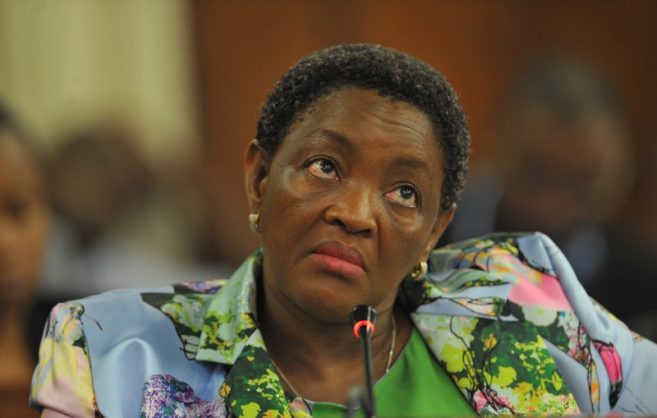
Bathabile Dlamini will breathe a sigh of relief after Justice Leona Theron ruled at the Constitutional Court on Thursday that she does not have to pay back the money for the legal costs she incurred while minister of social development.
Pearl Bhengu, on the other hand, was not so lucky, as she will be made to pay costs for the 2018 application for the extension of the contract of private company Cash Paymaster Services (CPS).
Bathabile Dlamini the former minister of @The_DSD does not have to pay the costs of the courts in her personal capacity. But #SASSA will have to pay for the self created crisis.
— Athandiwe Saba (@Athi_Saba) August 30, 2018
#Sassa #PearlBhengu to pay costs in relation to the 23 March on the scale of an advocate and two counsel. #BathabileDlamini gets a free ride.
— Amanda Watson (@_amandzing) August 30, 2018
Back in April, The Citizen reported that it would be decided whether the minister of women in the presidency would be forced to pay this money back in her personal capacity.
This followed two Constitutional Court (ConCourt) orders over the South African Social Security Agency (Sassa) debacle.
In March 2017, Dlamini was ordered by the court to show why she should not be asked to pay the costs of the matter between the Black Sash Trust, Freedom Under Law and herself.
Each time Dlamini has been to court over the issue in the past, she’s lost the fight.
Yet, the ConCourt has been unable to force her, or her department, to comply with judicial orders it issued since 2017 – declaring the agreement between Sassa and CPS invalid because of the threat of nonpayment to social grant beneficiaries.
With the SA Post Office (Sapo) in a position to take over ATM payments, the only hitch was how cash payments would be delivered.
Sapo/Sassa card holders were promised no deductions, three free withdrawals, one free balance enquiry and one free mini-statement per month – a free full statement covering up to a maximum of three months on demand – and a free first replacement card.
The potential failure to effect cash payments would have affected some 2.8 million people across the country, which held the ConCourt over a barrel.
Dlamini was accused of frustrating any efforts by banks to bid for Sassa contracts and ultimately become paymasters.
In March last year, Dlamini offered an unreserved apology for the anxiety and fear caused about the uncertainty around the payment of social grants.
The ConCourt had earlier ruled that the minister was responsible for the crisis that led to Sassa being unable to give assurances for the payment of about 17 million social grants to poor and vulnerable citizens dependent on government for social assistance. In its judgment, the court was scathing about her competence.
The court extended Sassa’s contract with CPS for another 12 months following an application by the Black Sash Trust, which asked the court to resume its supervisory role over the payment of grants. The ConCourt had ruled in 2014 that the contract with CPS was constitutionally invalid.
Sassa insiders said they were ordered by Dlamini to find dirt on commercial banks in order to disqualify them from being part of South Africa’s social grant payments system – paving the way for the contract of social grants distributor CPS to be extended.
With Dlamini now shifted to the women’s ministry as part of President Cyril Rampahosa’s cabinet reshuffle in February, Banking Association of South Africa MD Cas Coovadia said commercial banks were now able to revive talks with Sassa about their role in paying social grants.
“We didn’t make much progress until the change in the minister. After the change, things started to move quickly. The barriers have been removed. Sassa is now working with the banks to avail their services.”
Read original story on citizen.co.za

