Update: Disaster management on high alert after Orkney earthquake
The Orkney earthquake is the fourth confirmed seismic incident within a year in South Africa.
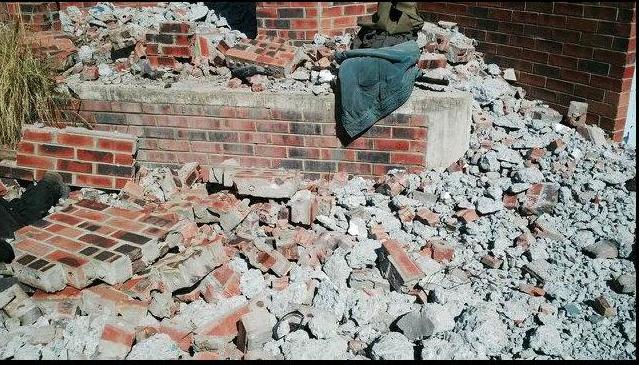
After the Orkney earthquake at 12.20 pm this morning, which registered at 5.3 on the Richter scale, disaster management teams across KwaZulu-Natal have been placed on high alert.
According to the MEC for Co-operative Governance and Traditional Affairs (COGTA), Nomusa Dube-Ncube, the eThekwini disaster management centre has registered the tremor. COGTA KZN maintains that no damages have been reported as a result of the tremors.
“Our disaster management facilities are monitoring the situation closely and we are ready to intervene in any part of KZN with speed should it become necessary,” she said.
So far, only one fatality has been confirmed while 17 were injured at a mine in Orkney.
The Orkney earthquake is the fourth confirmed seismic incident within a year in South Africa.
Major earthquakes in South Africa:
September 29, 1969 – Tulbagh – known as the Ceres earthquake, this incident registered at 6.3 on the Richter scale, and is widely referred to as the worst earthquake in South African history.
May 28, 2013 – Mbabane near Newcastle – 4.0 magnitude.
November 18, 2013 – Johannesburg – 4.0 magnitude.
December 2, 2013 – Bela-Bela, Limpopo – 4.0 magnitude.
Early reports by the SABC claim the incident was not mine related, as the earthquake originated much deeper than any mines in the world, at 10 kilometres below the surface, suggesting natural movements of the tectonic plates to be behind the disaster.
Michelle Grobbelaar, the unit manager at the seismology unit at Council For Geoscience, said the earthquake measured 5.5 on the Richter scale, similar to an earthquake experienced in the same region in 2005.
“In 2005 we had a similar earthquake that measured 5.3 on the Richter scale. Two miners were killed and there was building damage,” she said.
She added that earthquakes were not uncommon in South Africa although any quakes bigger that a 4.5 were considered rare.
“Because this earthquake and the one in 2005 was in the same region – a mining region – it becomes difficult to find out whether it is a natural event or caused by mining,” she said.
Ms Grobbelaar added that South Africa’s geological landscape seemed to be conducive to allowing seismic waves to travel some distance.
Reportedly, at least 400 houses in the Orkney area were damaged during the quake.