What disclaimers mean to you
Seeking to clarify just how binding such practices are, the Newcastle Advertiser accepted advice from counsel on the matter.
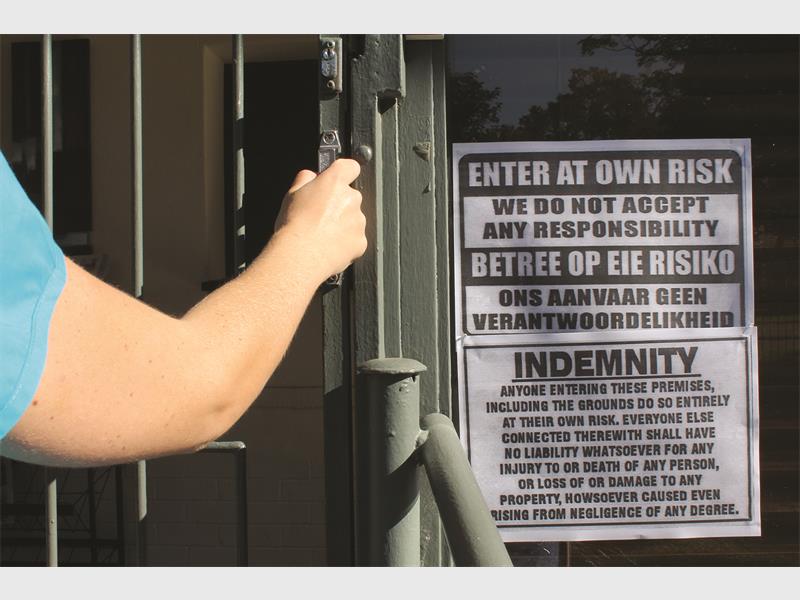
‘We accept no responsibility for…’
This is the sentence which seemingly absolves malls, supermarkets and more from any guilt, should a consumer be injured on the premises.
Disclaimers are nothing new.
Seeking to clarify just how binding such practices are, the Newcastle Advertiser accepted advice from counsel on the matter.
Here’s what you need to know:
Disclaimers are binding, provided they are clearly displayed, are accessible to any reasonable person and are clear in their terms.
This also includes entry tickets, bearing the disclaimer notice.
What the owner is not liable for, must be stated in simple terms, and it makes no difference whether you read the notice or not.
“It has been part of our common law for some time.”
The disclaimer is used to absolve the property owner from general duty of care.
However, a disclaimer cannot be used to ward off claims made in terms of gross negligence, such as an unmarked hole, an open elevator shaft or exposed electrical cables.
Counsel used a recent example to provide more clarity.
In a current case in Gauteng, a woman sued a shopping mall for injuries she sustained, after taking a nasty fall in a loading area.
The owners said a disclaimer vetoed any action against them.
However, it was determined the disclaimer was not displayed in the area where the plaintiff fell, and thus the owners were liable for damages.
“If there is no notice at a particular entrance, the owner is still liable.”
Property owners should also ensure the notice is placed in a zone where clients can see it, and not tucked around a corner where no one goes.
Of course, not all cases are as cut and dry.
“We have studied the case law, and found it is not a closed book.”