Longest day of the year
Although not a big deal for many South Africans, Monday 21 December marks the summer solstice for 2014 in the southern hemisphere.
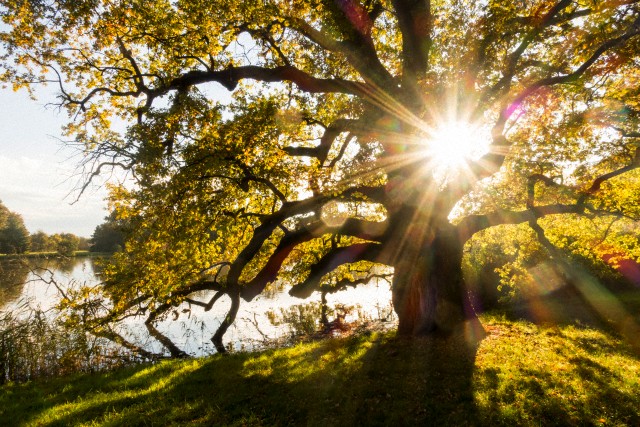
Monday 21 December, marks the summer solstice in South Africa – the longest day of the year in the southern hemisphere, marking the start of moving towards winter.
The summer solstice occurs at the moment the earth’s tilt toward the sun is at a maximum. Therefore, on the day of the summer solstice, the sun appears at its highest elevation with a noontime position that changes very little for several days before and after the summer solstice.
In fact, the word solstice comes from Latin solstitium or sol (the sun) + –stit-, -stes (standing).
Celebrating the summer solstice in South Africa is not a tradition, but in other countries the longest day of the year was celebrated with several rituals over hundreds of years.
In ancient China, the summer solstice was observed by a ceremony to celebrate the earth, femininity and the “yin” forces. It complemented the winter solstice that celebrated the heavens, masculinity and “yang” forces. According to Chinese tradition, the shortest shadow is found on the day of summer solstice.
In many countries in Europe, where the solstice is celebrated in their summer, midsummer festivals or celebrations are still held around the time of the June solstice.
In ancient Gaul, the Midsummer celebration was called Feast of Epona, named after a mare goddess who personified fertility and protected horses. In ancient Germanic, Slav and Celtic tribes, many pagans celebrated Midsummer with bonfires. After Christianity spread in Europe and other parts of the world, many pagan customs were incorporated into the Christian religion. In many parts of Scandinavia, the Midsummer celebration continued but was observed around the time of St John’s Day, on June 24, to honor St John the Baptist instead of the pagan gods.
In North America, many Native American tribes held ritual dances to honor the sun. The Sioux were known to hold one of the most spectacular rituals. Usually performed during the June solstice, preparations for the dance included cutting and raising a tree that would be considered a visible connection between the heavens and Earth, and setting up teepees in a circle to represent the cosmos. Participants abstained from food and drink during the dance itself. Their bodies were decorated in the symbolic colors of red (sunset), blue (sky), yellow (lightning), white (light), and black (night).
In some countries, they still celebrate the summer solstice. In northern European countries like Sweden, Denmark, Norway and Finland, Midsummer is a festive celebration. When the summer days are at their longest – and in the north it is the time of the midnight sun – festivals generally celebrate the summer and the fertility of the Earth. In Sweden and many parts of Finland people dance around maypoles. Bonfires are lit and homes are decorated with flower garlands, greenery, and tree branches.
For free breaking and community news, visit Rekord’s websites:
Like our Facebook page and follow us on Twitter.