Some fascinating facts about humans and the insect connection
Globally, insects play many roles in our mythology, art and even religion.
SINCE the first humans strolled across the African plains, insects, beneficial and harmful, have always been closely associated with us.
It is therefore little wonder that, across the world, insects feature so much in our mythology, art, literature and poetry. Through the ages they have been used as symbols and metaphors, have been assigned supernatural qualities and have even been worshipped as gods.
YOU MIGHT ALSO BE INTERESTED IN: Some fascinating facts about the charming chameleon
Here are some fascinating facts about man and his relationship to insects:
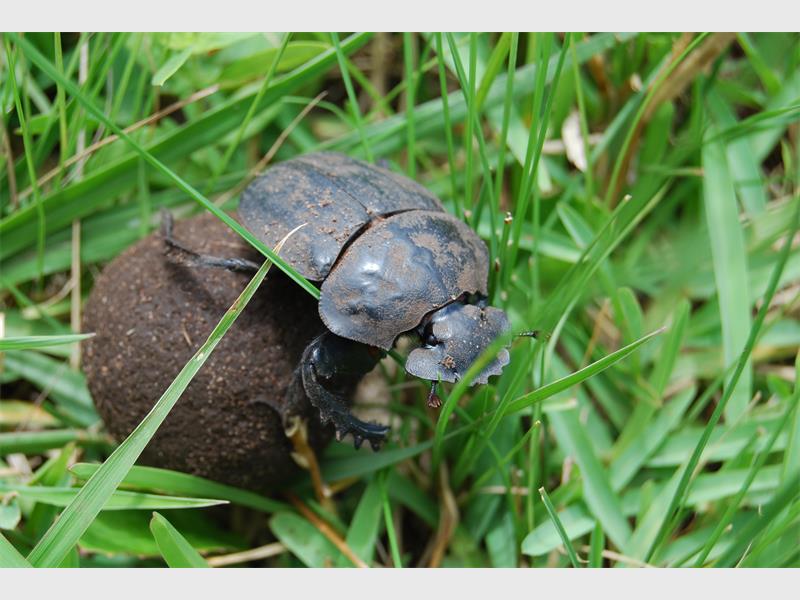
* The ancient Egyptians venerated the scarab beetle, weaving stories and legends about this insect into their religious beliefs. Scarab beetles were created out of clay, stone, jewels and precious metals and used as talismans, amulets and ornaments. Modern humans might not worship the scarab beetle but are fascinated by its relative, the dung beetle, a particularly useful little creature.
* Another insect that was treated with great reverence was the praying mantis, which featured in many of the legends of the San. They called him Cagn and worshipped him as the progenitor of their race.
* There are quite a few biblical references to insects. In Proverbs the reader is told “Go to the ant, thy sluggard, consider her ways and be wise.” In many of our folk stories, ants are symbols on industry and forward planning.
* Swarms of locusts, on the other hand, are seen as forces of destruction. They too are mentioned in the Bible. For instance, in Psalms 105 we read about locusts and caterpillars that, “without number, did eat up all the herbs in the land, and devoured the fruit of their ground”.
*Flies also feature in the Bible. In Exodus, we read how “grievous swarms of flies” were sent to plague Egypt and Ecclesiastes talks about the dead flies causing “the ointment of the apothecary to send forth a stinking savour”. Today, we still refer to a problem as the fly in the ointment.
* In later Christian times the butterfly was seen as a symbol of resurrection. In paintings of the Madonna and Child artists used a butterfly on the hand of the Christ Child to foretell his resurrection.
* Illuminated manuscripts feature the caterpillar, chrysalis and butterfly as symbols of life, death and rebirth while the bee was used as a religious symbol of diligence, activity and good works.
* The well-educated and distinguished Roman soldier, Pliny the Elder (AD 23 to 79) who compiled a collection of books on natural history, thought that the useful bee had been created for the sake of man. “So great is Nature that out of what is almost a tiny ghost of an animal, she has created something incomparable,” he wrote about the bee.
* Insects feature quite a bit in English poetry. John Clare described wild bees as “These Children of the sun which summer brings as pastoral minstrels in her merry train.”
* Nature poet William Cowper penned these lines about the glow- worm: “Beneath the hedge or near the stream a worm is known to stray; That shows by night a lucid beam which disappears by day.”
* Finally, one of the most popular insect in literature must be Richard Scarry’s Lowly Worm, a character that appears in many of his delightful children’s books.
Source: The Bible and ‘The insects of Southern Africa’, a gem of a little book by Margaret Bevis, which was published by Thomas Nelson and Sons back in 1964.
HAVE YOUR SAY
Like the South Coast Herald’s Facebook page, follow us on Twitter and Instagram
For news straight to your phone, add us on WhatsApp 082 421 6033