Local solar users can benefit from credit
The free basic electricity policy was designed to benefit poor households by providing them with free kilowatts of free electricity per month.
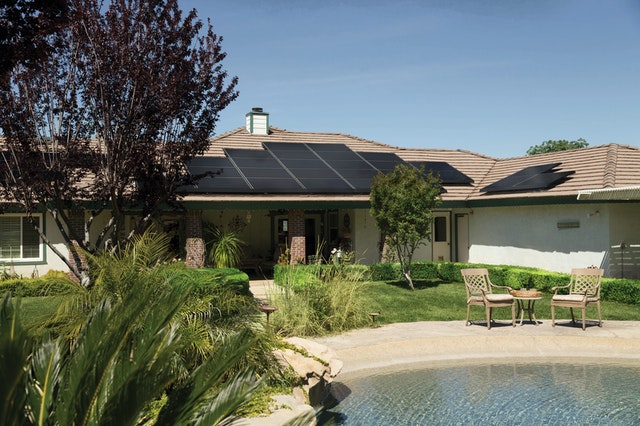
An exciting addition to the city’s supply of electricity tariff structures is the introduction of a Solar PV Embedded Generation export credit component to all residential, business and industrial tariffs that has a fixed charged component.
ALSO READ: SolarAfrica now supplying 13.5MW of electricity to the Ford Silverton Assembly Plant
That means customers who install Solar PV panels on their rooftops and generate more than what they consume during the day.
These excess units generated will be measured by an approved meter and the customer will with their bill at the end of the processed billing receive a rand value credit for these units.
The by-laws, related approved policies and schedule of tariff’s condition will apply.
Residential customers who are on Tariff A will move to Tariff B should Solar PV be installed.
Free Basic Electricity
Indigents who receive free basic electricity (FBE) may have noticed some changes in their free electricity units this month.
The metro has confirmed the changes, saying it’s in line with the city’s FBE adjustment.
According to the metro spokesperson Zweli Dlamini, the city’s free basic electricity for poor households has, as of July 1, decreased from 100kWh down to 50kWh.
The changes have been implemented in line with the Free Basic Electricity National Policy.
“The city informs its customers of changes effected on the electricity tariffs and the supply of FBE units applicable to customers registered and deemed to be indigents.
“The city’s FBE allocation and funding is governed by the Free Basic Electricity National Policy as well as guidelines and grants received from National Treasury.
ALSO READ: Five common myths about going solar
“Both the guidelines and grants received from National Treasury are as per the FBE National Policy, which is 50kWh units per month per registered and deemed indigent only,” explained Dlamini.
He further stated that since the approval of the provision of Free Basic Services by the national government, the city therefore absorbed the funding of the additional 50kWh units of the current 100kwh units provided to registered indigents as well as the full 100kWh units to tariff A (IBT) customers who did not qualify as indigents.
“In addition, the city has a substantial amount of approved indigents that will qualify for the 50kWh units, but there are also huge numbers of deemed indigents.
“Therefore, we encourage customers who qualify in terms of the city’s indigents’ policy to apply, as this will allow approved registered indigent customers to continue to receive the 50kWh FBE units,” Dlamini said.
ALSO READ: Energy generation through solar trees
Implemented changes are as follows:
A) Approved registered and deemed indigent customers on tariff A IBT will with their first transaction of the month receive only 50kWh FBE as opposed to 100kWh FBE units previously received.
You pay for all units above the 50kWh FBE units.
B) Customers not qualifying and not approved as indigents on tariff A IBT will receive zero FBE units as opposed to 100kWh FBE units currently received. Will pay for all units in all Tariff A (IBT) blocks.
“The above approach will be uniformly implemented to the metro electricity customers regardless of whether a customer is supplied with electricity by Eskom or the City of Ekurhuleni.”
Also follow us on: