All you need to know about the voting process
You are not allowed to photograph your marked ballot paper, so no selfies.
South Africans head to the polls today (Wednesday) to vote in the municipal elections.
If you’re note sure what to expect or what you have to do, here is a guide to the voting process:
• Find your correct voting station
Ensure that you have the address for the correct voting station for the voting district in which you are registered.
Most voting stations are located in community buildings such as local schools, churches or community centres.
Where buildings are not available, voting stations are set up in tents in parks or other open land.
In some sparsely populated rural areas, specially adapted vehicles are used as mobile voting stations.
Every voting station has large, clear signs outside marking it as a voting station.
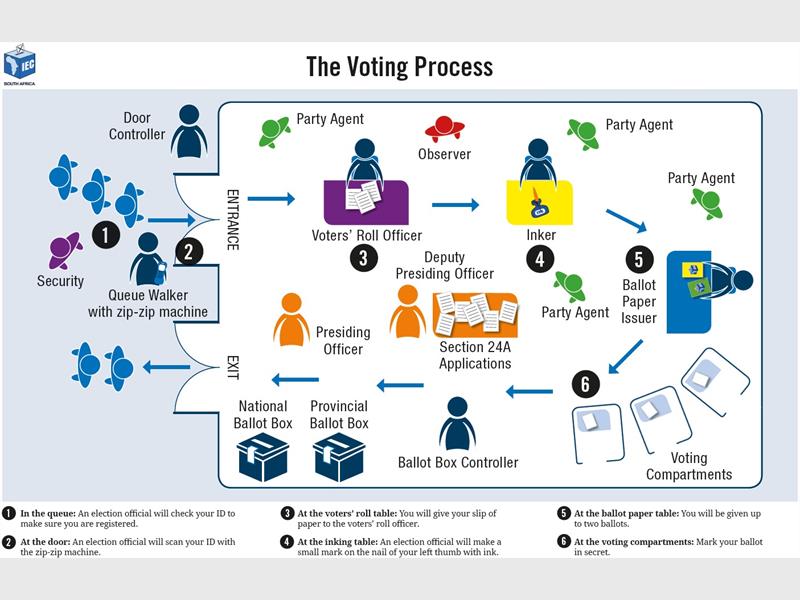
• Present your valid identification document to the door controller at the entrance of the voting station.
At the entrance of the voting station is an election official who serves as a door controller.
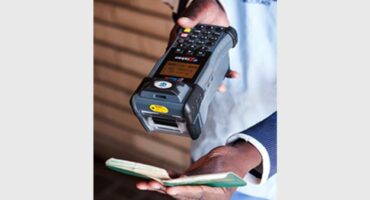
He or she will check that you have a valid identification document (green barcoded ID book, smart card ID or temporary ID certificate), will scan this document, and present you with a slip that confirms that you are a registered voter.
The door controller will also tell you when it is your turn to enter the station and will advise where to go once inside the voting station.
• Check that you are on the voters’ roll
Once inside the voting station you will proceed to the voters’ roll table where election officials will take your ID document and check for your name and identity number on the segment of the national common voters’ roll for that voting district.
Your name will then be crossed off – this is a manual mechanism for ensuring that voters only vote once.
An election official will then ink your left thumbnail.
This is a special ink that will not wash off your nail for several days.
This ink mark will show everyone that you have participated in the election.
• Get your ballot papers
An election official will then hand you your ballot papers, which they will tear off a pad.
Each ballot paper has a unique number and you must make sure that there is a stamp at the back of your ballot papers to verify that they were issued to you on that Election Day.
For municipal elections voters in metros and local councils receive two ballot papers (one for a ward councillor and one for a political party as part of the PR section of the election).
Voters in areas which form part of a district council receive a third ballot paper for the district council election.


• Get your identification documents stamped
Your green ID book, if that was your identification document, will then be stamped by an election official to show that you participated in the election.
• Find an empty voting booth and make your X
You will then be directed to an empty voting booth.
Here you will place your X in the box next to the political party and/or candidate of your choice.
To avoid a spoiled ballot, ensure that you make only one mark on each ballot paper and that your mark is clear.
If you make a mistake call an election official and they will provide you with a new ballot paper.
When you are finished, fold your ballot papers in half and leave the voting booth.
Just a reminder – you are not allowed to photograph your marked ballot paper, so no selfies.
• Cast your vote
An election official stationed at the ballot box will check that there is a stamp at the back of each of your ballots.
Having made your mark, drop your completed ballot paper through the slot in the top of the ballot box.
• Ensuring voting is free and fair
After casting your vote, you will then be directed to the exit.
Remember that political party representatives and independent observers (both national and international) are present throughout the voting and counting process to observe the process and to ensure it is free and fair.
(Information obtained from the Independent Electoral Commission)
Also read: Elections 2016: Political murders of election candidates
Elections and the ‘hidden’ ballots
Elections and the police force