
Rescue hens find a place in the sun
CHARTWELL - With the help of two animal activists, a Chartwell resident is housing 21 rescued battery hens that are now living out their days with the sun on their feathers.
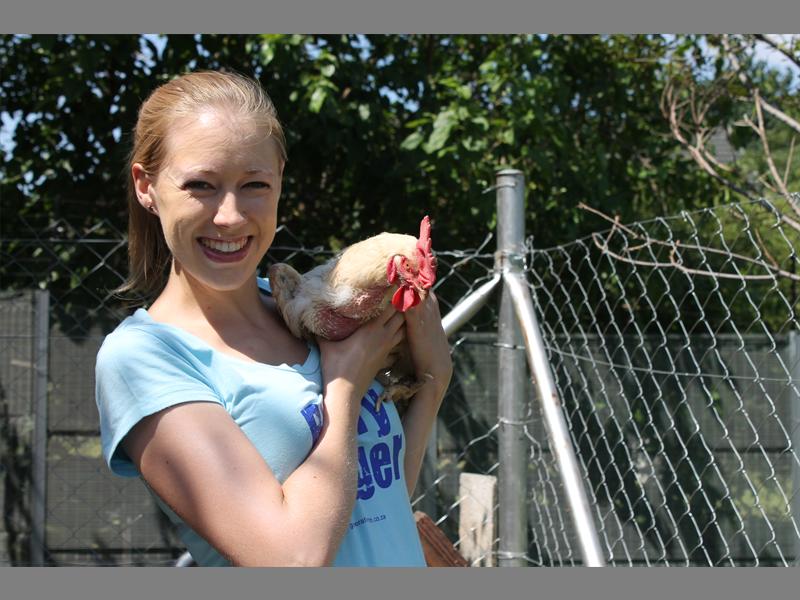
Kate Townshend adopted the hens after learning about the process of battery egg farming. Eileen Chapman, the Gauteng representative for Compassionate World Farming SA said there were currently 24 million egg-laying hens across South Africa, while only 14 percent of them were free range.
Her organisation raises awareness about factory farming with the aim of encouraging free range farming. Animal activist Janine Nash explained that when egg-laying hens were no longer productive, they were sent to a cull depot where informal traders could buy them at a reduced rate to be sold to the general public.
Nash purchased the 21 hens from one such informal trader before giving them to Townshend to look after. Nash explained that battery hens often have missing feathers because the frustration of being in a small cage makes them peck each other. She added that to stop the hens from killing each other the tips of their beaks are either cut or burnt off. “Free-range hens produce about 30 eggs a year,” Nash said. “Battery hens are forced to produce 10 times that amount.”
Kevin Lovell, CEO of the South African Poultry Association responded to Nash’s claims that battery hens injured one another out of frustration. “All chickens are prone to pecking,” he said. “Conventional farming usually leads to less pecking than free range farming.” He added that removing the tips of the hens’ beaks was better for them from a welfare perspective as there would be less risk of them injuring each other. “The tip of the beak can be removed by two different methods, using a hot knife or using a light beam which causes the tip to fall of a few days later,” he said.
Lovell addressed Nash’s claim that battery hens laid 10 times the amount of eggs they would in the wild by saying that modern farming, whether free range or conventional, uses improved breeds that have an increased potential to lay eggs, and the productivity was enhanced by managing the light cycles that the hen experiences. “No modern hen lays 10 times the eggs that other hens lay, but they do lay more eggs,” he said. “This is why eggs are the cheapest form of animal protein.”