WATCH: Government applauds Karan Beef compliance during oversight visit
Agriculture Minister John Steenhuisen and Gauteng MEC for Agriculture Vuyiswa Ramokgopa were in Heidelberg on June 23 to conduct an oversight visit at the Karan Beef feedlot.
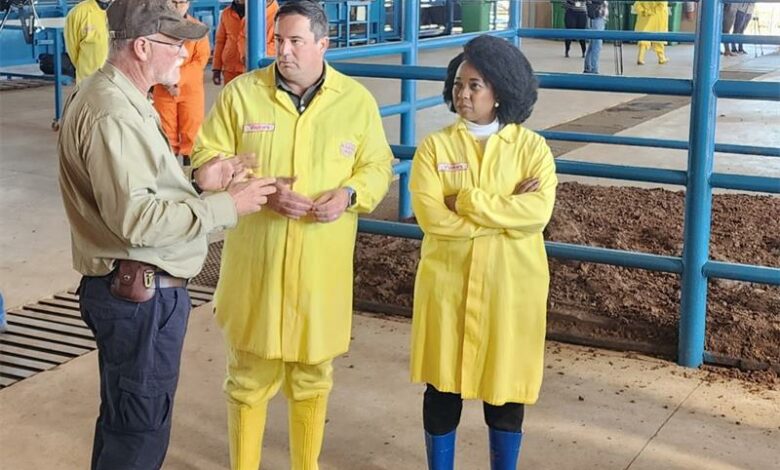
On Monday, Gauteng MEC for Agriculture and Rural Development, Vuyiswa Ramokgopa, and the Minister of Agriculture, John Steenhuisen, conducted an oversight visit at the Karan Beef feedlot in Heidelberg.
This visit followed the confirmation of Foot and Mouth Disease (FMD) cases at the facility on June 2.
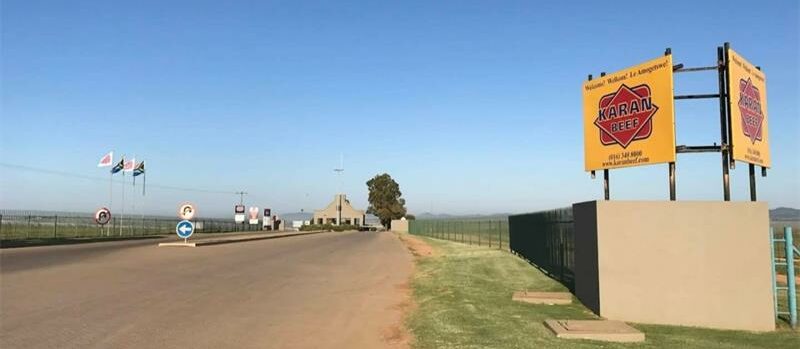
The oversight visit was aimed at assessing containment protocols and to reinforce the government’s commitment to halting the spread of the disease.
The FMD outbreak had a significant impact on the beef sector, with cases confirmed in Gauteng, KwaZulu-Natal, Limpopo, and most recently, the North West province.
The visit to Karan Beef commenced with a briefing by the Gauteng Department of Agriculture and Rural Development (GDARD)’s Veterinary Services Unit, outlining the province’s response and interventions to contain the spread of FMD.
“This is not just a Karan Beef issue, it is a national crisis. Soft borders between provinces and the unchecked movement of livestock have created concerns and we need to implement tighter controls and better surveillance,” said GDARD chief director Wynton Rabolao.
Steenhuisen, ready to answer all questions from the media, stated that the outbreak had a massive impact on the entire value chain of red meat as well as on consumers.
“The price of red meat has increased considerably since the outbreak. Karan Beef is responsible for roughly 30% of the beef sector in South Africa and when a facility like this is affected, it influences the entire supply and demand chain — not only beef, but also those providing feed, transport, or packaging,” he said.
Steenhuisen was asked if it was possible to trace where and how the outbreak started and answered that through veterinary science, the origin of the disease can be traced. He added that the source of the outbreak remains under investigation, though officials suspect the virus may have entered through informal livestock trade routes near Labolla and other soft-border regions.
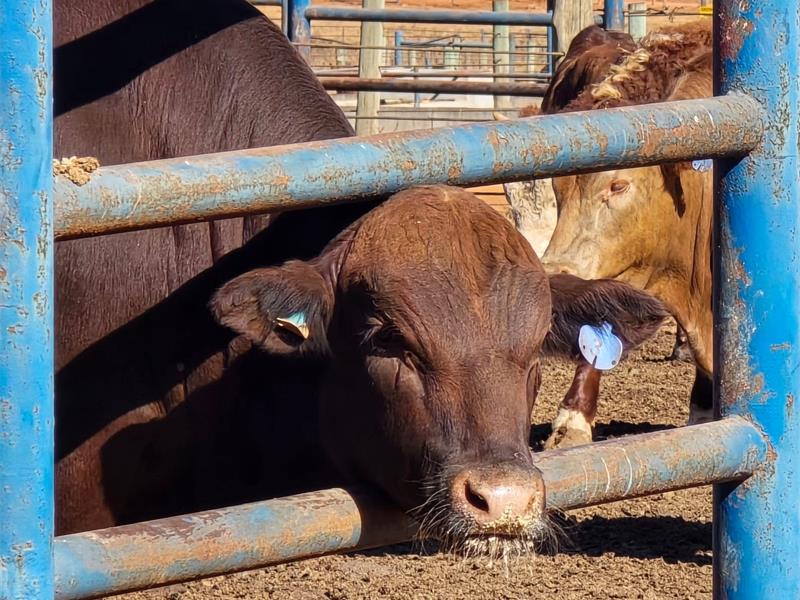
He said that any farmer, meat producer or auction house must have the proper protocols in place to prevent any disease and if found that protocols were not followed, they must face the consequences.
“We have ordered over 900 000 vaccine doses to get FMD under control, but vaccines alone will not solve this. We must restore local production capacity and enforce protocols locally and across borders. However, the economic knock-on effect is already being felt as we cannot afford to have these outbreaks. The vaccination process is part of a strategy that will lead to a long-term solution on how to bring FMD under control,” he added.
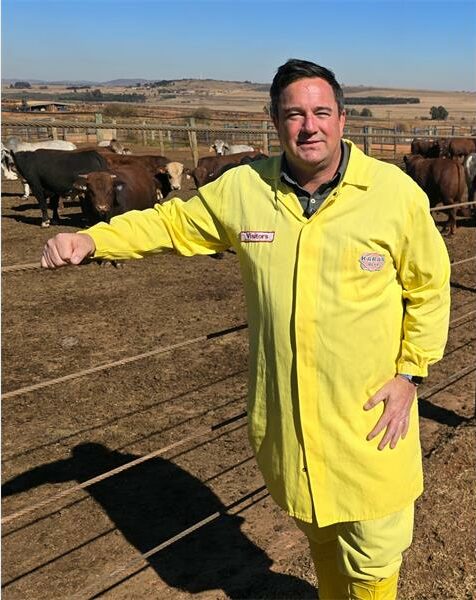
Steenhuisen reinforced that people cannot get sick from FMD and that the meat remains safe for consumption as the disease is not transferred to humans. He encouraged consumers to continue buying beef.
“The Karan Beef Heidelberg feedlot, slaughters around 2 000 cattle daily and is pivotal in the country’s beef supply chain. The outbreak has disrupted exports, with China, Namibia, and Zimbabwe suspending imports from South Africa. Beef prices have surged, and small-scale farmers are struggling to move livestock amid winter grazing shortages,” Steenhuisen said, adding that FMD is similar to a flu virus in humans as the strain spreads quickly.
Regular inspections must be done, strains must continuously be tested and vaccines must be administered to prevent the spread.
Ramokgopa emphasised the need for coordinated action and in her turn added:
“We are working closely with national authorities and industry leaders. The virus does not respect a provincial border and our response must be equally borderless.”
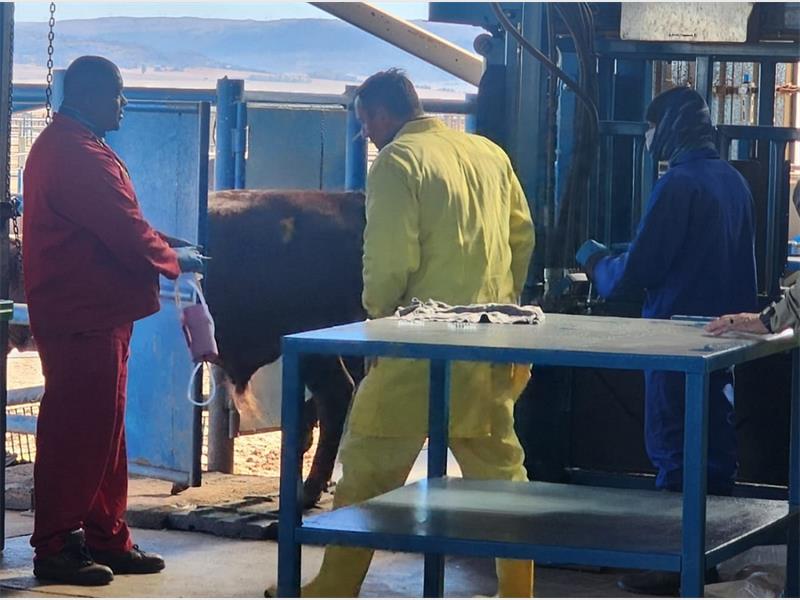
After the media had been addressed, attendees followed Karan Beef management to the processing area to see how vaccines are being applied to cattle.
In closing, Steenhuisen reiterated that red meat is safe for consumption and that all protocols are in full effect at Karan Beef facilities.