Heritage plaque unveiled at former black concentration camp cemetery in Heidelberg
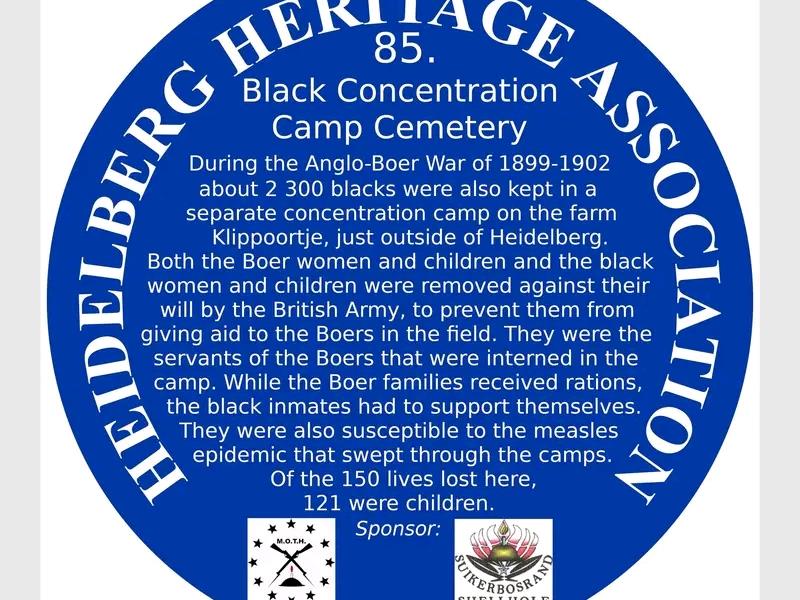
Heritage Blue Plaque No. 85 has been unveiled behind Heidelberg Mall, marking the site of a former black concentration camp cemetery where 150 people, including 121 children, reportedly lost their lives during the Anglo-Boer War.

The Heidelberg Heritage Association has unveiled a heritage blue plaque number 85 to commemorate the site of the former Black Concentration Camp Cemetery in Heidelberg.
The cemetery is situated directly behind Heidelberg Mall. Its location was rediscovered in June 1999 by Eric van den Berg and Johan Strauss during research into a 1905 map that indicated the position of the burial site.
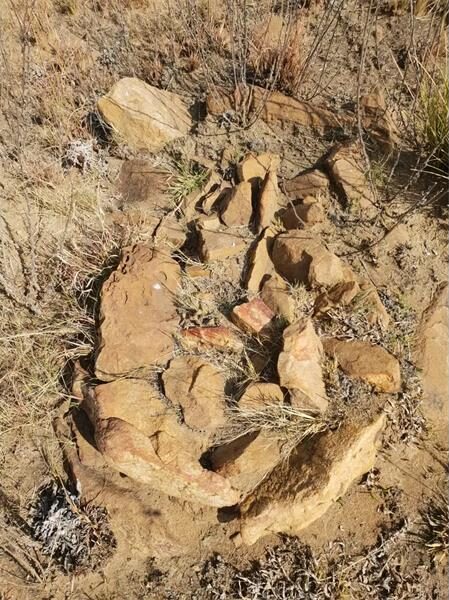
During their investigation, van den Berg and Strauss identified approximately 30 graves, providing important physical evidence of the former concentration camp cemetery.
Their discovery also established that the Black Concentration Camp was located in proximity to the former White Concentration Camp.

During the Anglo-Boer War (1899 – 1902), the British authorities established concentration camps for both Black and White South Africans.
The camps became increasingly overcrowded as thousands of men, women and children were removed from their homes and placed in camps as part of the British military strategy to restrict support for Boer forces.
Conditions in the Black and White concentration camps differed considerably. While White camp residents received official rations, Black camp residents generally did not receive the same level of provision and were expected to provide for many of their own needs.
Historical accounts indicate that the British policy was intended to encourage able-bodied Black camp residents to work. Residents were employed in activities including growing crops for British troops, digging trenches and driving wagons.
Black residents were also recruited for military-related duties, particularly as scouts to track Boer commandos and as guards at blockhouses.
Those who were able to work could exchange their labour for food or purchase mealie-meal at a reduced price. During the war, the farms Emmasdale and Klippoortje were annexed by the British. Klippoortje was used for the concentration camps and for agricultural activities carried out by Black South Africans working for the British.
The Heidelberg Black Concentration Camp was one of the larger camps of its kind, with more than 2,300 people held there for much of the war. Living conditions were extremely poor, while inadequate food, sanitation and medical care contributed to widespread illness and loss of life.
A particularly devastating measles epidemic resulted in numerous deaths. Historical records indicate that 150 people died at the Heidelberg Black concentration camp, including 121 children.
The camp was officially closed on 25 October 1902, several months after the conclusion of the Anglo-Boer War.
Historical records also indicate that four Black concentration camps operated in the wider Heidelberg district during the war: Heidelberg, Nigel, Balfour and Greylingstad.
The unveiling of the heritage plaque provides an opportunity to recognise and preserve a largely overlooked chapter of Heidelberg’s history. It honours the men, women and children who lost their lives at the camp and acknowledges the experiences of Black communities affected by the Anglo-Boer War.
The Heidelberg Heritage Association said preserving and sharing this history is important to ensure that future generations understand the experiences of all communities affected by the conflict.
Moths Suikerbosrand Shellhole sponsored the heritage plaque.