Medical waste facility on the cards for Isando
The proposed devices will produce no air emissions or liquid effluent
PLANS are in the pipeline to open a medical waste treatment facility in Isando which will treat 400 tons of waste a month.
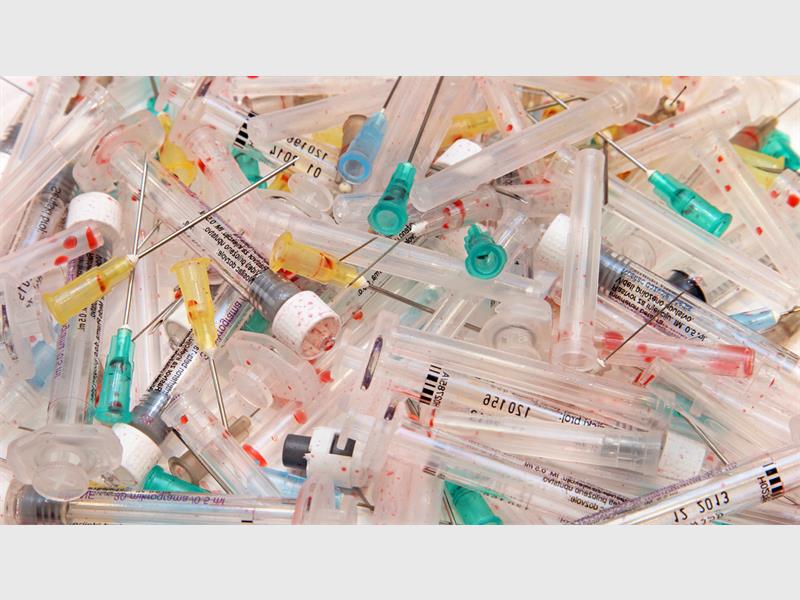
The proposed healthcare risk waste (HCRW) facility will treat infectious waste such as latex gloves, swabs, bandages, theatre masks, needles, scalpel blades, glass ampoules, syringes, pharmaceutical waste (tablets, capsules and creams) and anatomical waste (tissue, plasma and blood).
The facility will be run by Waste Scope (Pty) Ltd, and Jones and Wagener Engineering and Environmental Consultants (Pty) Ltd (J&W) has been appointed as the independent Environmental Assessment Practitioner (EAP) to undertake the Environmental Impact Assessment and a Waste Management Licence Application for the proposed project.
Waste Scope is proposing to operate the facility in an existing warehouse at 14 Purlin Street. The company proposes to install two microwave HCRW sterilisation devices, the AMB-serial 250-Ecosteryl and Micro-Waste™ Disinfection System (MDS™) units.
Also read:
• Baby’s body dumped in medical waste box on P91
Initially the maximum treatment capacity of the facility will be 400 tons a month but if the market requires it and it becomes viable, two additional units will be added, which will double the treatment capacity of the facility to 800 tons a month.
The proposed facility will treat 77 per cent infectious waste, 16 per cent sharps, four per cent pharmaceutical waste and three per cent anatomical waste.
This type of waste poses environmental and health risks to the public and therefore cannot be disposed along with general municipal waste.
Prior to the disposal of HCRW it is required that it be disinfected. Various methods and devices can be utilised for the treatment and disinfection of HCRW.
At the proposed Isando facility, HCRW will be treated according to these steps:
1. The proposed HCRW treatment devices will receive medical waste from various HCRW generators. At the facility the medical waste will be offloaded, sorted into waste types, catalogued and dispatched in skips to the two microwave treatment devices.
2. The skips are attached to the treatment devices, weighed, mechanically lifted and emptied into a holding hopper attached to each unit.
3. The waste goes from the hopper into an enclosed shredder which reduces the waste into small particles.
4. The shredded waste is continuously conveyed through the unit and heated by means of steam injection and exposed to a series of microwave generators which sterilises the waste.
5. The sterilised waste is fed into containers, catalogued and transported to a landfill appropriately licensed to receive it as a delisted waste.
The advantages of the proposed treatment facility are:
It will decontaminate and disinfect HCRW and reduce the quantity of hazardous waste to be disposed thus providing a safe environment.
The disinfection occurs at temperatures below 110°C, at which harmful by-products normally associated with incineration or autoclaving are created.
The proposed devices will produce no air emissions or liquid effluent.
Air filters ensure that odours and particulate matter are controlled prior to allowing the air to exhaust to the atmosphere.
The temperatures at which the devices operate will not change the chemical or physical characteristics of the waste.
Microwave energy emissions will be monitored and maintained within acceptable limits.
The Consultation Scoping Report for the project will be available for public review and comment from September 17 to October 19 at Kempton Park Library at the civic centre.
For electronic copies, contact Anelle Lötter or Sibongile Bambisa on 012-667-4860.