
Begonias: A shady love affair
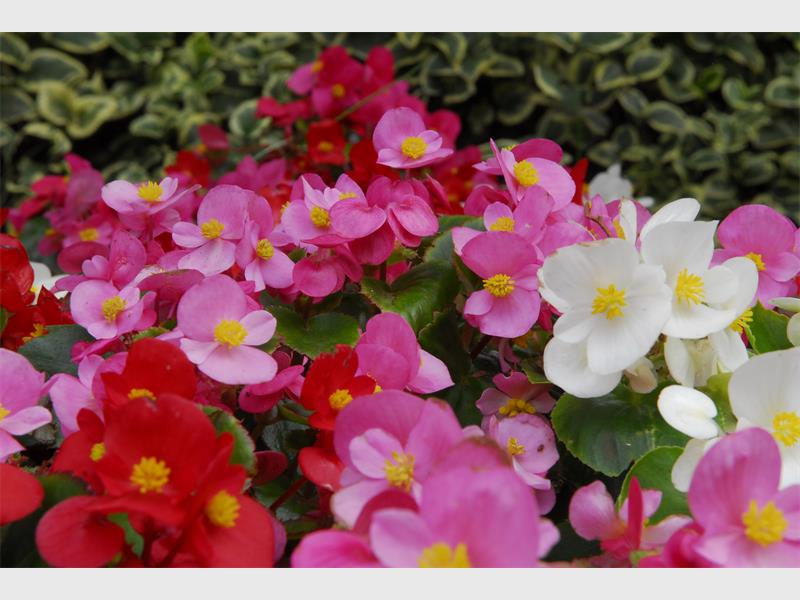
The white and light pink varieties are particularly well suited for the shade
Everyone has those shady areas in the garden where nothing grows, or at least they think, nothing can grow.
Well, the good news is there are things that can grow there and we’ve got two gorgeous annuals for you to use, not independently, but together.
Begonia semperflorens or bedding begonias and its numerous cultivars, and its well suited companion, coleus or more commonly known as “Flame Nettle” or “Painted Leaf”, are just the thing to brighten up those dull areas in the garden.
Begonia semperflorens
There are different varieties available so check which ones you need before buying. For edging your flower beds, pots and hanging baskets, you should opt for dwarf varieties. For our purposes, we’d opt for the larger varieties, sometimes as tall as 30-40cm, which can be planted en masse to create a wonderful, long lasting show of colour in that drab area.
Location
The most ideal location for Begonias is dappled shade. The white and light pink varieties are particularly well suited for the shade because the lighter colours show up well, while if the reds are planted in sun their colours are a shade or two deeper.
Begonias will reach for the sun when they’re starved of it, growing taller and spreading out more, a little like an umbrella, so can be planted further apart in the shade. Deeper shade is tolerable if that’s the gap you have to fill but you’ll have to compromise by accepting you’ll have less blooms.
In case you’d like to plant your begonias in full sun, which is perfectly acceptable, just remember that when planting them in the sun, it’s essential to plant them closer together so that the smaller umbrella of leaves will manage to shade the ground between the plants sooner to avoid the soil heating up too much.
Watering
Begonias like average to moderately fertile and well-draining soil and like it to be kept moist but not sodden. Water-logged soil can cause all sorts of unwanted problems.
Mulching around the plants during the hot summer months goes a long way to keeping the soil cool, which is their preference, and helps reduce evaporation substantially. This is where coleus becomes a wonderful companion, acting as a natural mulch, as you’ll see shortly.
Maintenance
Begonias don’t require much maintenance. Deadheading flowers and yellowing leaves will encourage new blooms but isn’t essential and if you prefer a neat and compact plant for a container, you can cut back any stems that have extended beyond the mound of the plant.
Coleus
Excellent for use as a ground cover, these plants will compliment your begonias like no other. They too require fertile, well-draining soil and at maturity you can expect a 30cm spread so remember this when planting. At 20cm high with densely packed foliage, this mini canopy will act as the natural mulch your begonias very much need and want, keeping the soil cool through the summer months.
Information supplied by the Bedding Plant Growers Association. For more, go to www.lifeisagarden.co.za.