It is still premature to give a full report on the extent of the oil spillage in Swartspruit as a result of a fire at a distribution warehouse in Isando.
GUD Holding Divisional Director – Group Legal and Human Resources manager, Anthony Trickey, said they were working very closely with the Gauteng Department of Agriculture and Rural Development, Directorate: Environmental Compliance Monitoring and the City of Ekurhuleni, Environmental Resource Management Department on resolving the matter.
Also read:
• Warehouse fire causes huge oil spill in Swartspruit
• WATCH: Isando factory goes up in flames overnight
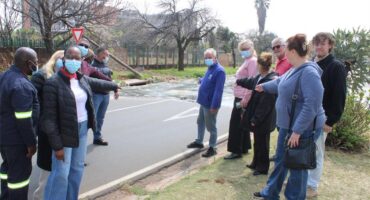
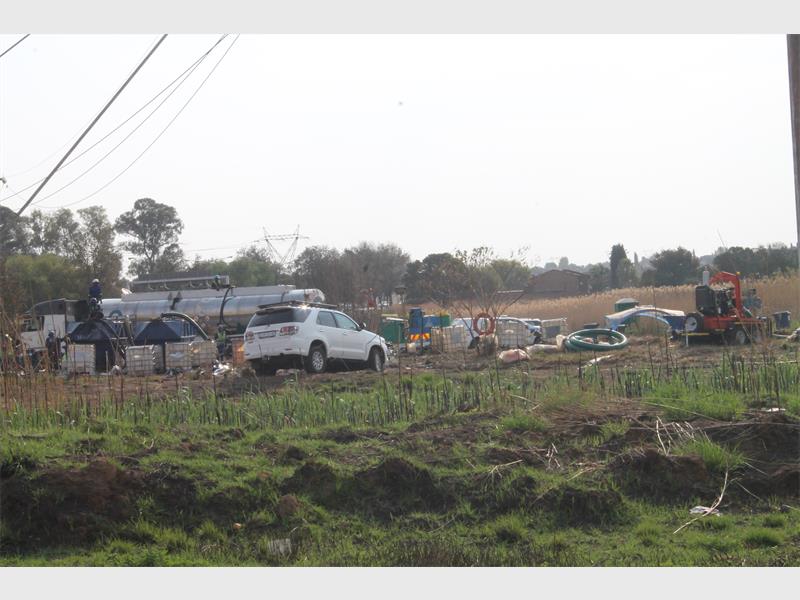
Hazmat spill response company Drizit Environmental was called upon by GUD and GUD’s insurance company to assist with clean-up operations. They have been on site on the corner of Kelvin Road and CR Swart Drive since Friday morning last week.
“We are doing everything possible to address the spillage and will release a statement once the clean-up and containment is complete,” said Trickey.
Questioned on reports of water in Isando smelling of diesel, Trickey said the pollution was completely unrelated to the oil spillage. Trickey further added that there had been reports of an ongoing problem of water pollution in Isando.
“We are taking full responsibility for the oil spillage but we have requested that water samples previously taken be examined to determine the extent of water pollution that existed prior to the oil contamination,” he said.
Ekurhuleni Metro Municipality spokesman, Themba Gadebe, said following the fire, lubricating oil had entered the Kempton Park storm-water system, resulting in contamination of drains and pollution of a nearby river.
“It is estimated that the oil has migrated about 7km away from the site. A major clean-up operation by Drizit Environmental is currently underway,” pointed out Gadebe.
Gadebe said GUD Holdings, as the owner and person in charge of the oil, was ultimately responsible for any contamination of the environment and for the clean-up of the polluted environment.
“The metro has issued correspondence to the company reminding them of their responsibility in terms of section 28 and section 30 of the National Environmental Management Act (NEMA) to rectify the pollution and rehabilitate the affected environment,” he said.
He added that the scale of the clean-up operation was quite large so it was expected to take a while.
Yet what are the implications of the contamination?
“In general terms, the contamination can have a delirious impact on water quality, flora and fauna of the river system.
“In addition, the oil has contaminated the storm-water infrastructure (ie the drains) and would have to be flushed from the system. In specific terms the exact impact on the environment can only be determined by a specialist study.
“As a final note, from an environmental regulatory perspective, the incident is being handled in terms of section 30 of NEMA and the following environmental authorities will monitor the clean-up activities: EMM’s Environmental Resource Management Department; Gauteng Department of Agriculture and Rural Development; Department of Environmental Affairs and Department of Water and Sanitation.”