
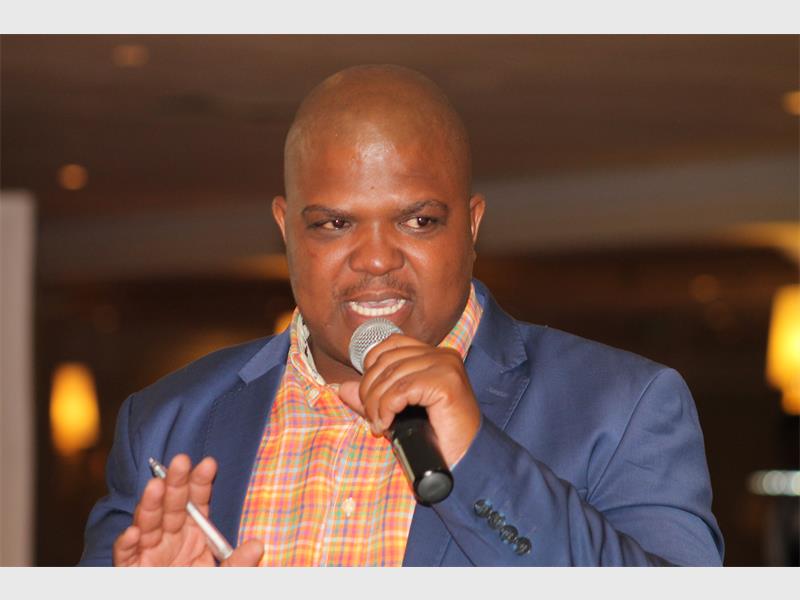
EKURHULENI MMC for Human Settlement, Clr Lesiba Mpya, said the city’s intention is to deliver 100 000 houses in the next five years, with an ambitious plan of also developing identified land into 59 000 serviced stands.
Mpya was addressing media at the Ekurhuleni Press Club at Emperors Palace on Friday.
Topics he touched on included the re-blocking strategy, densification, title deeds and the housing beneficiary list dating back to 1996.
He said planned densification was being introduced – an international trend the city would embrace and promote, as it gives sustainable use of land.
“Cities across the country are faced with urbanisation. We are an industrial and manufacturing hub, so we continue to attract a large number of people in search of a better life and prospects for their future.
“The strategic decision we have taken, is that we need to promote densification, which will allow us to vertically grow the city as horizontal growth prospects are daily being constrained. We are a highly landlocked region and our strategy is to build high rise RDPs so we can accommodate large numbers of people in a relatively small area,” Mpya explained.
“The densification strategy is the future, as land is not expanding – and it will bring a solution to some of our housing backlogs.”
He emphasised the municipality also wanted to win the war on illegal occupation of land.
“We want to send a strong message to those who want to illegally occupy land, that we aren’t going to negotiate with anarchy. We want to develop this land so that our people can live in a habitable environment with decent sanitation, electrification, decent roads and storm water.”
“We are the highest ranking municipality in South Africa for the number of informal settlements, with 119. As a department we have come up with the re-blocking system. Re-blocking is the reconfiguration and
re-positioning of shacks in very dense informal settlements in accordance with a community-drafted spatial framework. The aim is to better utilise the spaces in informal settlements to allow for better
service provision.
“Life in informal settlements must be habitable and people should have access to water, with the same purity as suburban areas and townships. Re-blocking seeks to address many social ills that our people have forever been living with; also addressing their spatial planning – just to unblock and move them a distance apart so they can have access to state services,” he explained.
“It’s heartbreaking when a woman is giving birth at night and an ambulance can’t even access that particular area.”
Mpya said the department had already started re-blocking six informal settlements successfully and were in the process of re-blocking 20 more in this financial year.
He added that the department was in possession of 11 000 title deeds that needed to be given to owners.
“Many people have been waiting for their title deeds. A person wants to have a sense of ownership: it is sentimentally valuable that when you hold your title deed, you are defined as an owner.
“It is difficult to locate title deed owners because beneficiaries have either relocated from the address available, or they have passed on,” he explained.
In the current financial year, Mpya said the department planned to distribute 2 500 title deeds, while the distribution of the 11 000 was in their five-year target.
“We plan to find innovative ways of making sure we locate beneficiaries.”
Another major issue facing the department is the waiting list for houses dating back to 1996.
Mpya said there were around 180 000 to 200 000 beneficiaries still on the waiting list. It had come to light during imbizos that many beneficiaries who owned houses, couldn’t move into them, because they were being illegally occupied by other people.
“We must investigate what went wrong in the illegal occupation of houses. The question we must ask is: how did you occupy this house and who authorised it?.
“We must hunt for ‘corrupters’ and ‘corruptees’ within the system who are giving the department a bad name. We must cleanse ourselves and ensure we run a credible and open process. We want to mitigate on deficiencies, some of which are unintended and some of which are driven by corruption from some officials.”
Mpya said timelines on the outcome of internal investigations would be announced towards the end of November.
“We must take ownership of wrongs, with the full intention to correct them. We are a department that is at work.”