
Winter tips to keep safe
Motorists are at high risk from dense smoke caused by dry, burning vegetation next to major routes and freeways
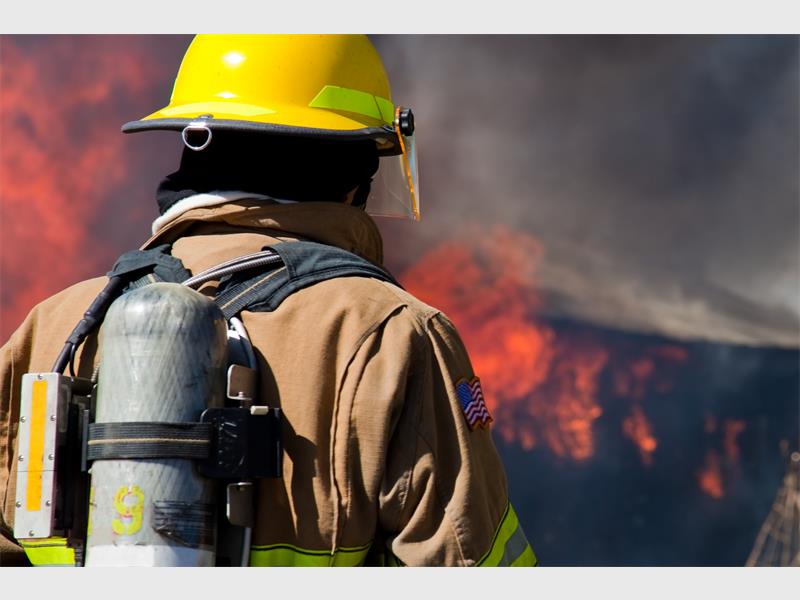
WINTER has once again arrived and Ekurhuleni Disaster and Emergency Services is already concerned about the safety of its people.
This is because of all the people who are either killed or injured during this time of the year while trying to keep warm.
Household fires and veld fires are prone to occur during this season and are either caused deliberately, accidentally and spontaneously. These fires can consume people’s homes and valuables before firefighters arrive.
Motorists are at high risk from dense smoke caused by dry, burning vegetation next to major routes and freeways. Another potential hazard is wind direction, which might blow the smoke across the routes and thus obscuring vision for motorists and pedestrians. This could lead to an accident.
Tips to be safe:
Smoking:
Careless smoking inside homes/structures is still far too common a practice. More injuries and deaths are still experienced from such fires.
– Never light cigarettes, pipes or cigars near any flammable liquids.
– Never throw lit cigarette butts out of a vehicle.
– Never smoke in bed. Get up and sit where you are less likely to doze off.
– Use large metal or glass ashtrays.
– Never smoke in bed while under strong medication.
– Never smoke in bed while overtired.
Heating sources:
– Switch all types of heating sources off before going to bed. (Heaters, fire places and braziers).
– Switch all heaters off in the absence of adults.
– Avoid using electrical heaters in a wet/damp environment.
– Wait until the heater has cooled off before moving or refilling it.
– Keep a space of approximately a meter between the heater and the household objects.
– Provide or open ventilation into the room for fresh air to enter and smoke to escape.
Cooking sources:
– Don`t throw water on an oil, paraffin or electric fire. Rather smother the flames.
– When cooking with a paraffin stove, leave a window open to allow the fumes to escape.
– Use the appropriate pot size on a paraffin stove.
– Operate the stove away from other flammable liquids or gases.
– When you pour paraffin into a lamp or stove, use a funnel and not a cup. Funnels prevent spillages and only refill when the device is cold.
– Always keep paraffin stoves and other appliances on a flat surface so they won’t fall and start a fire.
– Keep the burning stove away from combustibles such as curtains.
– Always turn your stove and lamp off when you leave home or are out of sight.
– Never leave young children with a burning paraffin appliances alone.
– If your clothing catches fire, fall to the ground and roll over to put out the flames (stop, drop and roll). If someone else is on fire, cover them with a blanket.
– Is an adult always present in the kitchen when food is being cooked?
– Ensure flammable liquids are stored in safety containers and kept away from the heat.
– Get qualified crafts-person to repair appliances. (Electrical, Gas and Paraffin).
Lighting Sources:
Candles
– Cut the candle shorter.
– Use the appropriate candle holders’ half filled with water/sand. Avoid plates or saucers as these are still far too common practices.
– Put the candle on the centre of the table. Avoid putting it next to the open windows.
– Place it out of reach of children.
Matches and lighters
– Matches and lighters are not toys. Keep such items away from children.
– Know where your children are at all time. Just like adults, most other fires are deliberately caused by juveniles as well.
General safety
– Avoid throwing lit cigarettes butts onto dry vegetation. This can cause grass or veld fires.
– All portable electrical appliances should be switched off during load shedding.
– Domestic electrical appliances should also be switched off during load shedding.
– Thatch roofs are highly flammable and need to be treated with fire retardants because hot ash from veld fires in the vicinity might spark a blaze and the possibility is high for the roof to ignite.
– Fire breaks are highly recommended.
– Keep the grass cut short, especially when it is near a thatch roof. The Veld and Forestry Act 1989 (Act 101 of 1989) and Environmental Management Act, 1989 (Act 73 of 1989) states that no person may within the area, make an open, uncontrollable or unattended fire or permit a fire to be made in such a place and/or in such a manner as to pose a real or potentially real threat to any human being, animal, building and premises or property.
– Buy and install smoke alarms in every room of your home.
– Test smoke alarms monthly.
– Practice fire drills with your family.
– Install a carbon monoxide detector outside bedrooms.
Contact numbers
For emergencies contact 10177 (National Toll Free Number) or 112 when using cellphones.
For life threatening emergencies, phone 011 458 0911.