

Watch: Rookie Pietermaritzburg snake catcher comes face-to-face with deadly boomslang in car
An unexpected encounter prompted a careful boomslang rescue and a renewed warning about the dangers of misidentifying green snakes.
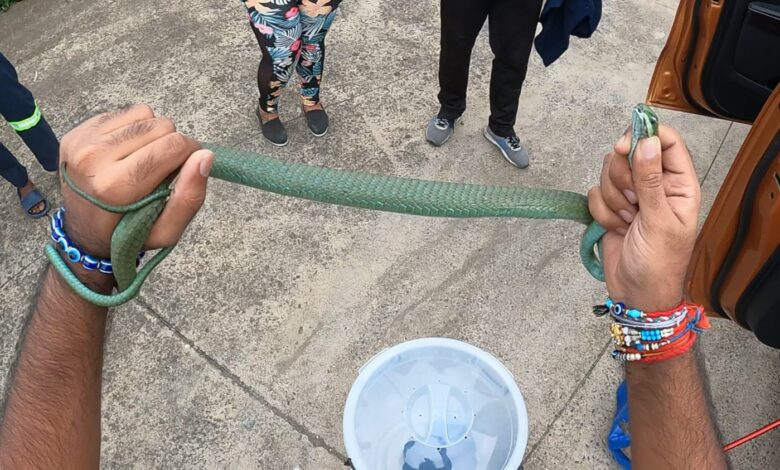
A Pietermaritzburg snake catcher expecting a routine call-out for a harmless green snake instead found himself face-to-face with one of Africa’s most venomous species, the boomslang, hidden beneath a car seat.
The Witness reports that Akil Ramsurran responded to the call last Thursday, thinking he would be dealing with a spotted bush snake, which often squeezes into tight spaces. But when he slipped his head and torch under the seat, he froze.
“I found myself face-to-face with a boomslang. I don’t think I’ve ever been caught off guard like that,” he says.
He bolted to his vehicle to fetch proper equipment and safely removed the snake, which appeared stressed but uninjured. It was later relocated to a natural area.
The driver later revealed she had unknowingly travelled 40km with the boomslang’s tail hanging out her rear-view mirror, giving the snake a long, unexpected lift.
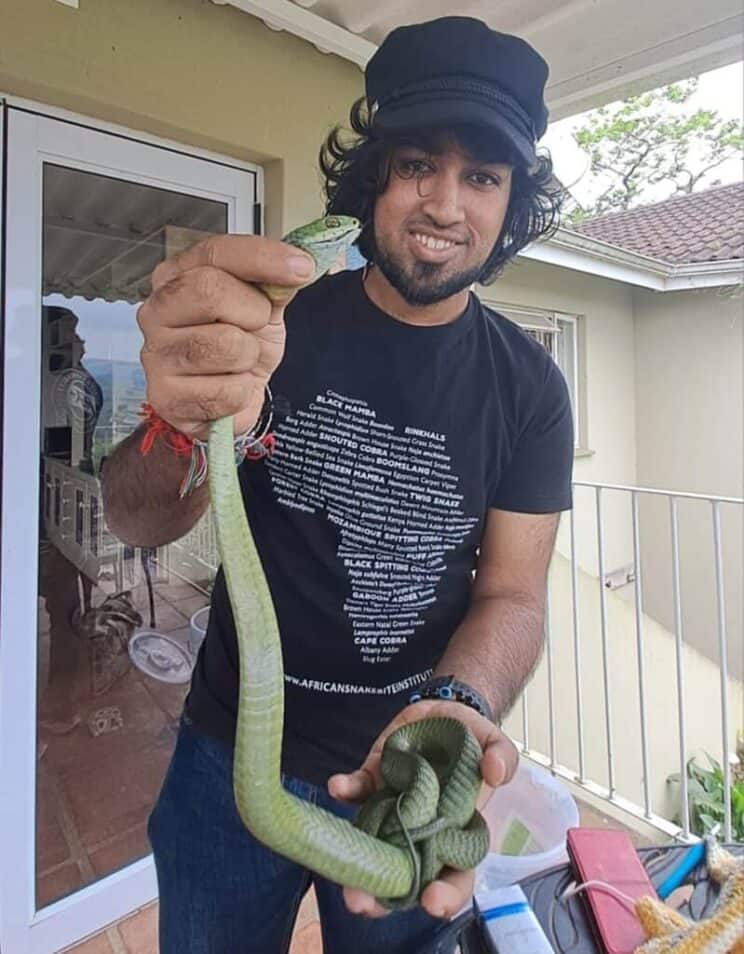
Ramsurran says boomslangs, despite their potent hemotoxic venom, are shy and non-aggressive. But he warned residents never to handle any ‘green snake’ unless they can accurately identify it.
Ramsurran, mentored by experienced catchers such as Dean Boswell and Pieter Potgieter, who referred him to the boomslang report, says recent months have been busy as temperatures rise.
“I’ve rescued everything from boomslangs and adders to harmless bush snakes hiding in gate motors, air conditioners and roof tiles,” he says. Spotted bush snakes remain the most common due to the abundance of geckos around homes.”
He added that some rescues involve injured snakes. “Many are hurt when people try to kill them. I help rehabilitate where I can. Snakes are essential in maintaining our ecosystem.”
He hopes to expand into snake research and eventually work more closely with mambas.
Boswell says he also caught two large black mambas recently. One was in Bellevue, and another in Ashburton, both found near homes, and one was feasting on baby kittens.
“Mambas, unfortunately, do prey on small animals like that,” he says.
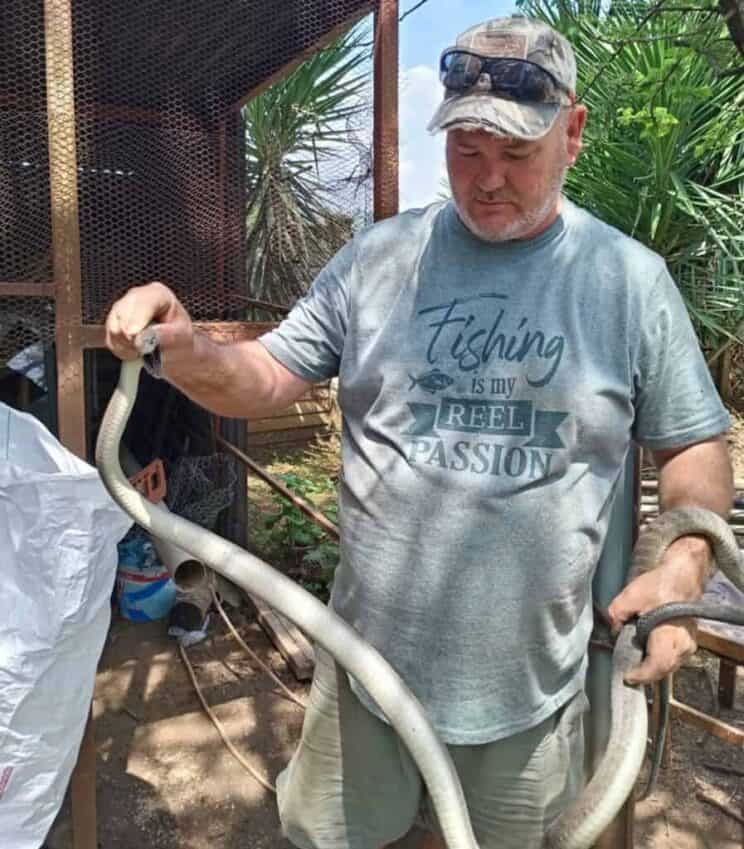
He believes habitat loss is pushing more mambas into residential areas. He has also seen a rise in monitor lizards entering homes in search of food.
Boswell urges residents to avoid killing snakes and to keep an eye on the serpent until help arrives. “A puff adder can disappear in 30 seconds. We can’t help if we can’t find it.”
He welcomes young snake catchers entering the field. “People are learning there are alternatives to killing snakes. With proper training and patience, they can help protect these animals and the environment.”
Read original story on witness.co.za
