MEC urges road safety after Mopani learner hit by minibus dies
Limpopo Education MEC mourns Gr 3 learner killed by speeding minibus near school. Calls for driver caution and support for affected family.
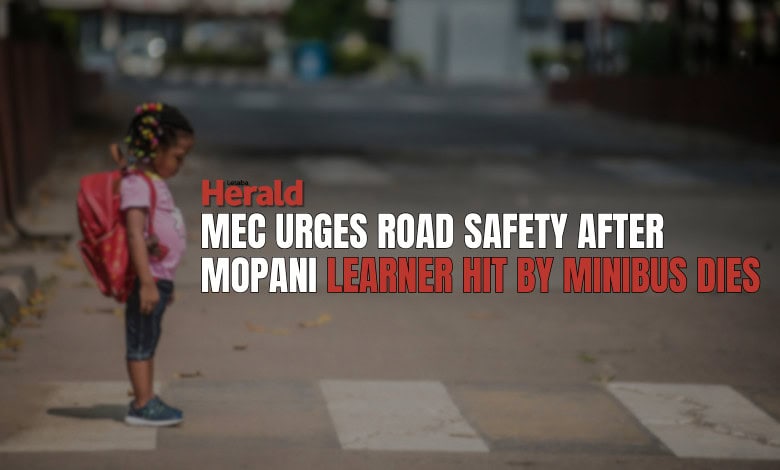
LIMPOPO – Limpopo Education MEC, Mavhungu Lerule-Ramakhanya, has expressed deep sorrow following the tragic death of a Gr 3 learner from Pfuxetani Primary School in Mopani.
The 9-year-old was fatally struck by a speeding minibus just 100 metres from the school gate on Wednesday afternoon (August 6), shortly after the school day had ended. Although the child was rushed to Khensani Hospital, she sadly succumbed to her injuries.
In response, the provincial education department will deploy social workers to provide psycho-social support to the affected family and school community.
Lerule-Ramakhanya has called on motorists to exercise heightened caution, particularly near schools, as many learners depend on public roads for their daily commute.
A G R O W I N G N A T I O N A L C O N C E R N
According to Arrive Alive, child pedestrians remain among the most vulnerable road users in South Africa, with pedestrian fatalities accounting for between 35–40% of total road deaths. A lack of adult supervision, poor infrastructure, and reckless driving near schools and residential areas are among the factors contributing to these statistics.
Children, particularly in rural areas, often walk long distances to school on roads without pavements, controlled crossings, or pedestrian bridges. Many are unaware of basic road safety principles and are exposed daily to high-risk traffic conditions.
Children are significantly safer when supervised by adults who can guide them on how to cross roads safely. However, due to socio-economic challenges, including single-parent households and absent parents, many children are left unsupervised near roads.
This lack of supervision increases their risk as they are small, unpredictable, and unable to judge the speed or distance of oncoming vehicles. It becomes the responsibility of teachers and extended family to educate them on road safety.
E D U C A T I O N & P R E V E N T I O N
Arrive Alive stress that road safety education must start early and be reinforced consistently by parents, educators, and community leaders.
Key lessons include:
- Using pavements where available and walking on the right-hand side of the road facing oncoming traffic where there are none.
- Crossing roads only at designated areas such as zebra crossings, traffic lights, or pedestrian bridges.
- Avoiding distractions like mobile phones or earphones when walking near roads.
- Wearing high-visibility clothing and ensuring that motorists see them before crossing.
M O TO R I S T R E S P O N S I B I L I T Y
- Arrive Alive also urges drivers to prioritise safety before even starting the car, especially in residential areas where children may be playing nearby.
- Always check behind the vehicle and scan surroundings before reversing or pulling off.
- In areas with pedestrian activity, such as near schools, informal settlements, or recreational spaces, reduce speed, stay alert, and avoid distractions.
- Pedestrians may be difficult to spot, especially in poor weather or low light, so remain cautious and give yourself enough time to react.
- Never overtake near pedestrians or at crossings, and always stop well behind a pedestrian crossing to allow visibility for other drivers.
- Watch carefully when turning, as pedestrians may enter the road while your attention is on oncoming traffic.
- Exercise particular care in high-risk zones like school areas, parks, and informal settlements, where crossings are often informal or non-existent.