R40 truck stoppages frustrate Hoedspruit residents
Concerns over heavy vehicle activity in and around town continue to raise safety questions among road users.
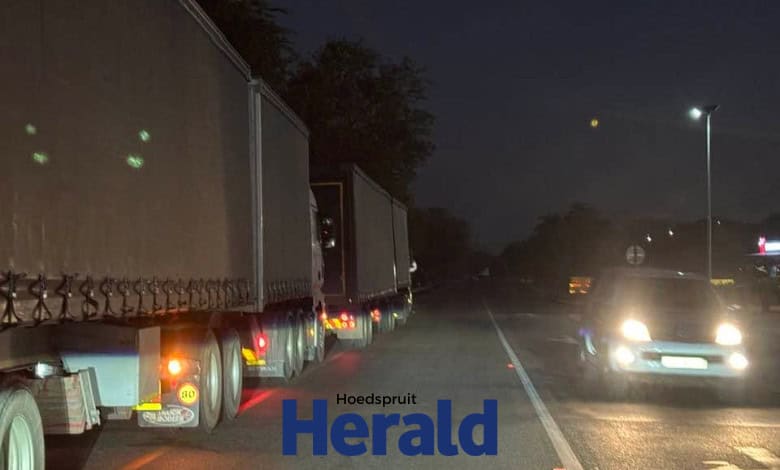
HOEDSPRUIT – The issue of trucks stopping and overnighting in and around Hoedspruit continues to frustrate residents despite efforts by authorities, community organisations and mining companies to address the problem.
Resident raises concern over R40 truck parking
Recent photographs shared by a concerned resident show trucks parked in a designated no-stopping zone on the R40 just south of the four-way stop at Lebamba, opposite the Total garage. According to the resident, the incident occurred at approximately 17:45 and created a dangerous situation for motorists.
The parked trucks reportedly forced southbound traffic into the centre of the road and partially into the northbound lane to pass safely.
“The southbound traffic was forced into the middle of the road and across into the northbound lane. This has become a joke. These trucks are dangerous to us locals. Something has to be done about this,” the resident said.
Ongoing concerns despite previous interventions
The latest complaint comes nearly two years after a coordinated effort was launched to tackle truck-related problems in Hoedspruit.
In June 2024, Hoedspruit Farm and Town Watch (HFTW) reported progress in reducing the number of speeding trucks travelling through town, attributing much of the success to cooperation from Palabora Mining Company (PMC). At the time, Foskor had started transporting minerals by road to Maputo, adding to truck traffic through the area.
Following discussions with Foskor representatives, HFTW shared video evidence of trucks speeding through town and overnighting in residential and commercial areas. The company reportedly took the concerns seriously and agreed to work with stakeholders to find solutions.
Klaserie Truck Stop introduced as alternative facility
As part of those efforts, a dedicated truck facility, the Klaserie Truck Stop, was opened at the former Klaserie One Stop. The facility was established to provide a safe and convenient alternative for long-haul truck drivers travelling between the mines in Phalaborwa and destinations such as Maputo and Mbombela.
Information distributed to drivers stated that trucks may not stop in Hoedspruit or surrounding areas except to comply with traffic regulations or to deliver goods. The notice also prohibited trucks from overnighting anywhere in Hoedspruit and along the R40.
Drivers were directed to the Klaserie Truck Stop, situated approximately 400m from the R40/R531 Klaserie junction.
The facility offers security, showers and toilets, a restaurant and takeaway services, resting areas and refuse disposal facilities. At the time, diesel services were expected to be introduced shortly.
Transport operators and authorities respond
The notice further warned that Maruleng Local Municipal and provincial traffic officials would monitor compliance and take the necessary action against offenders.
Klaserie Truck Stop owner JP Claasen previously said the facility was developed to address the lack of suitable overnight facilities for truck drivers.
“Drivers also have to find a safe place to overnight. Refuge is often found in town as it is considered safe to park. Unfortunately, there is minimal space to accommodate trucks in town overnight, or even to stop for refreshments,” Claasen said at the time.