Sandro also known as Alex leaves a mark in sculpting
Former Hoedspruit resident, Alex Trapani, says his sculptures are inspired by his upbringing where he spent many hours climbing mountains, playing in rivers, forests and open fields.

Sandro Trapani (also known as Alex Trapani) says there are three sides to him. “I am Sandro Trapani, the portrait sculptor who makes bust and figurative sculptures that speak of heritage, history, and the ancients. I am also Alex Trapani who makes conceptually engaging artwork that is experimental and speaks to ideas around human nature, behaviour, and how this all plays out in the art arena.
“And I am Trapani Sculpture Studios – a sculpture service business that is equipped to build any sculpture, from design to delivery, for any client that has specific requirements.” Trapani currently lives and works in Potchefstroom but is a former Hoedspruit resident where his mother still lives. “Our biggest client base is made up of other artists needing sculptures made to their specifications.”

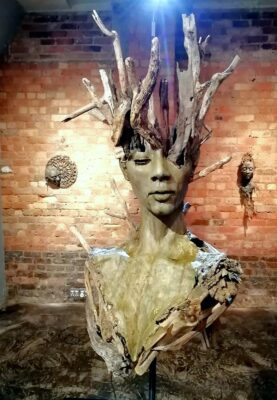
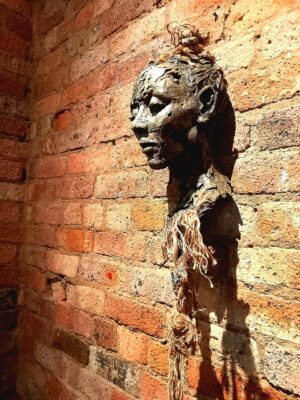
Sandro is not the only sculptor on this team, as different client expectations mean adopting specific skills. Other sculptors are hired who have the right expertise for the right job requirements. “By setting up my practice in this way I get to do everything I love to do, except painting. I love painting too, but there is very little time for it,” he said. Part of that journey involves reflecting on his past and heritage.
In his own family history information thereof is built on speculation, as his father was unclear about his own ancestry and heritage. “It is in this fact that the mysterious becomes relevant and engaging.
New narratives are built on old information,” he said. “I have been making art since I was very young. Even as young as 5-years-old I was experimenting and playing with clay, and soon after I was playing in my mom’s pottery studio.
Also read: Wildlife artist Young returns to the Lowveld
“I got to go to the National School of Arts and went on to study art at UJ. I have wanted to be an artist as far back as I can remember. The portraits and sculptures I make are usually inspired by the things I love most. “Wildlife, the bush, and nature are some of my favourite things in the world. I spent many hours as a kid climbing mountains,and playing in rivers, forests, and open fields. I was privileged enough to grow up in Mpumalanga along the Elands River.
My exposure to nature from an early age is a great source of inspiration,” he added. “The recollection of people, places and moments can be nostalgic, even melancholic, and are at times fleeting. These moments can become undefinable.
Remembering them accurately often leads to memory overlap. This overlap can be subtle, and as a result, the narratives may change, adjusted to suit the way in which the memory is preserved.
Over time, there is a sense of the historical but a loss of milieu. The portraits resonate with a personal experience not quite fully recalled. They become archives of collected or reclaimed memories that do not have to narrate a single event.
A single sculpture, however, can represent multiple experiences, moments, and places,” said Trapani. The portraits Trapani creates are nonspecific, meaning that they are created from many sources and do not represent a single individual.
Rather they are accumulations of many different recollections and references– a collection of beautiful but somewhat illusive memories.“I plan to keep making the works I make and hope to be able to focus fully on creating wonderful pieces that inspire people’s love for nature.
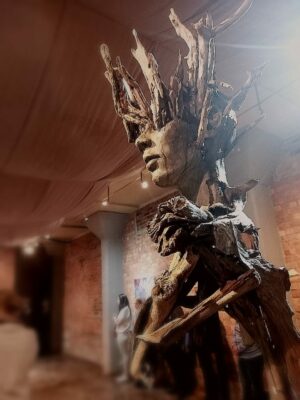
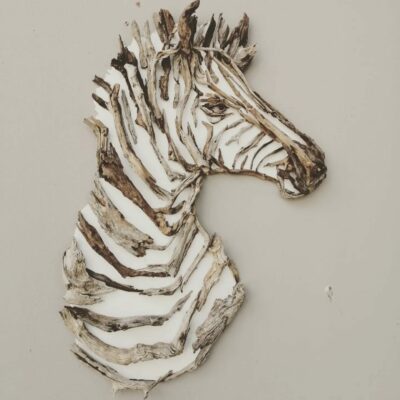
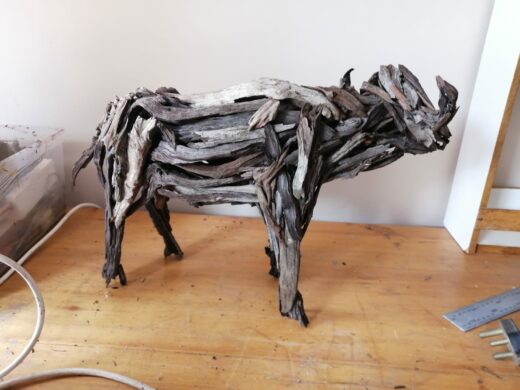
I love the idea that when you look at an artwork, even though you might quickly recognise that it is a buffalo, a zebra, or a person, every time you see the piece you see something that you never noticed before, just like if you went on your regular morning walk you might look up and see that the sky looks different today than yesterday.
We don’t always have to go far to experience new and wonderous things. They are often just hidden in every day,” he added. For his master’s degree, Trapani’s research focused on how, as an artist, thinking about behaviour influences how we alter behaviour, and therefore behaviour alters our thinking.
“The cyclical nature thereof becomes absurd and obsessive. The absurd is woven into the fabric of human existence, and the nature of art.
In a more general sense, over the last two and a half decades, Trapani has explored the Sisyphean nature of the Search for Truth, and how his own truth becomes less and less obtainable, or further obscured, along this journey of discovery. “There is a sense of sadness present in the portraits. Bar the obvious expressions of Pulchra Mors and Tragodia, sorrow is suggested through the familiar-yet-less identifiable elements introduced, such as ancient architecture – or due to the fractured, “dissolving” surfaces presented.
The imagery alludes to the loss of accurately preserved memories or heritage. The legitimacy of the past is fading away and a sense of longing comes to the fore. That is difficult to pinpoint, but from a very early age I had a love for sculpture. I make a lot of portrait sculptures in clay and other mixed media, and the wooden sculptures felt like a natural experimental material.
When I was teaching art we came up with a project to use reclaimed wood to build a monument to conservation awareness and that really sparked ideas for me too,” he concluded.