
Mobile units launched to increase testing capacity to identify Covid-19 cases
People will be tested in communities with the assistance of community health workers and contact tracers. A list of priority districts will be finalised by MECs.
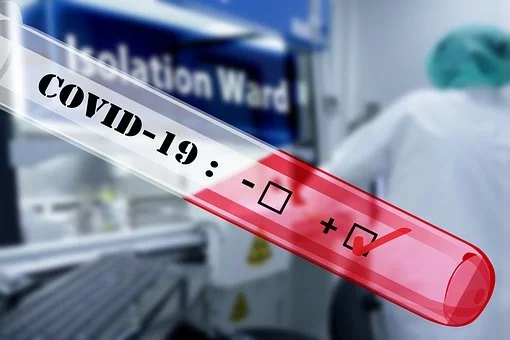
Sixty new Covid-19 mobile sampling and testing units were launched by health minister, Zweli Mkhize yesterday (April 1).
This is in addition to seven units already in use. All the vehicles are equipped with laboratories. The current capacity of laboratories has been up to 5,000 tests in 24 hours countywide.
According to the minister, by next week the aim is to push capacity to about 30,000 tests in 24 hours by using about 180 testing sites consisting of 320 testing units. Mobile units will also be used for rapid testing when when kits become available.
People will be tested in communities with the assistance of community health workers and contact tracers. A list of priority districts will be finalised by MECs.
With Covid-19 having risen to 1,380 positive cases in the country, the virus has moved from being traveller-based to local transmission. The department of health is concerned the lockdown will not be enough, thus the need for Covid-19 cases to be identified urgently.
To achieve increased case identification, president Cyril Ramaphosa announced the Covid-19 home visit programme.
It includes the deployment of community health care workers for door-to-door household screening. Each province has been requested to start working on this strategy by deploying their own community health care workers and professionals with appropriate personal protective equipment for those working on the mobile units.
“The CSIR and Right to Care have assisted us in mapping the most vulnerable in the population. Some 993 priority wards have been identified by using the social vulnerability index. If we are focused, we can collectively defeat Covid-19,” said Minister Mkhize.
There has also been a slower increase in positive cases in the past few days. The reduction in rate of increase is due to closing of the borders, enforcing quarantine of inbound travellers and stopping of large gatherings and overcrowded transport routes. However, he cautioned that more vigilance is needed.
“Internal transmission has started and it may spread silently as people with less means and those with mild symptoms in poor areas may not seek assistance immediately.”
The minister also reiterated that the testing criteria of patients with symptoms is reactive and restrictive. As a result, the department does not have a true picture of the size of the problem.
“We need to test hundreds of thousands of the population to get a better picture to refine containment strategies. Some 47,000 tests have been done so far, it is still far too low because of the nature of our country, the population size and the disease.”
Minister Mkhize called on community leaders, volunteers in communities and civil society to support the campaign against Covid-19, to spread the message and to teach people to take the lockdown measures more seriously.
* Notice: Coronavirus reporting at Caxton Local Media aims to combat fake news.
Dear reader,
As your local news provider, we have the duty of keeping you factually informed on Covid-19 developments. As you may have noticed, mis- and disinformation (also known as “fake news”) is circulating online. Caxton Local Media is determined to filter through the masses of information doing the rounds and to separate truth from untruth in order to keep you adequately informed. Local newsrooms follow a strict pre-publication fact-checking protocol. A national task team has been established to assist in bringing you credible news reports on Covid-19.
Readers with any comments or queries may contact National Group Editor Irma Green (irma@caxton.co.za) or Legal Adviser Helene Eloff (helene@caxton.co.za).
Read original story on southcoastherald.co.za

