Pressure mounts as Road Accident Fund system struggles
The Standing Committee on Public Accounts says the Road Accident Fund is helping fewer victims despite rising costs. The Association for the Protection of Road Accident Victims (APAV) warn that thousands of claimants are still awaiting compensation and suggests a national settlement centre to help reduce the growing backlog while reform continues.

The Road Accident Fund (RAF) is increasingly spending more money but, at the same time, helping fewer South Africans, while thousands of claimants are still awaiting compensation owed to them by law.
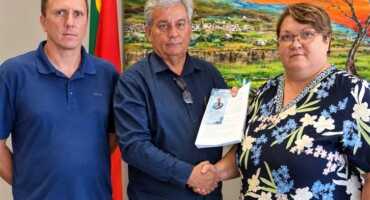
This is the message that the Association for the Protection of Road Accident Victims (APRAV) highlighted during a briefing at the National Press Club in Pretoria.
The organisation discussed the findings outlined by the Chair of the Standing Committee on Public Accounts (SKOOR), Songezo Zibi, in a recent committee report and meeting with stakeholders in the forensic industry, particularly in Irene.
According to the association, the findings pointed out an institution under serious pressure, struggling to fulfil its legal mandate.
In the past, the fund completed more than 400 000 claims per year.
Currently, it is alleged that only about 70 000 claims are being completed per year, although the average cost per settled claim increased more than 70% within three to four years.
APRAV Chair Ngoako Mohlaloga said, “The system is spending more and more to help fewer people. Every one of those claims has been sitting in the drawer, and each of those numbers represents a person: someone who cannot work and a family who cannot afford medical treatment.”
Mohlaloga also pointed out during the session the consequences of a claim form, which previously required claimants to submit expensive medical reports in advance.
According to him, this requirement possibly excludes thousands of people who cannot afford the costs of such reports.
He added that a judge invited Zibi to observe court proceedings where the RAF did not show up. Zibi could experience firsthand how cases have to be repeatedly postponed.
Mohlaloga pointed out that every postponement of a court case increases the cost of litigation without any benefits to the victims waiting for compensation.
According to Mohlaloga, Zibi described the postponed court case situation as an evil cycle in which claims get stuck in litigation, demand litigation fees and capacity, and the backlog keeps growing while fewer claims are settled.
The vice chairman of APRAV, Pieter de Bruyn, said some victims have been waiting for up to 10 years for compensation due to them.
De Bruyn said although the courts set aside the requirement for the claim form, the prejudice towards people who were turned away at the time has not been corrected yet.
He believes that people who have been excluded through the unlawful claim form, “must get a simple and fair chance to submit their claims again without further administrative obstacles.”
Another source of concern, according to De Bruyn, is the closure of district and satellite offices.
He said it particularly harmed people in rural and remote areas who already have limited access to services and who cannot afford transport or legal representation.
According to De Bruyn, the RAF also suffered significant staff losses, which further impaired its ability to function effectively.
He said SKOOR intends to complete its report by the end of August and present it to Parliament for consideration before the end of September.
“South Africans should then have a better understanding of the steps Parliament is planning to take,” he believes.
In addition to the identified problems, De Bruyn also announced proposals on how immediate relief could be provided to victims while larger reforms take place.
According to him, South Africa ought to focus on three goals: to repair the damage already done, provide immediate relief to waiting time claimants, and to reform the RAF for the long term.
The organisation’s most important proposal was to establish a national settlement centre.
According to De Bruyn, such a centre will not create a new state department or additional bureaucracy, but rather a practical mechanism to settle claims quicker that are already ready for settlement.
“The settlement centre will not replace the RAF or the courts. It still reserves the right to contest a claim that it actually disputes, and any real difference goes to court. This simply brings people who can really make a decision together in a room to do what RAF initially set out to do,” he said.
The proposed process entails identifying suitable claims, combining existing legal, medical and financial documentation where possible, and ensuring that every case is handled by a team of experienced claims experts and RAF representatives with decision-making authority. Where necessary, legal, medical or actuarial expertise can be called upon.
According to him, claims agreed upon must be paid within a reasonable time, while cases where there is still a dispute must be referred back to the ordinary court procedure.
De Bruyn suggested that the centre initially start as a pilot project with claims that are already on the court rolls or close to settlement.
While he believes that the proposed settling centre can bring immediate relief without legislative changes, he emphasised that sustainable reform is still essential.
“For a victim, reform is not a report, a new committee or another promise. It is a claim that is judged fairly, a settlement reached, money being paid out, lasting treatment, and a family that can finally move on again,” he said.
Do you have more information about the story?
Please send us an email to bennittb@rekord.co.za or phone us on 083 625 4114.
For free breaking and community news, visit Rekord’s websites: Rekord East
For more news and interesting articles, like Rekord on Facebook, follow us on Twitter or Instagram or TikTok or WhatsApp Channel