Reckless and rampant illegal electricity re-connections, as well as meter tampering, were rooted out after the Lekwa Municipality fined businesses around town to the total amount of R1.7-mil, with only three streets covered thus far.
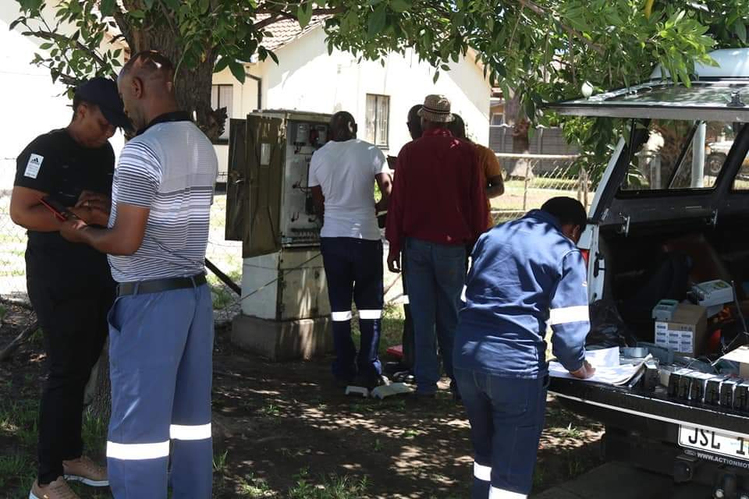
The municipality embarked on an inspection programme early in October and discovered businesses that had bypassed electricity meters.
A total of R700 000 have been paid already and 15 businesses transgressed.
Lekwa was recently identified as one of the distressed municipalities and there was an urgent need to come up with immediate interventions, as well as plans to curb electricity theft and raise more revenue.

They had recently adjusted their budget and set a target of a 90 per cent collection rate to fund service delivery operations and ensuring that all payment obligations are met, without failure.
Their interventions included replacement and installation of electricity meters, daily inspections of all electricity meters and consistent enforcement of credit control through cut-offs.
This is an ongoing programme.
The inspection team consists of various departments such as budget and treasury, technical services, planning and economic development, the municipal manager’s office and corporate services.
The mayor, Mr Linda Dhlamini, made alarming statistics public to the Standerton Advertiser during an informal talk on 15 November.
“A total of 15 000 of the 27 000 pre-paid customers are not buying electricity,” Mr Dhlamini said,

Lekwa also made good on their promise to embark on door-to-door electricity inspection due to persistent power outages in July this year.
Disconnections took place from municipal electric poles in Ext 6, Vodacom, Mahala Park and other sections.
The work was carried out in terms of Section 101 of the Municipal Systems Act of 2000.
The communications manager of Lekwa, Ms Thobeka Mtshiselwa, said on Friday, 22 November that some businesses have been caught red-handed.
“At some, the electricity was illegally connected the next day with the assistance of a local electrical company,” Ms Mtshiselwa added. She supplied the newspaper with information on the applicable fees for domestic consumers and industrial consumers.
As regards domestic consumers, a fine for a first offence is R12 938, R25,875 for a second and R38,813 for a third.
Businesses are fined R38 813 for a first offence, R64 689 for a second and R103 502 for a third.
“These illegal operations impact on the Eskom-account,” she concluded.
“This initiative tries to ensure people pay for the services they use.”