Stakeholders plead with SANRAL to consider local small businesses in the Secunda area
A plea was also made by stakeholders to SANRAL, to first consider local businesses to be appointed as the main contractors for projects.

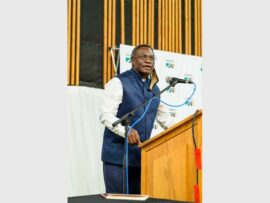
SANRAL (The South African National Roads Agency SOC Limited) is willing to respond to the needs and expectations of stakeholders in Mpumalanga, according to Themba Mhambi, SANRAL’s board chairperson.
The “Taking Sanral to the people” stakeholder engagement session was recently held at the Lillian Ngoyi Centre in Secunda.
In line with SANRAL’s fourth pillar of stakeholder relations, this engagement was required for stakeholders to be consulted about all project-related activities that affect communities.
Stakeholders voiced concerns during the session of formal training for small businesses before bidding for projects to ensure that they have an improved chance of procuring the opportunities.
A plea was also made by stakeholders to SANRAL, to first consider local businesses to be appointed as the main contractors for projects.
Stakeholders said there were far more capable businesses in the area, and only outsource where they don’t meet the requirements.
Mbambi emphasised that all SANRAL projects should have a direct impact on the communities in the form of jobs, community development and skills training for small, medium and micro enterprises (SMMEs).
“SANRAL is committed to ensuring that its transformation policy is understood and relevant to the communities in which its projects are operating and ensure that all SMMEs in the affected local municipality are afforded an equal opportunity to tender for projects in the area,” said Mbambi.
SANRAL’s Horizon 2030 strategy is a proactive response to deliver on the agency’s vision of a national transport system that will ensure a better South Africa for all, according to Mbambi.
It sets out in detail the strategic objectives and the critical enablers that will make it possible for the roads agency to remain a respected, dynamic and responsive organisation over the years to come.
GMM’s executive mayor, Nhlakanipho Zuma, welcomed the visit by the roads agency as it will solidify the partnership between the two entities and will help in advancing the link between road infrastructure and the local communities.
“We are a diverse municipality which accommodates all forms of nations. We are an economy with high factors of industrialisation which seeks to attract an average of 3,3 per cent of population growth per year,” said Zuma.
He also highlighted the negative impact of the Covid-19 pandemic on the local economy.
“While we have a population growth of 3,3 per cent, we are currently sitting at one per cent growth of the economy which indicates the state of the livelihoods of our people.
“Once you have your economic growth sitting beneath the population growth, it means that you are reproducing over elements of poverty and unemployment.
“Therefore, we appreciate any initiative that will come and advance us,” said Zuma.
GMM boasts about 998km of road infrastructure: 505km are tarred roads and 398km of gravel roads.
GMM says it is struggling to maintain these roads to the acceptable standards required.
GMM is also home to one of the country’s national key points such as the Sasol plant, which attracts lots of heavy trucks to the area.
This means that the road infrastructure requires maintenance frequently.
SANRAL projects in GMM manage about 2 400km of road infrastructure across the province and have planned a couple of projects throughout the municipality.
Some of the key projects earmarked for construction, upgrading and maintenance include:
• Upgrading of the R573 Moloto Road (Thebisile Hani) – the first phase of the project has been completed. More phases will be rolled out in 2022.
• Resurfacing of national route N17 section 02 and section 03 from R29/Springs (km 38.7) to R50/Leandra i/c (km 7.9)
• Resurfacing of national road R33 section 6 from Mkhondo (km 0.0) to Amsterdam (km 34.2)
• Planned repairs of various structures on national route N12.
These projects are in Victor Khanye Local Municipality, and will be split into three parts:
– repairs of various structures on national route N12 between Gillooly’s Interchange and Delmas Interchange,
– repair and resurfacing of national route N12 section 20 between Delmas and Petroport, and
– repair and resurfacing of national route N12 section 20 between Petroport to Ogies.
The duration of these projects ranges from 10 to 15 months, and are estimated to cost between R40m to R50m each.
Opportunities for subcontracting in these projects include concrete pavement repair, drainage and structures improvements, road furniture (road signs, guardrails) and road markings.
Routine Road Maintenance (RRM)
There is currently 10 routine road maintenance (RRM) projects servicing the province.
Two more will be awarded before March 31.
There is a special maintenance project along the N17 Section 5 from Chrissiesmeer to km85 within the Msukaligwa and Chief Albert Luthuli local municipalities respectively and the project will be completed by March 31, 2023.
SANRAL has about 2 500km of road network where maintenance is being done through RRM projects in the province.
Maintenance of the road is an ongoing exercise and is the only consistent activity within the SANRAL road network that is critical in creating jobs for local communities and subcontracting opportunities for targeted businesses on an ongoing basis.
SANRAL will continue to consult with all key stakeholders and partner with provincial and government entities to uplift communities and grow the economy to guarantee a better life for all.