
Renewable energy specialisation skills development programme launched in Standerton
The programme aims to equip students and lecturers from Gert Sibande, Nkangala, and Ehlanzeni with the skills and knowledge to attain a national certificate in Electrical Engineering: Renewable Energy, NQF Level 3.
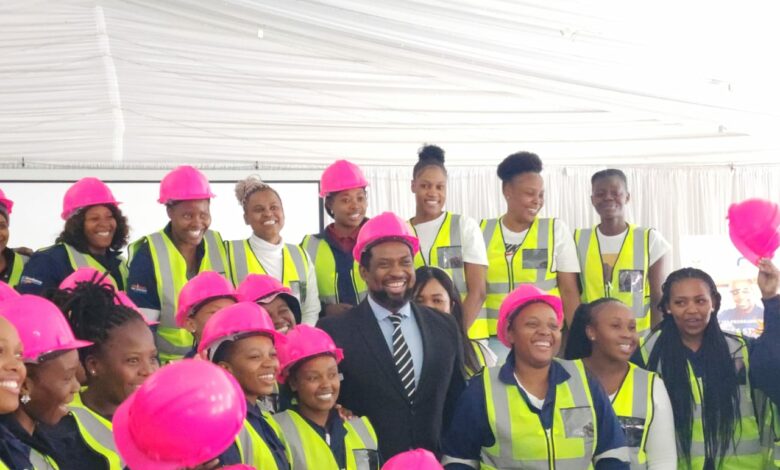
A guest house in Standerton hosted the launch of a renewable energy specialisation skills development programme on April 19.
The Energy and Water Sector Education and Training Authority (EWSETA) collaborated with Power Africa, a US government initiative coordinated by USAID.
Power Africa convenes the collective resources of the private sector, international development organisations and governments globally to increase energy access and end energy poverty in sub-Saharan Africa.
A red carpet awaited the dignitaries, who included the deputy minister of Higher Education and Training, Buti Manamela, the Premier of Mpumalanga Refilwe Mtshweni-Tsipane, the chairperson of the Gert Sibande TVET College Dr Bongani Mwale, college principal Molifi Mabe, along with councillors and officials from Power Africa, EWSETA and USAID.
Candice Moodley, an executive from EWSETA and the programme director in charge of the introductions, welcomed attendees, and everybody stood up for the singing of Nkosi Sikelel’ iAfrika.
The hall was full of young women who donned pink hard hats.
According to a statement by EWSETA, the programme was designed to develop skills in renewable energy for 100 unemployed women and 15 Technical and Vocational Education and Training (TVET) lecturers in Mpumalanga.
It aims to equip the students and lecturers from Gert Sibande, Nkangala, and Ehlanzeni with the skills and knowledge to attain a national certificate in Electrical Engineering: Renewable Energy, NQF Level 3.
The statement also said the long-term impact would enable Mpumalanga’s workforce to meet the demands of the changing economy and create opportunities for inclusive economic participation, especially for women and the youth.
The lecturers’ inclusion is a key component of the programme’s sustainability, enabling them to train future cohorts and adapt to new renewable technologies.
According to the information, the programme offers a chance for investors, financiers, developers, component manufacturers and suppliers who require skilled workers and artisans to take on occupations and entrepreneurial opportunities.
The programme will benefit Mpumalanga’s women in the sector and equip communities to benefit from new green-economy job opportunities.
It also aligns with the Department of Higher Education and Training’s strategic objectives to promote skills development in renewable energy, a critical sector in transitioning towards a more sustainable and inclusive economy and increasing employment opportunities in SA.
On a national level, the burden of inequality, poverty and unemployment in SA is addressed when the collective resources of stakeholders can make a meaningful impact.
As regards Mpumalanga, it is home to many of SA’s coal power stations and coal mining activities. It produces 76% of the total electricity generated in SA from 11 of Eskom’s coal-fired power stations.
Global warming is also addressed, and the goal of the Paris Agreement mentioned to limit global warming to well below 2°C above pre-industrial levels and to pursue efforts to limit the temperature increase even further to 1.5°C.
South Africa, furthermore, is initiating several mitigation measures that will reduce the reliance on coal for electricity generation to achieve its low-carbon development imperatives.
Local skills development in renewable energy will equip communities to benefit from new, green-economy job opportunities.
The lecturers will be equipped with the latest knowledge and skills in renewable energy technologies that will improve the quality of education and training, making it more relevant, up-to-date, and responsive to industry demands.
This will lead to a more productive, competitive, and sustainable economy with a skilled workforce.
According to the statement, strategic partnerships between the government, the private sector and educational institutions are required to build a capable state for an educated, skilled, and capable workforce.
The statement addressed the role of women, saying it is vital to include women in technical and leadership positions in the energy sector to promote gender equality and diversity.
In conclusion, the statement considered the role of TVET colleges and called them critical to the economy’s growth because the technical skills training demanded by industries is provided.