UCT associate professor in oceanography receives 2025 Frontier Research Award
The Oppenheimer Memorial Trust remains committed to supporting researchers with funds and resources, awarding a five-year, R7.5m award to Dr Kayte Altieri for her oceanographic research.
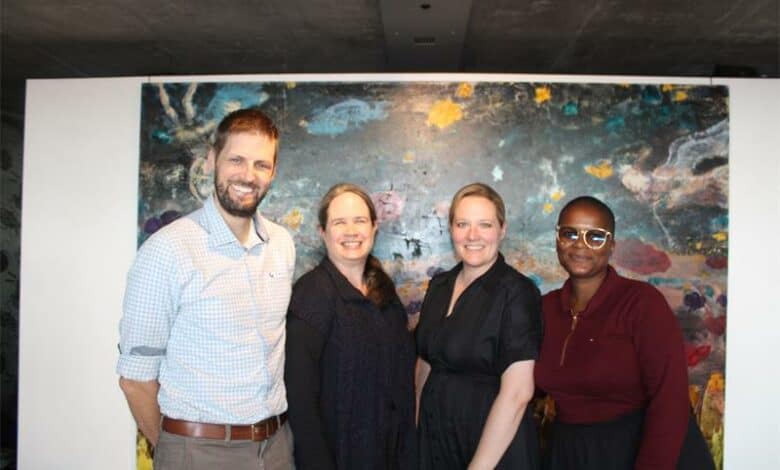
As part of the Oppenheimer Memorial Trust’s (OMT) commitment to rebuild and sustain South Africa’s academic excellence, the trust awarded its second Frontier Research Award to associate professor of oceanography from the University of Cape Town (UCT) Dr Kayte Altieri in a ceremony at Circa Gallery on May 12.
Read more: Thabo Mbeki inspires as young innovators shine at National Youth Entrepreneurship Awards
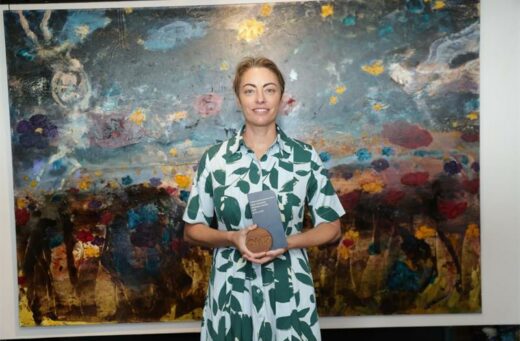
Altieri, an atmospheric chemist by training, was announced as the winner of the five-year, R7.5m prize. Her proposal pipped 175 other entries, which included disciplines such as astrophysics, visual arts, food security, ecology, paediatric immune diseases, and neuroscience, to the award.
The award recognises the efforts of visionary early-to-mid-career researchers, determined to build high-performance research teams engaged in cutting-edge research.
Finding out if air pollution-derived nitrogen improves our oceans’ ability to remove greenhouse gases from the atmosphere, or creates an even worse situation, will be Altieri’s mission.
She explained that the research would be completed over five years. “We will start with observations of the atmosphere and the ocean, to get a sense of what is in the air which is being taken over into the ocean. At some point, we will add a component where we go on an oceanographic research vessel, to do similar types of measurements at sea off the west coast of South Africa.”
Also read: Wanderers Clubs squash team bags five awards at the Joburg Squash Awards evening
She added that she, and other researchers, will keep taking atmospheric measurements, like the ones made on the coast, but the team will also add oceanographic observations, collecting seawater, measuring chemical biology, and conducting experiments where they test how those different ocean communities respond to inputs of atmospheric pollution. These will be done on the ship.
“Based on everything we learn from the observations in the atmosphere and in the ocean, we’ll input all of that into an ocean atmosphere model, which will allow us to quantify this process on a big timing space scale. We can only be on the ship in one season and one time, but we want to understand what’s happening over a much larger time, that’s why we need a numerical model,” elaborated Altieri.
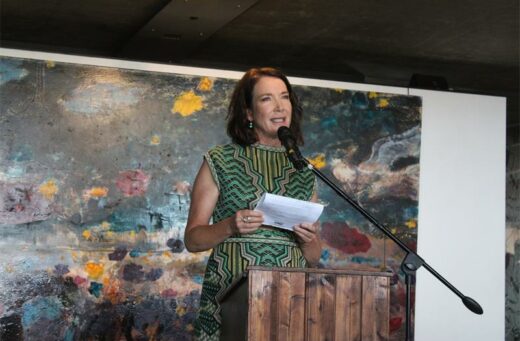
The OMT chairperson, Rebecca Oppenheimer, said: “We must support South African academia with the resources they need to compete globally, contributing knowledge that changes our world for the better.”
Professor Jeff Murugan, the acting deputy vice-chancellor for research and internationalisation at UCT, thanked OMT for its ‘visionary support’ for early-to-mid-career researchers, at a time when science, in particular climate science, is facing challenges.
He pointed to the fact that both New Frontiers Research Awards, to date, have gone to UCT researchers, on the subatomic particle front for Dr James Keaveney, and in the vastness of the ocean for Altieri, their work, indeed, representing diverse research frontiers.
Follow us on our Whatsapp channel, Facebook, X, Instagram and TikTok for the latest updates and inspiration! Have a story idea? We’d love to hear from you – join our WhatsApp group and share your thoughts!
Related article: Kingsmeads learner dances her way to six awards