
WATCH: Racehorse welfare under review as NSPCA and NHA debate reforms
The NSPCA and NHA face off over racehorse welfare as trainers, jockeys and animal advocates share their views on care, ethics and reform.
The welfare of racehorses in SA has become a subject of growing concern, as animal rights advocates and racing professionals debate what it truly means to protect the animals behind the sport.
Following a recent meeting between the National Council of SPCAs (NSPCA) and the National Horseracing Authority (NHA), the issue has sparked renewed national conversation about ethics, enforcement, and the balance between sport and welfare.
At the heart of the debate are long-standing practices, such as using tongue-ties, crops, performance-enhancing substances, and racing underage horses.
The NSPCA argues that these practices cause physical harm and emotional distress to animals, already giving everything to the sport.
NSPCA’s position
According to Jacques Peacock, the NSPCA spokesperson, the organisation’s primary concern is that the racing industry continues to rely on outdated and harmful methods.
“Raced horses often suffer from collapsed lungs, fractured legs and premature deaths,” said Peacock. “Another major concern is the NHA’s reluctance to address these issues and involve the NSPCA in monitoring equine welfare.”
@albertonrecordBehind every champion horse is a dedicated team. Assistant trainer Thomas opens the stable doors to show the daily rhythm of racehorse life.♬ original sound – Alberton Record
Peacock explained that tongue-ties cause discomfort, while performance-enhancing drugs push horses beyond their natural limits and that whipping inflicts pain under the guise of motivation.
“Early racing also places strain on young horses before their skeletons have fully developed, leading to long-term injury and suffering,” he said.
The NSPCA insists that when the Animals Protection Act is violated, those responsible must face criminal charges rather than internal disciplinary action.

“Minor internal fines and suspensions do not reflect the gravity of the harm inflicted. These are criminal matters, and mere penalties are not sufficient,” Peacock said.
He added that the NSPCA has faced serious challenges in holding the industry accountable.
“To date, we have largely been excluded from contributing to racing standards. The belief that the industry is well-regulated persists, even though internal politics in the NHA prevent its own rules from being enforced.”
Despite these frustrations, the NSPCA remains open to engagement and reform.
Peacock said the organisation is waiting for tangible progress following the NHA’s commitment to include it in future rule consultations.
“Our position remains firm. Stricter penalties must be enforced for crop overuse. Harmful devices like tongue-ties must be banned. Horses must not be raced before skeletal maturity. Welfare must take priority over commercial gain.”
@albertonrecordTongue ties, crops, and rule changes, two experts, two opinions. Watch till the end!♬ original sound – Alberton Record
He added that lifetime care is essential.
“Horses are sentient beings capable of suffering and experiencing pain. They deserve welfare beyond the track.”
The NSPCA’s public campaign, #ReinInThePain, continues to urge South Africans to support reform by signing a petition at nspca.co.za/reininthepain and reporting cruelty.
NHA’s response
The NHA has defended its record and independence.
Dr Matthew Bawden, the NHA chief veterinary surgeon, said the organisation is a non-profit regulatory body that safeguards the integrity of racing and the welfare of horses.
“Business interests do not influence our mandate. Our independence allows us to make difficult decisions that may not always align with short-term commercial pressures,” Bawden said.
Responding to criticism that the NHA does not open criminal cases, Bawden said global internal regulatory frameworks govern horse racing.
“Our disciplinary system allows us to act swiftly and apply specialist veterinary knowledge. Criminal charges are not the primary tool for regulating racing. Our framework ensures accountability and protection in real time.”
He explained that welfare monitoring is constant.
“On race days, we have full-time veterinarians present, who are part of international specialist groups. They oversee everything from pre-race checks to post-race examinations. Horses are tested for prohibited substances and monitored at training centres through unannounced visits.”
Regarding controversial practices, Bawden said tongue-ties, when applied correctly, are recognised aids that improve safety and breathing for some horses.
“They prevent horses from getting their tongues over the bit, helping them breathe easier and remain under control,” he said.
On crops, he said SA had already limited the number of allowed strikes and introduced guidelines to ensure it is used only for safety and correction.
“The crops we use today are lightweight and padded. They produce a sound that guides the horse rather than inflicting pain. We will continue to review our rules in line with global standards,” Bawden said.
He added that welfare and commercial viability are linked.
“Without proper welfare, there is no sport. Welfare is central to every decision we make.”
Voices from the track
At the Turffontein Racecourse, where many of these rules come to life, the people who work closest with the horses shared their viewpoints.
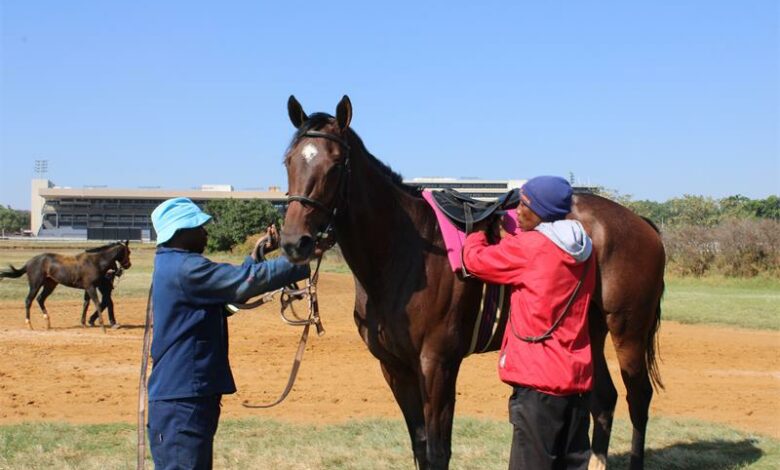
Thomas van Rensburg, an assistant horse trainer, described a typical morning.

“We go to the stables first to check each horse. We take their temperature and ensure they are healthy before training. The grooms replace the water and prepares clean feed. We take care of them like family.”
On the controversial use of tongue-ties, Van Rensburg explained, “When the horse cannot breathe, it makes a noise during the race. The tongue-tie helps keep the tongue in place. I don’t see anything wrong with it. Changing the rules might affect the horses because they are already used to this system.”
Jockey Gavin Lerena believes the crop and tongue-ties have their place in racing.
“Some horses need a tongue-tie because they can get their tongue over the bit and choke. The crop is primarily for guidance. Our crops are soft and make a noise more than anything. They don’t hurt the horse.“I love horses. Without them, I am nothing. I respect them and give them love,” he said.
Lerena added that the rules should change.
@albertonrecordMeet the hands behind the horses, grooms like this keep every champion race-ready!
“The NHA constitution is very much in the past. We are in 2025, now, and a lot needs to change.”
Another jockey, Nhlapho Loui, shared a similar sentiment about respect for horses.
“You never use a tongue-tie for no reason. It depends on the horse. The crop is there to correct, not to abuse. It is soft inside and mostly makes a sound.”
He said that welfare begins long before race day.
“Everything starts from home. You ensure the horse is healthy and ready. If something feels wrong, you scratch the horse. You do not take chances.”
He believes the SA racing rules are fair compared to those in other countries.
“In some places, there are no limits on crop use. Here, at least, we have rules. It depends on how people apply them.”
Searching for common ground
The NSPCA and NHA agree on one thing: Horses deserve care, respect, and protection. Yet, their visions of how to achieve that remain divided.

The NSPCA continues to demand legal accountability and the end of harmful traditions. However, the NHA maintains that it is already meeting international standards and that welfare is central to its mandate.
Between these two sides stand the trainers, grooms and jockeys, who spend their lives with the horses.
Their stories reflect the deep connection between humans and animals, as well as the difficulties in reforming a sport built on long-standing traditions.
Whether through new legislation, industry reform or public pressure, the future of SA horse racing might depend on finding a balance where performance and compassion can coexist.