Alberton commentator joins Dakar broadcast team
Alberton resident Matt Smith was invited to join the global broadcast team at Dakar 2026, marking a major milestone for the voice of South African Rally Raid.
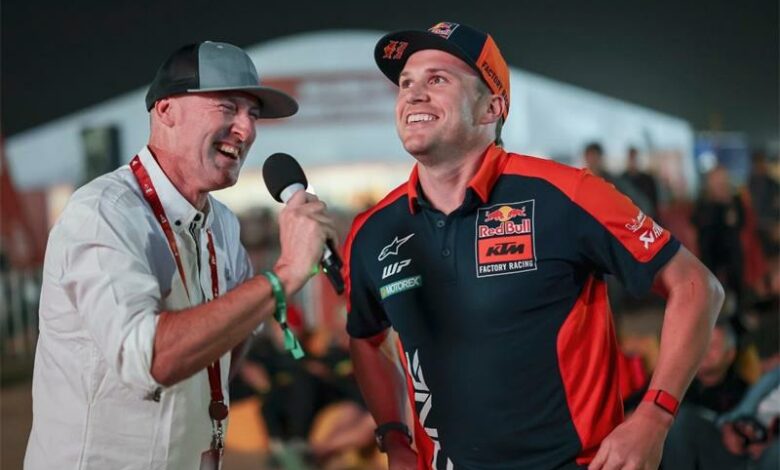
Although he has only called Alberton home for the past six months, Matt Smith’s voice has travelled far beyond the town’s borders, all the way to the world’s toughest and most prestigious motorsport event, the Dakar Rally.
The Amaury Sport Organisation (ASO) invited Smith, widely recognised as the voice of South African Rally Raid, to join the global broadcast team for Dakar 2026.
“After more than twenty years, this became the defining moment of my career.
“I genuinely thought I’d done something wrong,” Smith recalls the moment when a senior ASO official asked to speak to him after the South African Safari Rally, part of the World Rally Raid Championship.
“Instead, he told me I had done a good job and asked if I would consider doing Dakar. I said yes immediately, and if I’m honest, I probably burst into tears.”
A life in racing
Smith’s journey into motorsport began long before television commentary.
“I’ve been a racer since I was a youngster, racing bicycles and go-karts,” he explains.
In 1994, the same year he matriculated, Smith represented South Africa at the Downhill Mountain Bike World Championships in Vail, Colorado, earning his national colours as a junior rider, a highlight that many people may not know about.
He went straight into racing after school, working in the bicycle industry while continuing to compete.
Over the years, his racing achievements included being part of a team that won the 24-hour Superbike Race, where he took the chequered flag, and finishing in the top-five finish in his age category at the Masters Downhill World Championships in Pietermaritzburg in 2013.
From trackside to television
His move into media came in 2006 after returning to South Africa from the UK.
“I started doing live commentary. Quite quickly after that, I moved from trackside to television, and then it became a 50/50 split in my career,” he says.
Smith has since worked on major international events hosted locally, including World Superbikes at Kyalami and Monster Energy Supercross at Loftus. Each opportunity helped him grow.

“The turning point is always when you’re able to step out of your comfort zone and do bigger, more international, high-profile events,” he says.
Despite the pressures of live broadcasting, he has never considered leaving the field.
“It’s an amazing world that I live in. There was never a chance I would leave. I just wanted to continue and get better and better.”
Nothing prepares you for Dakar
Even with years of experience, the Dakar proved to be unlike anything else.
“The bivouac is a city, about 3 000 people, stretching roughly 3km long. You pack it up, move it and rebuild it every few days,” he explains.
Working days began before sunrise and often ended well after dark.
Smith delivered live television commentary, hosted podium ceremonies, filmed social media content, and contributed to broadcast production, all while operating in extreme heat and under constant pressure.
“You’re not allowed to show that you’re tired. You’re away from home, away from routines, away from family, and you still have to deliver energy, accuracy, and clarity every day.”
Preparation, he says, is key.
“My process is research – pronunciations, backgrounds, vehicles, and new technology. I don’t want to get it wrong. Confidence comes from preparation, and energy comes from confidence.”
That preparation was tested on the final day of Dakar 2026, when the 8 000km rally winner was defined by two seconds, the closest finish in the event’s history.
“Standing on that stage, seeing elation on one side and devastation on the other, was one of the hardest moments I have ever had behind the mic.”
Flying the South African flag
For Smith, representing South Africa on the global stage was deeply meaningful.

“South Africa produces incredible drivers and navigators, but also engineers, technicians, officials and media professionals. Dakar showed that our expertise travels.”
He points out that an important portion of the vehicles competing internationally are developed and manufactured locally, with South African engineering playing a major role in the championship’s competitiveness.
After 20 years in motorsport media, Dakar marked what he calls a personal peak.
“Dakar 2026 was life-changing.”
Returning home came with what he describes as a Dakar fallout, including exhaustion, illness, and an emotional comedown, but he is already focused on the future and on contributing to the continued growth of South African Rally Raid.
A message to young South Africans
Smith hopes his journey inspires others to consider careers in motorsport beyond driving.
“Not everyone can be Giniel de Villiers or Ross Branch. That’s less than 1% of people in motorsport. But there are hundreds of roles in motorsport, including media, engineering, logistics, and production. Dakar alone had 60 to 70 South African engineers working behind the scenes,” he says.
In one sentence, he describes the experience as life-changing.