
Cataracts: what they are and how to treat them
Springs ophthalmic surgeon Dr Clive Novis discusses the treatment of cataracts.
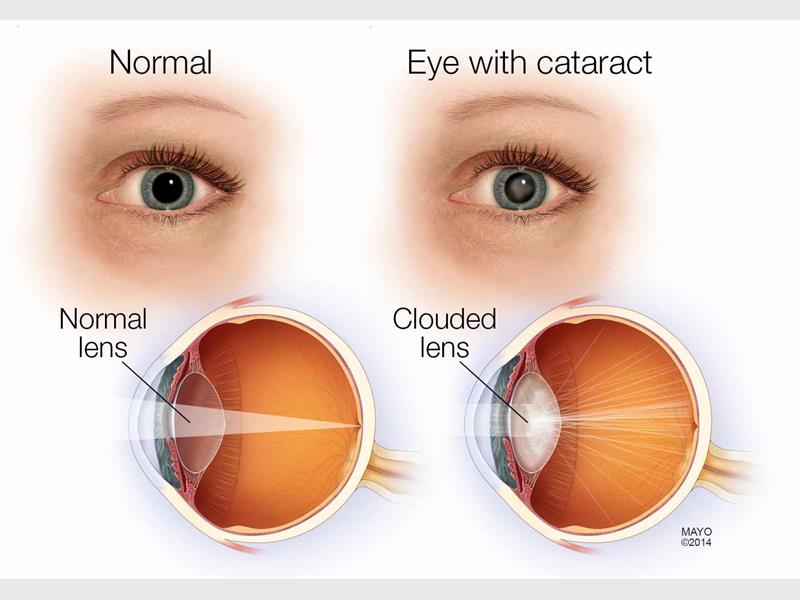
A cataract is an opacification or clouding of the lens inside the eye.
It is not a growth on the outside of the eye, therefore you cannot see it when looking in a mirror.
The cause is not usually known but is seen more frequently in people over 45 years of age.
However, younger people can get cataracts, especially if they suffer from diabetes. The treatment is removal by surgery followed by the implantation of a new lens.
According to Springs ophthalmic surgeon Dr Clive Novis, “With modern surgical techniques, smaller cataracts are easier to remove through a smaller cut.
“Therefore one should not wait for the cataract to become “ripe”, as in the old days.
“The sooner the operation is done the more likely that there will be minimal pain and redness and the better the eye will heal.”
He says this is especially true for people who are short or far-sighted.
Old, large cataracts can often not be removed through small incisions so waiting longer before having the cataract removed means that surgery using the old technique with a large cut and many sutures may need to be done.
The operation takes about 20 to 30 minutes but the whole procedure, including administration and preparation, takes several hours.
Novis advises patients to be prepared to spend up to eight hours at hospital when scheduling a cataract removal.
The patient will, however, no need to stay overnight.
Bring along a book to read and something to eat (unless you are having a general anaesthetic in which case you may not eat).
He adds: “Someone should drive you home from the hospital but if you are having a local anaesthetic then you can drive yourself to and from the hospital if the other eye can see well and if you feel comfortable enough to drive after the surgery.”
Also read: Ocular albinism patients get free testing and glasses
Anaesthetic
Novis says the operation can be done under general or local anaesthetic.
“If you are to have a general anaesthetic, be sure not to eat anything for at least eight hours, however, the prescribed medication must be taken with water.
“Diabetics, however, should not take their insulin or tablets.
“Clear fluids in small a quantity (a cup of black tea with sugar) may be drunk at home on the morning of the operation before you leave for the hospital.”
He advises that you take medications, drops and pumps with you.
Pain
The operation itself is painless.
When the anaesthetic wears off, mild pain or discomfort may occur for the first few days and you may have a sore throat from the anaesthetic.
Novis says severe eye pain after the first day is abnormal and should be reported to your eye specialist.
Improved sight
The eye is usually blurry for a few days after the surgery.
Vision will improve when you receive your new spectacles several weeks after the surgery.
In most cases, your eye specialist will refer you to your optometrist two weeks after the surgery, who will then test your eyes for new glasses.
If you have retinal problems (at the back of the eye behind the cataract) the vision may not be as good as expected.
Retinal problems are common in older patients and Novis explains these problems may not be diagnosed until after the surgery as the cataract blocks the view of the retina.
“Remember that no two eyes, or operations, are exactly the same and the two eyes may not feel or see exactly equally after cataract surgery.”
Also read: South Africa ranked 52nd healthiest and happiest country in the world
After the operation, you are free to do light activities which are comfortable on the eyes, including reading, sewing, watching TV.
Any spectacles that feel comfortable can be worn and sunglasses may be worn outdoors.
You must return to your surgeon for a check-up one to two days after the operation and you should be ready to drive and return to work within two to three days.
Follow us on our social media platforms: