Malaria makes a comeback in SA
South Africans urged to take precautions when travelling to malaria areas.
As the northern parts of South Africa head into their rainy summer season, visitors to areas where malaria is endemic are warned to pay the necessary attention to protecting themselves from the dangerous mosquito-borne illness.
“Unfortunately, we haven’t seen the last of malaria in South Africa, which by all indications is making something of a comeback.
“Over the last year, there have been a number of cases reported from areas where it was previously thought to have been eliminated, such as the Waterberg District in the north-east of Limpopo,” observes Dr Peter Vincent of Netcare Travel Clinics.
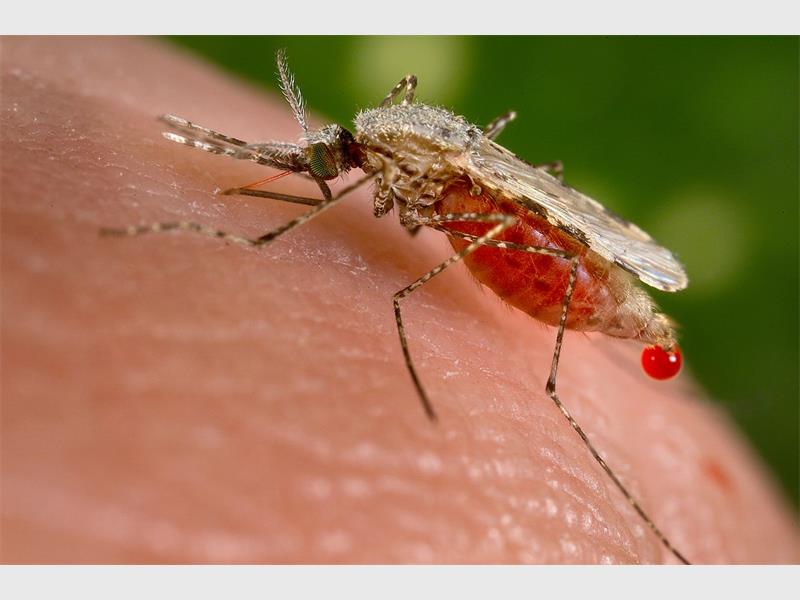
“The rainy summer season in the northern parts of South Africa is associated with an increase in the numbers of malaria-carrying anopheles mosquito and a considerably enhanced risk of contracting the illness within the endemic areas of Southern Africa.
“The risk is highest between September through to the following May, which is considered to be malaria season in South Africa,” adds Vincent.
He warns travellers malaria infection can result in serious complications, particularly if it is not identified and treated at an early stage.
Netcare Travel Clinic are consequently advising travellers to do their homework before visiting areas where malaria may be present.
This is particularly important as the National Institute of Communicable Diseases (NICD) recently proposed expanding the malaria risk areas in and changing the Malaria Risk Map for South Africa for the first time since 2013.
“Make sure you know where these areas are and understand what kinds of precautions may be necessary ahead of your trip.
“Malaria poses a risk in the northern parts of Limpopo, eastern Mpumalanga and northern KwaZulu-Natal, as well as parts of neighbouring countries such as Mozambique, Botswana, Zimbabwe and Namibia,” he says.
The map, which was published in the NICD’s Communicable Diseases Communiqué of September 2018, and was yet to be approved by the Department of Health at the time of publishing, proposes extending the low-risk malaria areas to as far west as Lephalale in Limpopo and medium-risk areas to beyond Musina in the west, and Hoedspruit in the north-west.
The NICD recommends visitors to low-risk areas take precautions against being bitten by mosquitos, but advises additional measures, including the use of appropriate prophylaxis medications, when visiting medium- or high-risk areas in Southern Africa.
“Should any traveller to a malaria area develop flu-like symptoms for up to six months following their trip, they should have an urgent blood test for malaria.
“This is extremely important, as malaria is commonly misdiagnosed as flu and this can have serious, sometimes even fatal, consequences for the individual involved,” warns Vincent.
“When visiting one of the higher risk areas, we recommend you adopt a comprehensive prevention strategy that not only includes the use of a prophylaxis medication prescribed by your doctor, or travel clinic, but to also adopt the necessary measures to avoid being bitten by mosquitos.”
Vincent advises those who are visiting an area where there may be a risk of contracting malaria, to use insect repellents containing DEET on all areas of the skin that are exposed, and to sleep under DEET-impregnated mosquito nets at all times of the year.
He points out, although it may be active throughout the day on overcast days, the malaria-carrying mosquito is usually a dusk to dawn feeder. He advises people to change into long-sleeved shirts and blouses, long trousers and socks as evening approaches.