
Conditions for Eskom debt write-offs for municipalities
The South African Local Government Association (Salga) acknowledged with concern the debt spiral Eskom and municipalities faced.
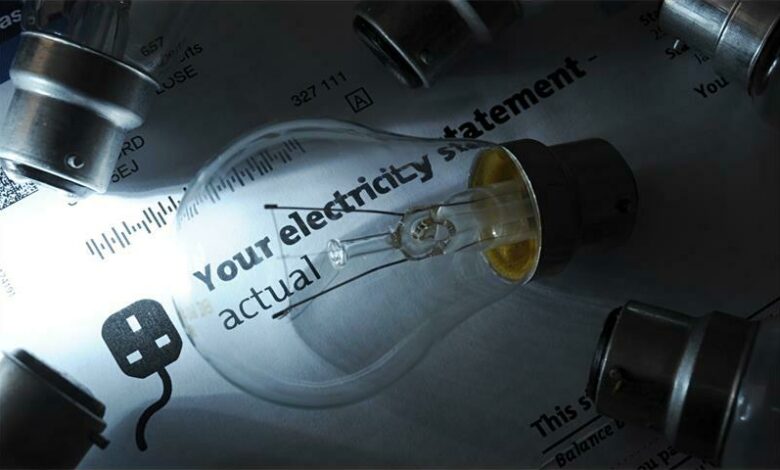
The South African Local Government Association (Salga) acknowledged with concern the debt spiral Eskom and municipalities faced. Municipalities owed Eskom R56.3b as of December 31 last year, while municipalities were owed R306b for the same period.
The debt represents the structural and systemic challenges in the electricity industry, which require a long-lasting solution.
Salga, therefore, welcomed National Treasury’s proposal to give debt relief to municipalities, which Salga had advocated for in intergovernmental relations (IGR) structures.
Within these IGR structures, Salga also proposed solutions to address the underlying structural and systemic challenges in the electricity distribution that contribute to the debt spiral.
The Municipal Debt Relief Circular for the 2023/24 Medium Term Revenue and Expenditure Framework (MTREF) published by the National Treasury on March 31, in terms of the Municipal Finance Management Act (MFMA), is part of a National Treasury package designed to resolve Eskom’s financial and debt crises.
The circular aims to present a solution for the non-payment of electricity consumption by defaulting the municipalities, and in parallel, address the consumer culture of not paying for services.
Without universally restoring debt collection, the debt would immediately accumulate anew.
The circular details the conditions and processes municipalities must follow to qualify for debt relief. These conditions aim to restore financial best practices and improve revenue collection.
They include measures to install prepaid meters, update indigent registers, adopt funded budgets, ring-fence revenue from water and electricity, and exercise credit control mechanisms, among others.
These measures, if successfully implemented, could also free up revenue for those municipalities owing Eskom to maintain their current bulk accounts, pay other creditors’ current accounts and provide a reliable basic level of services.
Salga welcomed the overall National Treasury debt relief package. With some modifications and additional solutions, it is believed the package could contribute to improved performance and prevent debt build-up.
However, municipalities must have sufficient time to meet the conditions, many of which are onerous.
The structures, systems and processes needed to be in place to comply with the conditions will range from three to five years.
Salga proposed that the timeframe of one year, as per the circular, be increased to realistic timeframes to satisfy the prerequisites because some of the conditions could be achieved relatively quickly while others would take much longer.
For example, implementing prepaid meters requires at least a three-year timeframe, considering that capital projects like this require finance, project plans, and supply chain management, including contracting and implementation.
Municipalities must also educate communities about prepaid meters and have communities accept them before being rolled out.
Another condition requires municipalities to develop cost-reflective tariffs, which entails developing reliable data sets and updating the asset register and the cost of supply studies, which take time.
Updating the indigent register is another time-consuming exercise that involves extensive engagement with communities and ensuring that those who qualify for free basic services are correctly registered with the municipality.
Salga acknowledged the importance of these various conditions but appealed for more time for municipalities to prepare themselves appropriately.
Salga appreciated that National Treasury was limiting the interest on overdue bulk accounts to prime plus 2% at 30 days – as opposed to prime plus 5% at 15 days, which was agreed upon in the IGR engagements some years ago but never implemented. It is practises like the high interest charged on overdue accounts and penalties that contribute to the high debt.
Given that some conditions are onerous, Salga proposed that extensive support be available from national and provincial governments to municipalities.
In this regard, support plans should be developed for each municipality applying for debt relief, The plans should outline the support and resources required and the timelines to achieve each condition.
Such support includes updating indigent registers, establishing good billing and revenue management systems, having the necessary mechanisms to implement credit control measures, and the cost of supply studies, among others.
A tool to address affordability was also imperative because unaffordable tariffs would not improve revenue collection.
Thus, it was proposed that Provincial Treasury’s role should expand beyond monitoring compliance to include providing and leveraging support for municipalities. Salga supported conditions like adopting a funded budget and believed the write-off of the high debt due to Eskom would allow municipalities to table funded budgets.
The circular should also consider the impact of load-shedding on municipal revenue and expenditure and the resultant challenges municipalities will face in tabling a funded budget.
In this regard, they proposed that the municipal conditional grant system allows for more flexible conditions whereby municipalities can repair infrastructure damaged or vandalised because of load-shedding and develop new infrastructure that would mitigate the negative effects of load-shedding.
Salga does not support the voluntary revocation by municipalities of their distribution licensee if they cannot meet the debt relief conditions. Municipalities have a constitutional obligation in terms of Part B of Schedule 4 of the Constitution to provide electricity and gas reticulation.
The Municipal Systems Act (MSA) provides a detailed process to follow when considering alternative delivery mechanisms, and an application to voluntarily revoke their distribution license effectively pre-empts the prescripts of the Municipal Systems Act.
These prescripts were designed to ensure sustainable service provision, irrespective of the entity that provides the service.
A better condition is for municipalities to review their electricity distribution delivery mechanism in terms of the MSA, including a feasibility study to provide the service through an external mechanism.
Salga proposed that municipalities be aided to develop incentives for customers to pay, such as debt relief if current accounts are up to date, and to deal with the users of services who cannot be tracked.
Salga believed debt relief should extend to water debt, including the Water Trading Entity and water boards.