Springs campaign raises awareness about human trafficking ahead of World Day
The campaign forms part of activities leading up to World Day Against Trafficking in Persons on July 30.

The Gauteng Department of Social Development, Springs Office hosted a Trafficking in Persons (TIP) Red Flag Day Awareness Campaign near the Springs Taxi Rank in the Eastern Corridor on July 24 to educate the public about the dangers of human trafficking and encourage community vigilance.
The department stated that the campaign formed part of the annual World Day Against Trafficking in Persons, commemorated on July 30, which shines a spotlight on the global fight against human trafficking while raising awareness about recognising warning signs, preventing exploitation, and reporting suspected trafficking cases.
Addressing members of the public, Gauteng Department of Social Development provincial coordinator for Trafficking in Persons, Takalani Sekoba, said the department strategically selected the taxi rank because transport hubs provide an ideal platform to reach thousands of commuters, travellers, and community members every day.
“It is an honour to stand before you today as we commemorate Trafficking in Persons Red Flag Day. Today is not just another awareness campaign; it is a call to action.
“We have gathered here because human trafficking is a serious crime that continues to rob people of their dignity, freedom and future,” said Sekoba.
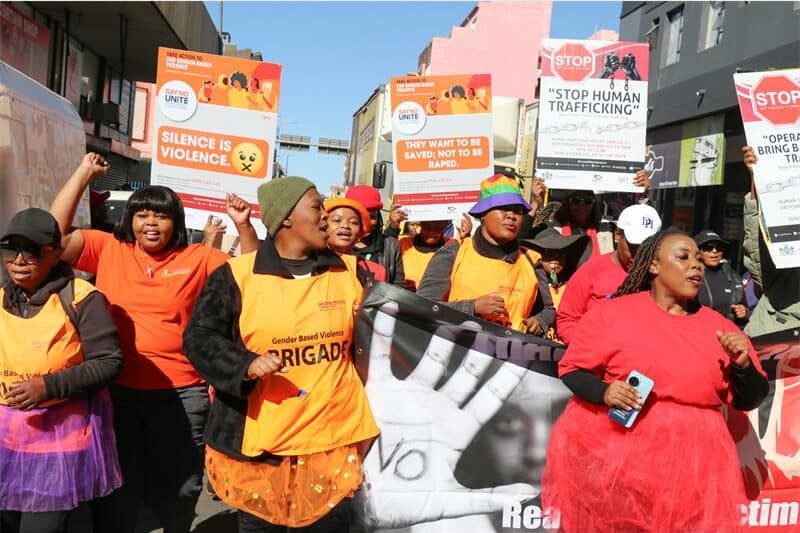
She said this year’s theme, ‘Recognise the Signs, Prevent Trafficking, Protect Lives’, serves as a reminder that every member of society has a role to play in preventing trafficking in persons.
Sekoba explained that trafficking in persons, often described as modern-day slavery, involves the recruitment, transportation, transfer, harbouring or receipt of people through force, coercion, deception, abuse of power or exploitation.
Victims may be exploited for sexual purposes, forced labour, domestic servitude, forced criminal activities, forced begging or even organ removal. She also challenged the misconception that human trafficking only occurs across international borders.
“The truth is that trafficking also occurs within our own communities. Victims can be recruited from schools, taxi ranks, shopping centres, churches, social media platforms and even through people they know and trust,” she said.
Sekoba warned of a growing trend in Gauteng, in which fraudulent overseas employment opportunities are being offered. Victims are promised lucrative jobs in countries such as Thailand, only to be trafficked into scam compounds in Myanmar, where they are forced to commit cybercrime under threats of violence and torture.
ALSO READ: Gauteng Education announces 2027 Grade One and Grade Eight admissions dates
“These cases remind us that trafficking is evolving, and criminals are becoming more sophisticated,” she said.
She urged community members to remain vigilant and recognise common warning signs, including job offers promising unusually high salaries with little or no experience required.
“Recognising these signs can save lives. However, awareness alone is not enough. Prevention begins within our families and communities,” she concluded.
The department explained that it plays a critical role in supporting victims of trafficking. The department shared that once a victim has been identified, it provides psychosocial support, temporary safe accommodation through accredited shelters, medical referrals, family reunification where appropriate, reintegration services and long-term aftercare programmes.
To ensure a coordinated response to trafficking in persons, the department indicated that it works closely with the South African Police Service (SAPS), the Directorate for Priority Crime Investigation (Hawks), the National Prosecuting Authority, the Department of Home Affairs, the Department of Employment and Labour, municipalities and civil society organisations in implementing the Prevention and Combating of Trafficking in Persons Act, 2013 (Act No. 7 of 2013).
As South Africa prepares to observe World Day Against Trafficking in Persons on July 30, the department continues to encourage all residents to remain alert, report suspicious activities, and work together to protect vulnerable individuals from exploitation and abuse.