
Not enough detail
According to the back cover blurb "When Bridget Hilton-Barber got on a train to Grahamstown in 1982 to study journalism at Rhodes University, she had no idea of the brutal drama that would unfold.
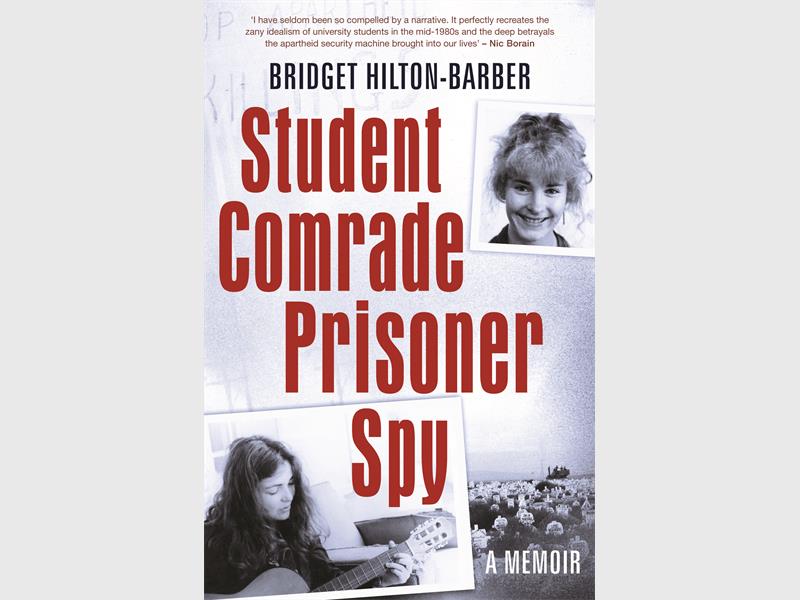
Book: Student Comrade Prisoner Spy
Author: Bridget Hilton-Barber
Reviewed by: Samantha Keogh
Review made possible by: Penguin Random House
While I watched a video of Rhodes students clashing with police last Wednesday, this book landed on my desk.
As a Rhodes graduate I have been watching the development of the #FeesMustFall protests at Rhodes, so it seemed like the perfect time to jump into Bridget Hilton-Barber’s autobiography about her time, and student activism, at Rhodes.
The work of South Africa Police security branch spies during the ’80s has long been whispered about, but it was only with the release of Olivia Forsyth’s book last year that the experience of the spies was openly spoken about.
Here was a perfect opportunity to learn about the experiences of those who suffered at the hands of these spies.
According to the back cover blurb “When Bridget Hilton-Barber got on a train to Grahamstown in 1982 to study journalism at Rhodes University, she had no idea of the brutal drama that would unfold.
“She ended up spending three months in detention without trial, and after her release discovered she had been betrayed by one of her best friends, Olivia Forsyth, who was a spy for the South African security police.”
Tempted by the idea of learning about the political activism at my alma mater and the Eastern Cape at large, through the writing of someone who was an active participant in the war to bring down apartheid, I ran home and read the entire book in one sitting.
Hilton-Barber has a way of weaving her tale so the reader is transported to Grahamstown, Cradock, Port Elizabeth and the areas in-between at the time of great strife in the area, a time when people could simply disappear at the hands of security branch either to be found dead like the Cradock Four or never to be seen again.
Knowing the landscape well, I could see exactly where her life was unfolding and imagine the fear she experienced much of the time with the threat of indefinite detention or torture a possibility at any time.
Her harrowing story of a friend’s house being bombed is extremely vivid, especially the description of the blood and charred pieces of skin on a car seat after the driver had taken one of the occupants to hospital, essentially to die.
However, while there were some very poignant moments, throughout the book I felt that I was being cheated just a little.
Her writing conjures up vivid images but she often stops short of describing a situation fully or giving meaningful details of an event – leaving the reader a little resentful.
I was also hoping to read more about how Forsyth managed to fool all her targets, infiltrating their anti-apartheid movements and becoming a valued member of these movements.
How did she lull them into a false sense of security before betraying them and handing them over to the security police?
Hilton-Barber’s views of this betrayal and its success is hardly touched on.
In fact, the news that Forsyth was a spy and had worked against them is given only one line in the book and the story moves on without touching on how her friends dealt with the betrayal.
Later references to Forsyth and conversations between the two women make it feel like it Hilton-Barber saw it as a trivial event which she almost swept under the rug.
We read about subsequent phone conversations between the two, which seem banal, never does it seem that Hilton-Barber confronted or discussed the betrayal with Forsyth.
For me this betrayal in the midst of a fight to bring about change in the country should have been one of the core themes running through the book rather than a throw away one-liner.
This is, in fact, the meat of what the dust jacket promises.
This is a well written book about the writer’s personal catharsis rather than the quintessential telling of a white student’s experiences as part of the Eastern Cape movement to bring down apartheid.