
Try these new delicious recipes this Easter
These chefs have created recipes suitable for everyone.
The Easter weekend is this weekend, and while this year we may not be able to visit family and friends or host those customary lunches, we can certainly celebrate at home with dishes both traditional and modern.
We asked chefs from the various Capsicum Culinary Studio campuses what they will be preparing, serving and eating this Easter and also asked them to share a recipe.
Chef Eoin Shiell from the Pretoria campus and winner of the Capsicum Chef Lecturer of the Year revealed he would be doing something slightly unusual, but still keep an egg theme and making his easy-to-make and utterly delicious egg ravioli.
“This is a very different, but amazing recipe that can be served family style or plated for a more formal/fancy dish.
“It’s rich and sumptuous without actually being expensive or overly complex and features ingredients most should have at home.
“It can be served as part of a bigger dish or even enjoyed for breakfast,” says Shiell.
Egg Yolk Ravioli by chef Eoin Shiell
Pasta dough
500g cake flour
2 whole eggs
3½ egg yolks
¼ cup warm water
1 tablespoon olive oil
Pinch of salt
Flour for rolling
Water, olive oil and salt for boiling.
Egg yolk filling
Five egg yolks (make sure not to break the yolks)
150ml cream
½ teaspoonn red wine vinegar/sherry/brandy
Touch of finely chopped garlic
Touch of salt
Touch of black pepper
Truffle oil, optional
Egg wash
Piping bag/ziplock bag
Crispy fried basil or sage for plating
Grated or shaved Parmesan for plating
Olive oil for plating
Flaked/rock salt for plating
Also read: On today’s comfort food menu – cheesy potato and herb bake
Method
Pasta dough
Place the flour and salt into a large mixing bowl and create a well in the centre.
In a separate bowl mix the eggs and whisk well.
Tip the eggs into the well and either using your hands or a fork mix the flour into the eggs a little at a time.
At about the midway point add the water and olive oil and mix well till the dough forms a ball.
Once the dough forms a ball, turn out onto your workstation and start kneading.
If it is too wet/sticky add a bit more flour, if too dry add a touch of water to help bind it.
You will have to knead the pasta for about 10 minutes till it forms a smooth, soft ball.
Once formed wrap in plastic wrap and store in the fridge for at least one hour.
Remove the dough from your fridge and let it stand at room temperature for 10 minutes, as this makes it easier to work with.
Cut into two halves. (When not working with the dough always keep it completely covered as it will start to oxidise and dry out.)
Roll the dough out using a floured pasta machine to the third last setting and lay out onto your floured work surface.
Repeat with the other ball of pasta.
It helps to fold the pasta over itself when running the pasta through the machine on the first three settings as this helps strengthen the dough.
If you don’t have a machine you will have to roll the pasta out by hand as thin as possible on a floured surface.
Lay the rolled-out sheets onto your cleaned floured surface, ready to place your filling.
Egg yolk filling
Gently heat your cream and garlic and remove from the heat.
Place into a large bowl and cool in the fridge for 20 minutes.
Remove from the fridge and add the vinegar/sherry/brandy, truffle oil and seasoning.
Whisk the cream till it is at a stiff peak and place into the piping bag.
Seal piping bag well and store in the fridge till ready for use.
Assembling the ravioli
On one sheet of pasta, equally spaced out, pipe your flavoured cream as this is used to stabilise the egg yolk.
Make sure you pipe a circle that is wide and high enough for you to place and stabilise the egg yolk in.
Carefully place the egg yolk in the centre of the cream, keep it in a bowl as it makes it easier to tip out.
Egg wash all around the filling.
Repeat for as many as required, making sure they are equally spaced.
If the yolk breaks you will have to start again.
Carefully lay the other sheet of pasta over the filling and carefully shape and press down.
To remove excess air, find a ring cutter that just fits around the filling and turn over, using the blunt side to press out excess air and help shape the ravioli.
Cut out the ravioli using your a larger ring cutter.
Make sure to use a fork to seal all around the ravioli and then with a slightly smaller cutter you can choose to cut off the excess and untidy pasta.
Lay onto a tray with greaseproof paper and dusted with flour.
Place into the boiling water and cook till the pasta is al dente – roughly three minutes.
Remove with a slotted spoon and place onto a greased tray to drain well.
If the pasta breaks or gets pierced you can’t use it, so be very careful.
We want perfectly cooked pasta and a runny egg yolk when you cut into it.
Place onto your plate and serve with the crisp herbs, Parmesan, olive oil and salt.
Alternatively, serve as an element to a dish.
Also read: WATCH: Sugary foods that cause inflammation
Cape Town campus chef Jaco Page says he always whips up a batch of his much-loved pickled fish for Easter.
“My family can’t get enough of it and are always pleading with me to make it, so they are especially happy when Easter comes around and they know that there is going to be a big platter of it gracing the centre of our table,” says Page.
Easter Pickle Fish by chef Jaco Page
1kg hake portions
Six medium onions
140ml sugar
20 ml turmeric
55ml hot curry powder
20ml salt
5ml whole peppercorns
Four bay leaves
Four lemon leaves
300ml water
700ml vinegar
Method
Bake hake portions in the oven at 180°C for 25 minutes or until lightly brown.
Slice the onions very finely.
In a large sauce pot add all the ingredients together and bring to boil, then add the onions and cook until soft – about 30 minutes.
Add fish into sauce and cool down properly before refrigerating.
Refrigerate for 48 hours to ensure the pickle sauce pulls into the fish.
Serve hot or cold.
Also read: Try these sweetcorn savoury muffins
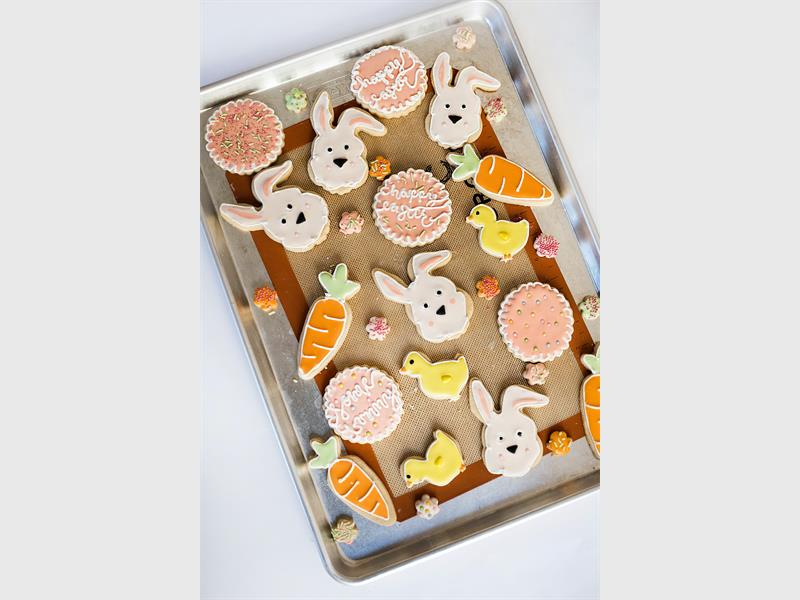
For Bernice Warner from Capsicum’s PE campus, nothing says Easter like royal-iced cookies.
“These are easy and fun to make and you can get the whole family involved when it comes to the icing.
“Give each member of the family a piping bag and icing and let them create their own designs – whether it be chicks or bunnies or even Easter eggs,” says Warner.
Royal Iced Cookies by chef Bernice Warner
Sugar cookies
400g cake flour
1 medium egg
200g butter or baking margarine
200g castor sugar
5ml vanilla essence
Royal icing
1 egg white
400-500g sieved icing sugar
5ml lemon juice or ¼ teaspoon cream of tartar
Method
Sugar cookies
Cream the butter and sugar until light pale and fluffy in a stand mixer or bowl with an electric hand mixer.
Add the beaten egg and vanilla essence until well combined.
Mix in the flour until a dough ball forms.
Wrap in plastic wrap and set to chill in the fridge for 20 minutes before rolling out.
Pre-heat oven to 200°C.
Roll out the chilled dough on a lightly floured surface to about ½ cm and with assorted cookie cutters cut out shapes and place on a prepared and lined baking tray.
Allow space in between the cookies during baking as they bake better that way.
Bake for approximately 15 minutes or until golden around the edges.
Remove and cool on a cooling rack until ready to decorate.
Also read: Try these versatile egg muffins for your lunch boxes
Royal icing
Whip the egg white until soft peaks form on the whip attachment in your mixer bowl and start adding a half a cup of icing sugar at a time while mixing on low speed until incorporated before you add the next amount of sugar until there is no more left.
Add the lemon juice and mix for a few minutes on high speed.
The mixture will become very white and glossy. It’s now ready to use.
Select your food colouring and divide into the amounts of colour needed.
Decorating
You will need piping or ziplock bags to decorate your cookies.
You may change the consistency of your icing with a small amount of water if too firm. Note: too much water will cause the icing to run excessively.
Allow the decorated cookie to dry for a few hours before consuming. The rest may be sealed in an air-tight container.
Follow us on our social media platforms: