Sewage overflows threaten Alberton waters: Historic farm, golf course devastated
Joburg’s sewer system is overflowing, literally, and Alberton residents are paying the price. MP Steven Moore and Clr Tim Denny are pushing for urgent intervention by the Green Scorpions after years of municipal neglect.
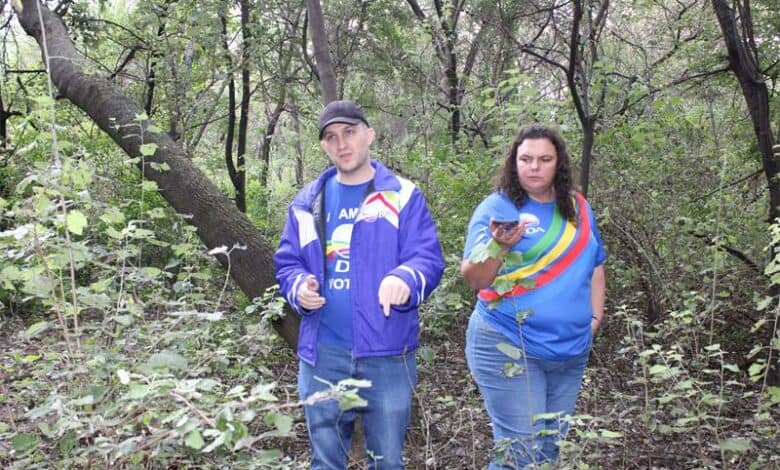
A grim environmental reality was laid bare on April 12.
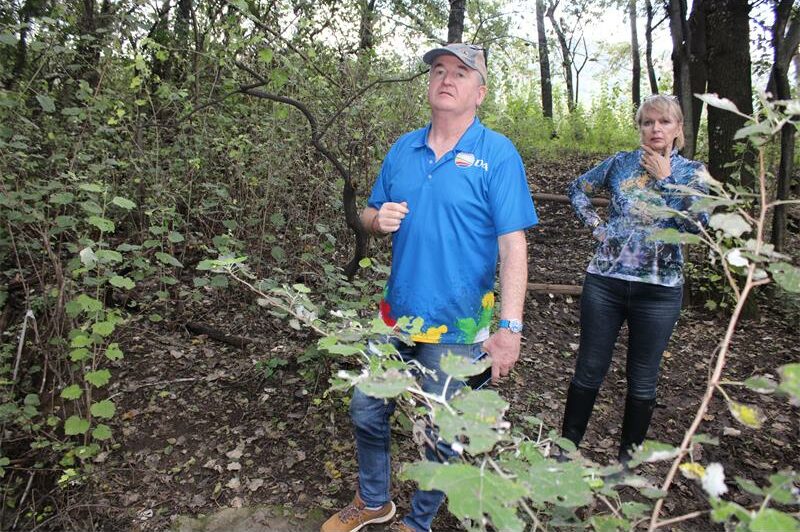
Steven Moore, the MP for Environmental Affairs, led a site visit across several pollution points in Alberton.
Accompanied by the media and Ward 106 Clr Tim Denny, the visit was an attempt to expose the ongoing sewer overflows plaguing the area and pressure the City of Johannesburg into taking accountability.
The tour began at the historic Meyersfarm, winding through the Reading Country Club, and ended at the New Redruth Village Shopping Centre.
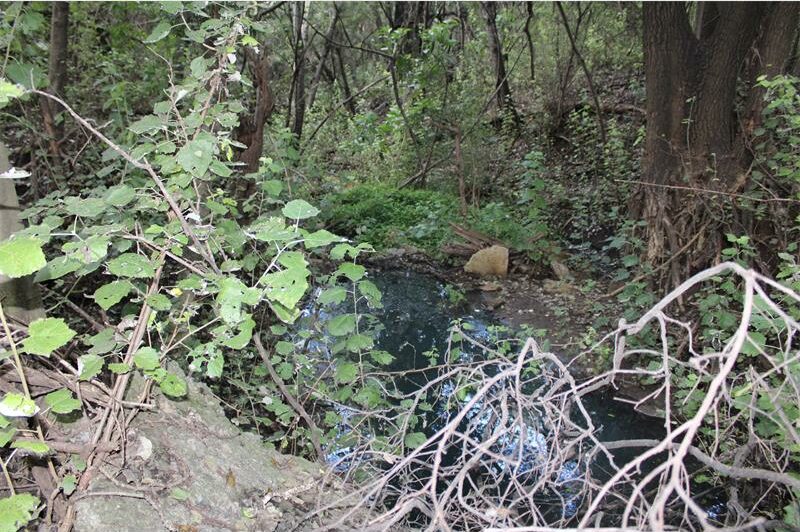
These locations, all on a shared sewer line originating in southern Johannesburg, represent some of the worst-affected areas where sewage regularly spills into water systems and public spaces.
“This is a notorious problem. We’re dealing with a massive pipeline that starts in Joburg, runs through Glenvista, and flows through Alberton and beyond into Germiston. There are at least 15 overflow points where untreated sewage regularly pours into the river system, eventually contaminating the Natal Spruit,” said Denny.
Longstanding jurisdictional confusion has worsened the situation.
Denny explained, “Up until the river, it’s Joburg’s responsibility. On the other side, it’s Ekurhuleni’s. The Reading Golf Club is the boundary. So now, Johannesburg is polluting Ekurhuleni waters.”
Legacy systems, modern problems
The issue, according to Moore, is rooted in outdated infrastructure and municipal neglect.
“Many of these problems started decades ago when Joburg and Ekurhuleni were still one entity. The sewer systems were built to service a unified metro. But after the split, these pipelines became a political and administrative tug-of-war,” he explained.
Today, Johannesburg is technically responsible for maintaining many sewer lines that flow into Ekurhuleni.
But that responsibility has often been dodged.
“What’s happening now is Johannesburg is polluting Ekurhuleni waters,” said Denny, who has spent years fielding complaints from frustrated residents and local farmers.
“There’s finger-pointing, delays, and little to no accountability.”
Moore also highlighted how urban development has compounded the crisis.
“Developments keep springing up – retirement villages, apartment blocks, shopping centres – but the bulk sewer infrastructure hasn’t been upgraded to match the increased load,” he said.
“Developers are supposed to pay for these upgrades, and municipalities are supposed to ring-fence those funds for that purpose. But in reality, the money is often redirected to cover other expenses. The result? Collapsing infrastructure and contaminated water.”
Meyersfarm: Ground zero of the sewer crisis
The first stop on the visit was Meyersfarm, a family-owned property whose history dates back to 1840.
According to Leola Meyer, one of the four beneficiaries of the family trust that owns the land, the sewer servitude that runs through the farm was registered in 1964 to allow Johannesburg to provide sewage services to the south.
“Back then, Joburg used to maintain the line. They’d regularly send a circular saw to clear roots and debris from the pipes,” Meyer said.
“But that stopped about 20 years ago. Since then, it’s been endless problems. Overflow after overflow. The sewage ends up in our water systems and, eventually, in the Reading Golf Club’s dam.”
She explained, “This servitude was done, I think, in the 1960s, and it comes from Linmeyer, and the whole of the south of Linmeyer’s sewage comes down these lines where it joins the Alberton sewage.”
She explained how the growth of natural plants, particularly trees with invasive roots, clogs and infiltrates the pipes. Without regular power flushing and root removal, backups are inevitable.
“We used to have a contact person, Smuts Marais in Alberton, who helped us manage it. But since he left at the end of 2023, no one’s taken responsibility. We’ve had to escalate the matter to Denny.”
Dead fish and disappearing wildlife at the Reading Golf Club
The next stop was the Reading Golf Club, where Donovan Main, a manager of the club, shared the impact the sewage has had on their dam and aquatic life.
“We had a call in December 2024 from the Meyersfarm, saying there was a sewage leak on their property. They’ve reported it. It’s been like six, or seven days. No one’s been out.
“I reached out to Tim immediately. Within 24 hours, you guys were great. You had somebody out there in the loop. The problem was solved,” Main explained.
“And then, later in December approaching January, we had another leak from the farm. Same story. The Meyersfarm got hold of me and mentioned that it’s still been a few days, almost a week now, but no response. Again, I spoke to Tim. Your team reacted, came out and sorted it out.”
According to Main, the first leak last December wiped out an entire stock of sterile carp valued at over R50 000.
“These fish were flown in from Cape Town. They’d been here for years, helping maintain the dam’s ecosystem,” Main said.
“From the first leak to the second one, we lost them all. They were probably less than a ruler when we put them in and when they took them out, they were like big fish. They’ve been there for about four or five years.
“The stench of sewage around holes five, six and seven was unbearable for our members and visitors,” Main added.
The club has also lost other aquatic life over the years due to similar incidents, including a freshwater crab population and a black otter that lived near the water.
“We haven’t seen him since the last major spill. The most frustrating part is the lack of urgency. Even when we report a leak, it can take days for someone to respond. We’re now at ground zero again – back to square one with our dam and its ecosystem,” Main shared.
A call for cross-border collaboration – and facing consequences
The final stop at the New Redruth Village underscored the urban impact of the sewage problem, where blocked pipes and recurring overflows affect businesses and residents.
But beyond highlighting the dysfunction, the visit also aimed to mobilise action, starting with an urgent environmental audit.
“We will do a full audit of the stream that runs through Alberton and South Crest.”
But that’s not the only level of government Moore plans to engage.
“I will also speak to our deputy minister of Water and Sanitation. He was supposed to be here today but couldn’t make it. He’s committed to tackling river pollution, and I believe once we compile all our findings and present them, he’ll help escalate this at a national level.”
Moore warned, however, that if inter-municipal co-operation fails, stronger measures might be taken.
“If Joburg refuses to engage or delays responses, then we explore legal and regulatory avenues. When the Green Scorpions or the deputy minister gets involved, people start to pay attention.”
A wake-up call
The site visit was a fact-finding mission and a wake-up call to residents, officials and environmental agencies.
The consequences of inaction are evident in dying ecosystems, collapsing infrastructure and growing public health risks.
“We are doing everything we can to make noise about this. The pollution is unacceptable, and it is happening in our backyards – in Alberton. If we don’t act now, what are we leaving behind for the next generation?” said Moore.
With the involvement of national officials and the looming presence of the Green Scorpions, Joburg’s long-ignored sewage problem could finally be forced into the spotlight.
WATCH | Concerns raised about dying fish at Alberton’s Jackson Dam