Slam dunk season for local schools
With school's basketball competitions just around the corner we focus on the game, how to play, what the rules are, and why it's seeing such a surge in South Africa and worldwide.
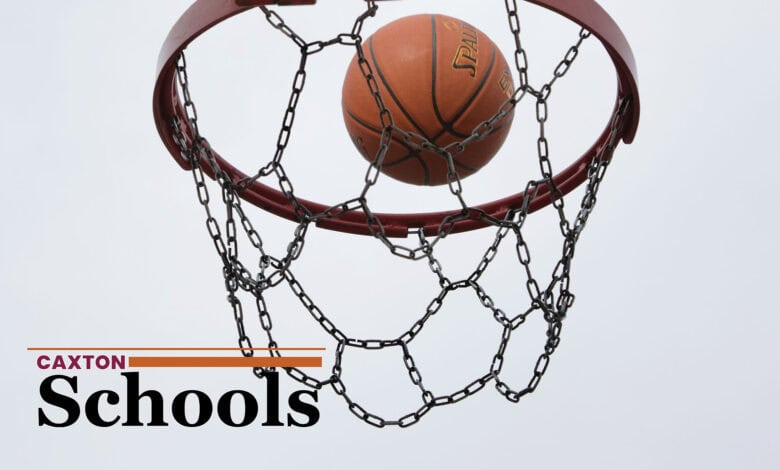
Basketball is one of the fastest-growing sports in South Africa, and its energy, teamwork, and excitement are capturing the hearts of young players everywhere.
Each season, more and more schools are forming teams, while building skills, spirit, and school pride on the court.
This year, once again, our local schools are taking things to the next level as they prepare to host major basketball tournaments, drawing talented players, passionate supporters, and plenty of competitive action, but, in a country where basketball isn’t exactly a national treasure sport (yet!), many people don’t know much about the game.
Also read: Hoops and Goalposts – Joburg giants set for thrilling 2026 water polo and basketball season
So, with that in mind, this article serves as a back to basics guide on all you need to know to confidently chat to fellow basketball parents courtside, and actually sound like you know what you are talking about.
Basketball basics
Basketball is a fast-paced team sport played between two teams of five players each on a rectangular court. The aim is to score points by shooting a ball through the opposing team’s hoop, which is mounted 3.05m above the ground. Players move the ball by dribbling and passing, while defending teams try to block shots, steal the ball, and prevent scoring. The game is divided into timed periods, and the team with the most points wins. Known for its excitement, skill, and athleticism, basketball is one of the world’s most rapidly growing sports.
History matters
Basketball was invented in 1891 by Dr James Naismith as a game to keep students active indoors during winter. The first games were played using a soccer ball and two peach baskets. Referees had to fetch the ball after every score.
Today, basketball is one of the most popular sports in the world, played in more than 200 countries. The National Basketball Association (NBA) is the most famous professional league, watched in over 215 countries.
The equipment
A regulation basketball court is 28m long and 15m wide, and the hoop is always 3.05m high, no matter where in the world you play. The centre line divides the court into two halves. The hoop is 45cm in diameter with a net attached.
Key Markings on the court
• 3-Point Line: Shots beyond 6.75m (FIBA standard) count as 3 points
• Free Throw Line: 4.6m from the basket
• Key/Paint Area: The rectangular painted area below the hoop
• Restricted Arc: A small semicircle under the hoop that affects charging fouls
South African basketball
Team SA is still young in basketball terms, having only officially joined the International Basketball Federation (FIBA) in 1992.
The introduction of the Basketball Africa League (BAL) helped spotlight African talent and raised the profile of the sport in SA. South Africa hosted the NBA’s Basketball Without Borders Africa development programme, inspiring many young players. The league is aimed at nurturing talent and expanding the sport’s footprint across Africa.
One of the biggest South African success stories is Samkelo Cele, who helped put SA basketball on the global radar. Cele has competed internationally, including a stint with the New York Knicks in the 2024 NBA
Summer League, where he scored in his appearance and gained valuable exposure. Later, he signed with Real Valladolid in Spain and joined Petro de Luanda for the BAL competition.
Many South African schools and universities now run competitive leagues.
Teams
• 2 teams
• 5 players per team on the court at a time
• Substitutions allowed
Game time
• Games are divided into quarters or halves (length depends on league).
• If scores are tied, the game goes into overtime.
Scoring
• 3 points: if shot from beyond the 3-point line
• 2 points: for a normal field goal
• 1 point: for a free throw
Ball movement
• Players can dribble (bounce while moving) or pass.
• No running while holding the ball (that’s called travelling).
• No double dribbling (stopping a dribble and then starting again).
Violations
• Travelling – If a player takes too many steps while holding the ball, or shuffles their feet before dribbling or passing, the referee blows the whistle and the other team gets the ball.
• Double dribble – A player must either keep dribbling or stop and pass or shoot. If a player dribbles, stops, holds the ball, and then starts dribbling again, that is a double dribble. • Shot clock violation – Teams only have a limited time to shoot, usually 24 seconds. If they keep the ball too long without taking a shot that hits the rim, the clock runs out and the other team gets possession.
• 3-second rule – An attacking player cannot stand inside the painted key area (close to the basket) for longer than three seconds while their team has the ball.
• Backcourt violation – Once a team brings the ball over the halfway line into the opponent’s half, they cannot take it back into their own half again.
Fouls
Fouls can lead to free throws, loss of the ball, player disqualification, or even ejection, depending on the type and severity.
1. If the player is fouled while shooting:
• If the shot goes in: Basket counts + 1 free throw
• If the shot misses: 2 free throws (for a 2-point shot), 3 free throws (for a 3-point shot)
2. If the foul is not during a shot:
• Usually the fouled team gets the ball back from the sideline, but, once a team commits five team fouls in a quarter (FIBA rules), the other team goes into the bonus, meaning that every common foul results in two free throws
3. Offensive fouls
• If the attacking player causes the foul there are no free throws, the basket doesn’t count and the other team gets the ball.
4. Technical or unsportsmanlike fouls
• These are for misconduct, rough play, arguing, or dangerous actions: The opponent gets free throws, the opponent gets possession, and in serious cases these fouls can lead to ejection.
Possession and start of game
• Games begin with a jump ball in the centre circle. One player from each team stands inside the circle as the referee throws the ball straight up into the air. Both players jump and try to tap the ball to a teammate. Once a team gains possession, the game is officially underway.
Basketball is simple to learn, exciting to watch, and encourages teamwork, fitness, and skill, which is why it’s growing so fast worldwide and in South Africa.