Democracy under the spotlight
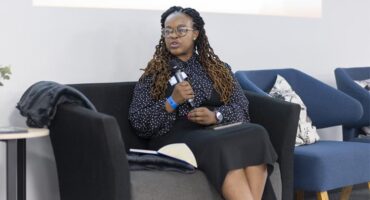
First to take to the podium was Ms Londiwe Langa, a young entrepreneur in the creative industry.

The varying views and understanding of democracy were explored by youngsters at the Rhodes Park Library on October 30.
The first-of-its-kind dialogue was held under the theme, ’20 years of democracy’.
A panel of four youngsters lead discussions as they shared their understanding of the theme.
First to take to the podium was Ms Londiwe Langa, a young entrepreneur in the creative industry.
Ms Londiwe described democracy as a gradual phenomenon where everybody has a role to play, irrespective of culture or race.
She said when South Africans went to the polls to elect a new government in 1994, it was not democracy but an opportunity for democracy to take place.
Ms Langa said the country has come a long way since the dark days of apartheid, but so much more needs to be done to ensure that all citizens reap the fruits of democracy.
She lamented the fact that some children in parts of country still do not have access to books and libraries in their communities.
“That is not how it should be, surely children like these are yet to experience what democracy is, and their right to education is not being fulfilled.
“Hailing from Eshowe, Kwazulu-Natal, Ms Langa told her story. She was among the first in her area to attend a well-resourced, multi-racial school.
“Even though I was in that environment, my thoughts were still enslaved. I felt it was a crime to have a text book from the library that I could take home and read,” she said.
“It was unusual for a black child to have such a privilege. For me, if a child can still feel like this 20 years into democracy, I think the child has been denied democracy. They will be denied the right to knowledge and opportunities to develop themselves fully. I don’t want to see any child going through the experience of feeling like they owe somebody an apology for exercising their right to education.”
Next to speak was Ms Kgomotso Modise, a student at Unisa, who tackled the declining trend of the economy.
Her point of departure was that many black citizens struggle to make a living because the economy does not create fertile ground for the poor to participate.
She said the number of young people who cannot find jobs is alarming.
“I must be able to look for a job with my qualification and find a decent job. If I cannot find a job after spending years at university studying, it feel like I am being denied my democratic right of having a job and my right to dignity.”
She said the widening gap between those who have and the have-nots across the racial bar is cause for concern.
“Earlier this year, President Jacob Zuma highlighted that the average white person earns six times more than the average black person,” said Ms Modise.
She said unless there can be a level playing field between black and white people in the economy, then economic freedom will remain an illusion for most.
Mr Paul Wandile Mvelase, who is studying a Ba in Law and Geography at Wits, was satisfied that South Africa’s democracy is maturing.
He said Chapter Nine institutions like the office of the Public Protector were doing a wonderful job of defending the rights of ordinary citizens.
“I am satisfied that we are on the right track, even though we are not quite there yet. We are maturing. We have the best constitution, which ensures that the rights of everyone, irrespective of colour, gender or race, is respected,” he said.
The final speaker, Ms Lindokuhle Mhlanga, said democracy will not be fully realised if the government still continues to provide low quality education to children.
“It is not only the education system that needs to be overhauled; teacher quality is also a concern in this country. We have just changed from OBE to a new curriculum; the same teachers without training are expected to efficiently teach the new curriculum,” she said.
After the presentations, those who attended the discussion asked questions and raised their own views.
Ms Sue Mulles, a retired teacher and a member of the I Love Kensington Association (Ilka), was one of those who listened to the the discussion.
“It was an exciting discussion but I think young people are missing out on an opportunity to capitalise on high standards of education; we can do with more intellectuals. Young South Africans must stop blaming society for all the problems, they must learn to stand up on their own,” she said.