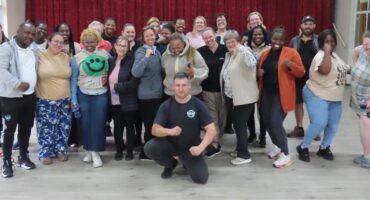
A victim of violence? Speak up
ER24 is urging all children to remember that they have rights and to speak up before it is too late.

Children are reminded that they have rights and need to speak-up when needed before it is too late.
Children are urged to seek help if they are victims of violence, or if they know of another child who is a victim of violence. Children are reminded to seek help from a social worker, parent, teacher or the SAPS.
Ms Asanda Magaqa, from Save the Children South Africa (SCSA) said, “Violence, abuse, neglect, exploitation and discrimination affects women, girls and boys across all social strata in South Africa.
“Gender-based violence (GBV) and child protection violations are hard to measure and difficult to define as maltreatment of children tends to be hidden and rarely reported.”
Children can be victims of violence at home, at school, in the streets, in the community and while in the custody of those who are meant to protect them.
“Perpetrators are relatives, friends, acquaintances or neighbours, suggesting that most abuses take place in or nearby the home. Physical violence also widely occurs at school, despite the ban on corporal punishment, as 16.8 percent of pupils report having experienced physical punishment. The SCSA condemns these acts towards children,” said Ms Magaqa.
She said violence against children is not only a child rights issue, but also a major public health concern.
Apart from physical injuries, the experience of violence often has severe and lasting consequences for a child’s psychological and social development, their behaviour and health outcomes.
These consequences can affect them well into adulthood.
“Depression, substance abuse, anxiety, suicidal behaviour as well as reproductive health problems such as unwanted pregnancy, sexually transmitted diseases and sexual dysfunction are just some of the consequences associated with exposure to violence. In particular, post-traumatic stress symptoms affect a large number of South African children, with only a small proportion receiving any counselling or professional assistance,” said Ms Magaqa.
Traumatic experiences also affect brain development in children and can lead to difficulties in learning and cognitive functioning.
Parents, teachers or other responsible adults should teach children how to protect themselves.
Ms Magaqa said there is a need to develop a parental skills programme, to better support parents in ensuring their children are safe.
“Parents and the community as a whole need to better understand the different types of violence and neglect, as well as the impact on the development of children. The SCSA has been working with 120 children’s groups in the Free State from 2013 to 2015 to empower them to take action regarding violence in schools.
“We have trained children to better understand what violence is. We have trained them to learn to assess their own environment and to come up with specific activities in their school to prevent and respond to violence. The coordination of stakeholders and services is also key in efficiently preventing and responding to violence. The SCSA has worked with local stakeholders to create coordination platforms to ensure that cases are handled in an appropriate and timely manner and that the risks specific to the community are identified in order to favour preventative measures,” said Ms Magaqa.
Constable Mpho Mashakane, the Cleveland SAPS communications officer, said the SAPS is concerned about violence against children. Among the various initiatives in place to address these concerns, the SAPS also visits schools and communities to discuss and bring about awareness on violence.
“The more we hold Social Crime Prevention (SCP) campaigns, the more people will become aware and come forward to report such matters. Children should be treated like children and not adults. They should be able to play anywhere, be safe and have fun as children. Adults who abuse children should be brought to book. There is also a special unit that handles all crimes committed against children. There are victim empowerment centres where victims are attended to as well. We urge victims of violence to report incidents to people they trust,” said Const Mashakane.
When you report an incident, the police officer should make you feel safe. You can ask for clarification if you do not understand their questions. The statement taken by the officer should reflect the details you have provided. The victim should not be questioned unnecessarily or pressurised into giving details.
“The police officer or social worker interviewing the victim should at all times be friendly, professional and make the victim feel safe and protected,” said Const Mashakane.
You have the right to:
- Talk about the incident to the police officer in a private room.
- Speak to a female police officer if you feel more comfortable.
- Know the case number, name and contact details of the investigating officer.
- Know when the perpetrator is arrested and released on bail.
- A representative in court.
- Information on the investigation and court process.
- Know when the perpetrator appears in court.
- Know when you and other witnesses are expected to testify in court.
Children can contact Childline on 08000 55 555.
Information provided by ER24.