A closer look at the Scottish Horse War Memorial
Many Jeppe High School for Boys Old Boys from Edenvale and Bedfordview are familiar with this memorial.
The aftermath of the South African War of 1899 to 1902 left deep divisions between English- and Afrikaans-speaking South Africans, some of which are still carried today.
However, very little is told or known about the war’s impact on black South Africans who were conscripted to fight for the United Kingdom or the Orange Free State and the South African Republic, commonly referred to as the Boers.
Although the conflict is commonly known as the second Anglo Boer, it was more than a war between the United Kingdom, its colonies and the Boers.
It affected all South Africans of various races, creeds and nationalities, resulting in thousands of deaths.
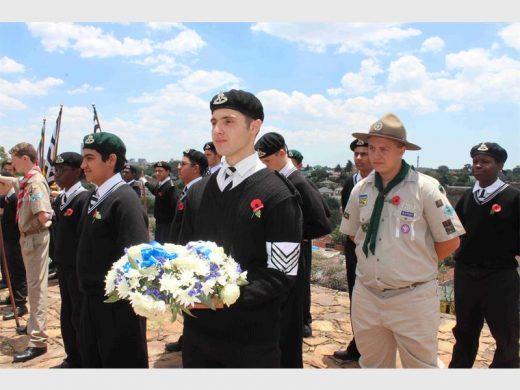
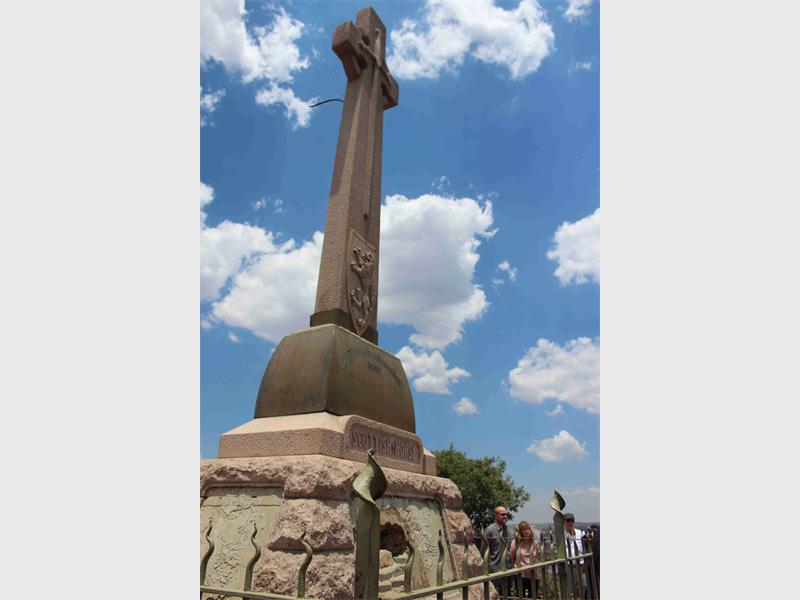
One memorial of the war which acknowledges the efforts of Africans who were conscripted is the Scottish Horse Memorial in Kensington.
Many Jeppe High School for Boys Old Boys from Edenvale and Bedfordview are familiar with this memorial.
The school hosts annual Remembrance Day services and often incorporates the memorial into the services with a march along Highland Road to the top of the nearby koppie to lay wreaths at the memorial.
The school hosts an annual remembrance service and incorporates a march to the memorial into the services.
Erected in 1905, the monument is one of Johannesburg’s oldest war memorials at 114 years old.
Located on Caledonia Hill, the memorial has plaques commemorating the soldiers of the regiment who died during the conflict.
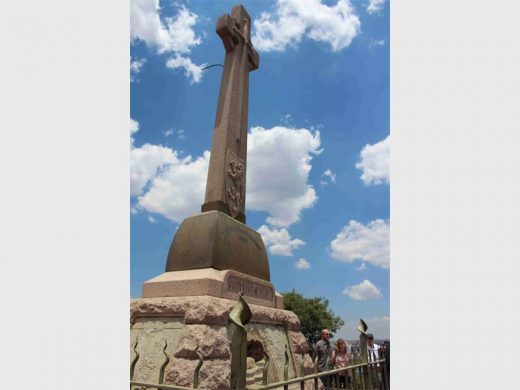
Four of the names are those of Zulu Scouts, namely, Bayisana Noondo, Jele Butclezi, Theophilus and John Basuto, who died in action.
Hoping to learn more about the involvement of black South Africans who fought in the war, the Express spoke to Dr Garth Benneyworth, head of the department of heritage studies in the school of humanities at Sol Plaatje University.
Benneyworth explained that the Scottish Horse Regiment was introduced into the war by the United Kingdom as a counter-guerrilla unit in 1900.
He said when the war initially started, black South Africans were mostly non-combatants and auxiliaries.
Their duties included constructing and digging fortifications, cooking, caring for horses and conducting maintenance.
He said the auxiliaries used by the Boers, referred to as agterryers, were mainly farm labourers who were conscripted when their employers were conscripted.
Like the Boers, the United Kingdom also made use of black South Africans as auxiliaries with many of the same duties.
Benneyworth explained that when the United Kingdom came to South Africa, they did not bring large scale units from other colonies such as India.
Instead, they made use of the indigenous population of South Africa.
Benneyworth said both the Boers and the United Kingdom made use of black South Africans from a variety of African cultures.
African soldiers and auxiliaries came from areas, such as Southern Botswana, Lesotho and the Eastern Cape.
It is estimated that 100 000 Africans were conscripted by the United Kingdom and 16 250 by the Boers.
Although there are few reports of black South Africans fulfilling combat roles at the start of the war, Benneyworth said as it progressed armed African soldiers became more common.
One example, identified by Benneyworth through his research, of the role black South Africans played in the war, was that of Matthew Thomas.
“Thomas was strongly recommended for the Distinguished Conduct Medal for his efforts during the Battle of Modder River of 1899 when the Cold Stream Guard, an elite unit he was attached, fought the Boers.
“While under fire from the Boers, Thomas ensured that the units’ soldiers and cannons were supplied with ammunition and supplies,” said Benneyworth.
At the time, the Distinguished Conduct Medal was only second to the Victorian Cross, and unfortunately Thomas was not awarded the medal because he was an African soldier.
Benneyworth highlighted that Thomas was again recognised for his efforts later in the war when the Boers started using guerrilla tactics.
“Thomas single-handily captured six Boer combatants,” said Benneyworth.
Other examples of the role black South Africans played in the war was the siege of Mafikeng.
“Barolong soldiers stationed at Mafikeng with United Kingdom forces repelled several attacks made by the Boers.”
The town was under siege for 217 days.
Benneyworth said in the later stages of the war, entire units of black South Africans mounted infantry units, similar to units like the Scottish Horse, and were put to the field by the United Kingdom.
Benneyworth is of the opinion that this was done to further break the morale of the Boers as African soldiers burnt and destroyed their farms as the United Kingdom introduced scorched earth policies.
Despite the role black South Africans played in the conflict, many who had sided with the Boers were sent to concentration camps when captured.
The black South Africans, like the wives and children of the Boers, were sent to concentration camps to demoralise the Boers and prevent the Boers from obtaining supplies.
However, the atrocities were not one-sided. Benneyworth highlights that the Boers’ strategy in the war was to lay siege to the three major towns occupied by the United Kingdom and shell them with artillery.
“At Kimberly, the Boers shelled the town and suburban areas, killing soldiers and civilians alike.”