Dr Ivan Jardine shares sleep apnea advice
ENT surgeon Dr Ivan Jardine shares insight into sleep apnea, its symptoms and treatment.
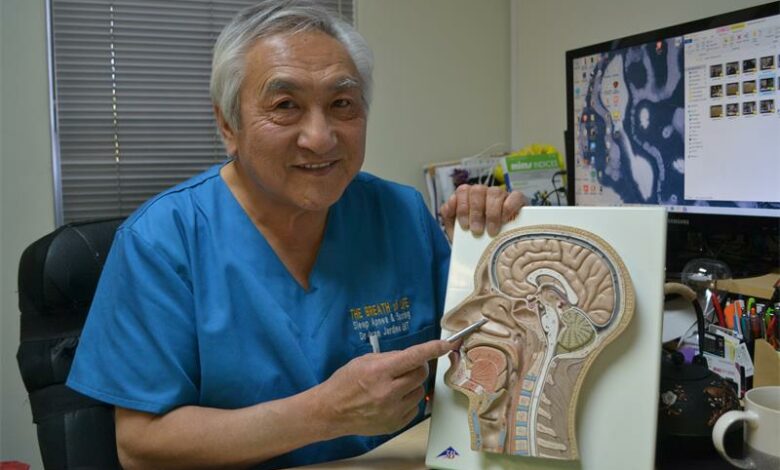
Sleep apnea can affect not only your sleep, but also your entire lifestyle and the lives of your loved ones.
Ear, Nose and Throat (ENT) surgeon Dr Ivan Jardine met with the Bedfordview and Edenvale News to provide more insight into sleep apnea, its symptoms and treatment.
Sleep apnea is a sleep disorder in which breathing repeatedly stops and starts throughout the night, with Jardine explaining that its severity is determined by how often a patient stops breathing.
ALSO READ: Gauteng Health defends disciplinary action in negligence and misconduct cases
“We all need to be aware that there is more to the nose than meets the eye,” said Jardine, adding that it is a gateway to so many things in the body.
According to Jardine, there are numerous symptoms that can contribute to sleep apnea.
“I am not saying that surgery is a fix-all solution, but it can definitely assist patients,” he said. “If a patient has numerous symptoms, they need to be treated.”
Some of the symptoms include:
• Blurry vision
• Snoring
• Waking up with a dry mouth and dry lips
• Poor taste and smell
• An increase in brain fog
• Mood swings
• Increased clumsiness
• Anxiety
• Cold hands and feet because of poor circulation.
“If your eyes are blurry and you are trying to read, you are most likely going to get a headache. Your brain is seeing something blurry; you’re getting headaches, so it’s likely you won’t remember the content you just read, which affects your concentration.”
According to Jardine, sleep apnea is progressive, and anyone can be affected.
Some of his youngest patients range between seven and 11 years old.
Lifestyle changes and treatment options• Treat and manage any allergies and remove any congestion in the nose
• Start exercising and adjust the diet to remove any excess weight
• Stop smoking or vaping.
“Surgery is not my first option; the first choice is to manage a patient’s lifestyle, and if there is no dramatic improvement, then we consider surgery,” explained Jardine.
Jardine said that although he is not against continuous positive airway pressure (CPAP) machines, in his opinion, humans are not meant to breathe with the assistance of machines.
CPAP machines treat sleep apnea by pumping steady, pressurised air through a tube and a mask to keep a patient’s airway open while they sleep.
“If we can open up the airways and if patients still need a CPAP machine, then by all means, but there are some people who cannot handle a CPAP machine.”
Jardine encouraged community members and patients who may believe they have sleep apnea to discuss their options with their doctor.
He said if they don’t or can’t find a solution, then they should consider speaking with or visiting an ENT.