Household recycling starts with separating waste at source
A plastic industry expert explains how household recycling habits can support waste management and improve the recovery of recyclable materials.
Household separation at source is the single most critical starting point for successful recycling worldwide, according to plastic industry expert Peter Waldburger.
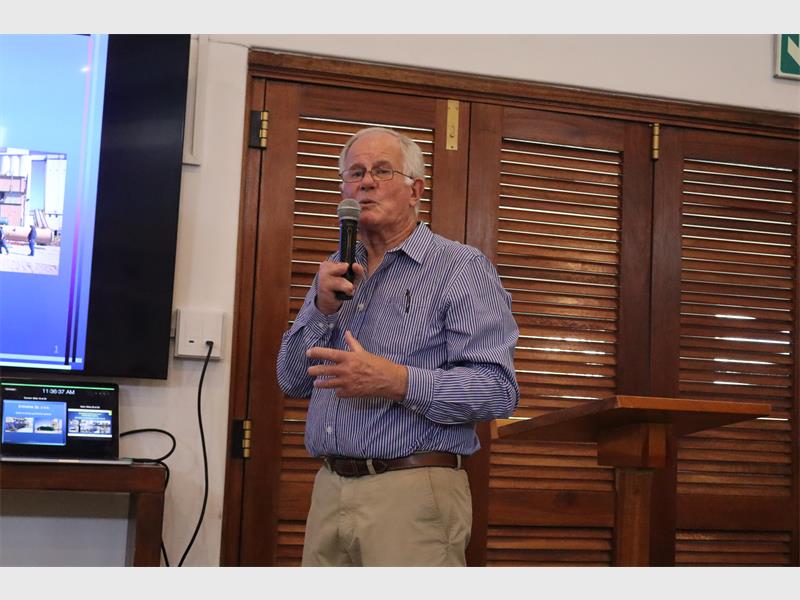
Speaking at a Probus Club of Bedfordview meeting on October 6, the director at the South African Plastic Recycling Organisation shared insights from his 46 years in the industry.
“Separation at source is us, in our homes, factories or shops. If we don’t separate at source, it makes downstream activities very difficult,” Waldburger explained.
ALSO READ: Heritage conservation in focus at Bedfordview Probus Club meeting
He taught members about different types of plastics and their various uses. Polyethene, commonly used for soft drink and water bottles, can be recycled into products including wadding, insulation, geotextiles, automotive carpets, strapping and new bottles.
Low-density polyethene is used for products such as water tanks, while polystyrene is commonly used in white goods packaging, including internal fridge panels. Recycled polystyrene can be used to manufacture products such as ceiling cornices and coat hangers.
The role and challenges faced by waste pickers were also discussed. Waldburger said waste pickers arrived about 20 years ago, initially entering landfills to recover recyclable materials, a practice deemed illegal. They later began searching through household waste bins for valuable recyclable items.
However, Waldburger cautioned against viewing waste pickers as a solution to South Africa’s broader waste and unemployment challenges.
He also highlighted the growing pressure on landfill capacity, particularly in urban areas. New landfills are increasingly being developed further away from cities, adding significantly to the cost of transporting waste.
ALSO READ: Bedfordview Probus Club hosts body language expert
In Durban, for example, a landfill is about 46km from the city. A truck may carry 10 tons of waste and could have to make two trips.
The distances are even greater in parts of the Western Cape. Residents of Knysna and Plettenberg Bay have to transport waste about 140km to Mossel Bay, one way. While the disposal cost is R400 per ton, the transport cost can reach R900 per ton.
“Johannesburg has just six landfills; two were closed a few years ago, and the next two are on the way. By the end of next year, Johannesburg will only have two landfills,” Waldburger said.
He raised concerns about waste pickers working inside landfills, describing the practice as extremely dangerous. Landfills operate heavy machinery, including graders, to continuously move and compress waste.
Waste pickers often work underneath layers of waste and soil while searching for recently discarded recyclable materials. This creates a serious risk of accidents, with several deaths reported each year. The danger adds another significant problem to the physical health challenges already faced by waste pickers.
ALSO READ: Bedfordview Probus Club hosts talk on estate planning
Waldburger also discussed the packaging levy introduced by the government in 2023. The levy is a tax applied to certain single-use plastic carrier and flat bags, with the intention of reducing pollution and encouraging recycling.
The funds generated through the levy go to Product Responsibility Organisations (PROs). However, a lack of cohesion between PROs, particularly in the sorting process, remains a challenge.
Middlemen control much of the waste stream, while recyclers are not formally supported and ultimately bear many of the costs involved.
Thermal treatment waste-to-energy — a process in which non-recyclable waste is converted into usable energy such as electricity — was also touched on. Waldburger noted that although the method is used in other parts of the world, it has not yet taken off in South Africa.
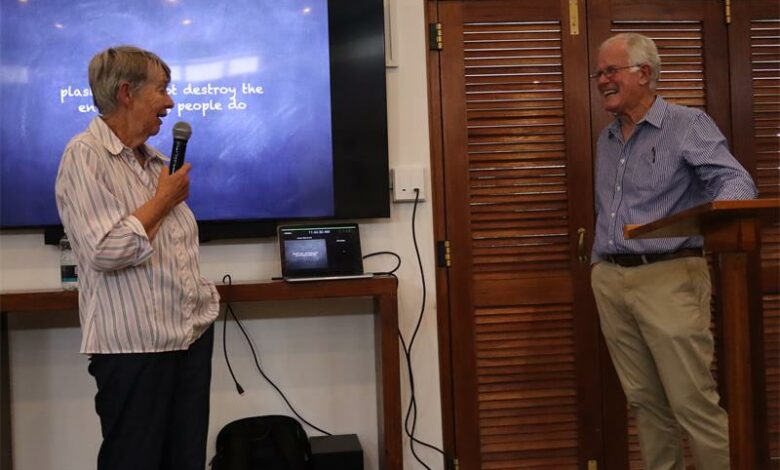
Concluding his presentation, Waldburger said: “Plastic does not destroy the environment, people do.”