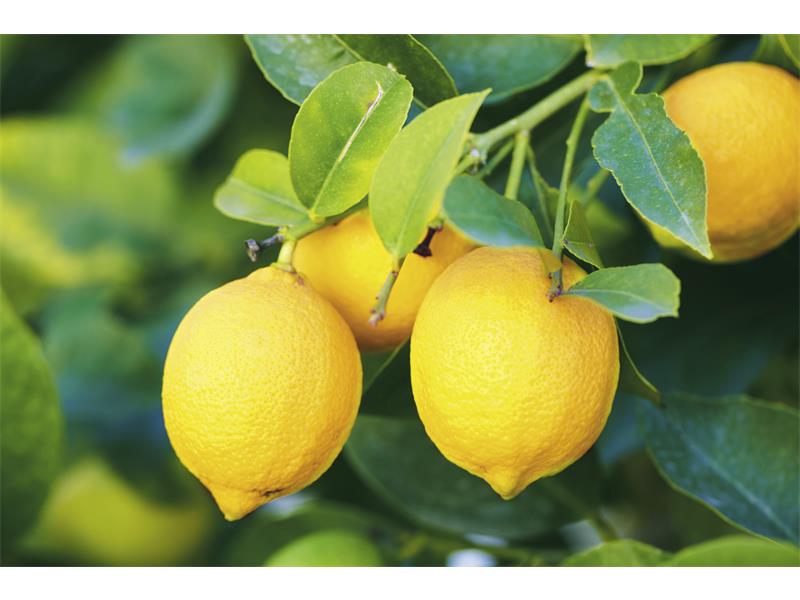
Lemons are the most popular of all the fruit trees sold in South Africa today.
One of the most versatile fruit used by many almost every day, they are incredibly easy to grow so every garden should have one.
Being well suited to growing in containers, they also work well on patios or balconies and as they are self-pollinating, you only need one tree to provide your own lemons.
Lemons set their fruit through early summer after a spring flowering and are ready to harvest from mid-winter.
They stay fresh on the tree for months, which means that as they mature, one can have a steady supply of fruit for most of the year.
With a few easy steps to follow, one can grow the best lemons.
Selecting your lemon tree
There are a few lemons that grow well in our local area. As lemons are cold tender and can be frosted as a young tree, it is recommended to plant them through spring and early summer for the best growth on them before the next winter. One of the most popular is Lemon Eureka; a smooth-skin lemon which is a good for juice and the tree bears the most fruit of all the varieties in the garden. The Cape Rough Skin Lemon has a thick rind which makes it good for cooking. In recent years, the Meyer Lemon has also been popular as it has a larger fruit and is juicy and has a good rind.
Where to plant
All lemons need a well-drained soil to grow well. If your soil has a high clay content, or holds too much water, the tree will eventually produce less and less fruit and also be more susceptible to disease. Water your lemon tree well once a week to every 10 days. If it looks like your soil might be a problem, rather opt for a container. When selecting a container, ideally select a pot that is more than 40cm in height and diameter. Your tree must have the most sun you can give it. Full sun is the best but some shade in the day is not a problem. If your tree gets more shade, one gets less fruit and the tree can also be more susceptible to disease.
Feeding
Lemon trees are hungry and need regular feeding. The most important time of the year to feed them is late winter through spring, with a high nitrogen fertiliser. Feeding them with an organic fertiliser will give them the nitrogen they need as well as the potassium to stimulate flowering which will lead to a good harvest.
What can go wrong
Most lemon trees get bumps on the leaves at some point. This is from an insect known as Psylla. The new leaves are stung which damages the young leaf cells and as the leaf matures, the leaves have the characteristic bumps. If left unchecked, greening can occur which is when the fruit does not ripen and the tree losses a lot of its leaves which will reduce its strength.
It is recommended to use a systemic insecticide, which will move through the plant and protect the new shoots, giving the leaves time to harden. Remember, if you are using a systemic insecticide, that you have to pick off all the fruit beforehand. Apply as the tree starts to flush its new leaves.
In recent years, the white and black powdery substance on the underside of leaves has become a problem. This will eventually kill your tree as it causes all the leaves to fall off if left unchecked. Known as sooty mould, it appears when either mealy bug, the white fluffy insect, or Scale which is a small yellow dot-like insect infects the underside of the leaves.
They suck sap and secrete honeydew that encourages the sooty mould. Getting rid of the insects will clear the mould. Spray with Garden Ripcord or Oleum and ensure good coverage on the underside of the leaves as it is a contact insecticide.
In mid to late summer, trees that are under stress from either water or other insects as indicated above are prone to getting infected with Red Spider. Leaves become blotchy and a light green or yellow, covered in webbing.
This causes the leaves to drop. The best thing to do in this case is to treat the first insect attack as well as the Red Spider. Red Spider can be difficult to eradicate and needs regular spraying with a Red Spider spray to cure.
q Information courtesy of Eckards Garden Pavilion.