
Tshwane likely to be ruled by a coalition governance yet again – analysts
Residents of the Capital City have seen an intense campaign season with some of the biggest political party leaders such as ANC President Cyril Ramaphosa, DA leader John Steenhuisen and EFF’s Julius Malema all campaigning in Tshwane in an attempt of winning votes.
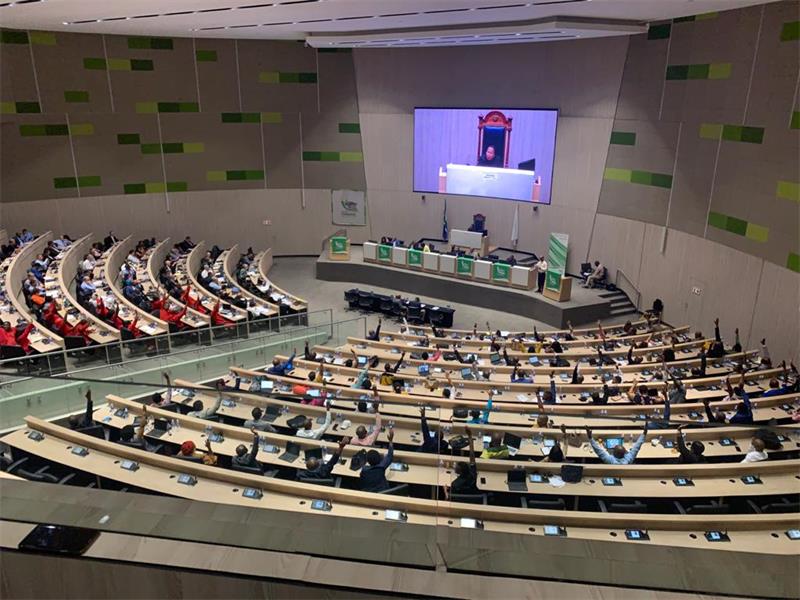
Who will win the Tshwane metro in the upcoming municipal elections set for November 1 as it is likely to be ruled by a coalition governance yet again?
Residents of the capital city have seen an intense campaign season with some of the biggest political party leaders such as ANC president Cyril Ramaphosa, DA leader John Steenhuisen and EFF’s Julius Malema all campaigning in Tshwane in an attempt to win votes.
These parties are also facing a lot more competition with new political parties and a growing number of independent candidates. A total of 45 political parties and 46 independents will take part in the elections.

Political analysts believe that the metro would likely be governed by a coalition government yet again with no party winning outright majority of votes.
In 2016, the ANC lost power in the metro to a DA-led coalition government. In the past five years there were failed coalitions between the DA and EFF, three different mayors, and the metro was under a seven-month-long provincial administration after disruptive and chaotic council meetings.
Tshwane University of Technology political analyst Levy Ndou said the years of the coalition governance which were dominated by instability in the upcoming elections could also measure the voters’ reaction to this.
“At local government level it is not about how good the party is. It is about the candidates that you forward in a ward. If you elect a person who is not known or trusted by the community then people will not vote for that individual although they love the party,” he said.
Some communities in the region have fought against ANC councillor candidates chosen to participate in the elections and this was not the first time it has happened.
“In 2016, ANC members decided not to vote because of the conflict for mayoral candidate between the group that supported the late Matsena (Mapiti) and Kgosientso (Sputla) Ramokgopa. When the ANC leadership imposed minister Thoko Didiza (as the mayoral candidate) that angered a lot of people,” Ndou said.
He said if the ANC could regain the lost voters the party could possibly have a fighting chance at regaining control over the metro.
But without this, Ndou said the metro would likely fall again in the hands of a coalition government.

“There is a lot of hunger from the political parties for the capital city this time around.”
Ndou said should the metro enter into a coalition, the parties would need to do better.
University of South Africa political science Professor Dirk Kotze concurred that the metro was likely to be governed by a coalition governance yet again.
“The two biggest parties in the region which are the ANC and the DA each need about 15-25 seats or more to what they had the last time in order to win the 50% plus one majority and this is unlikely to happen.”
Breakdown of the previous election results :
2016
- ANC: 41.25 %
- DA: 43.15 %
- EFF: 11.63 %
- VF PLUS: 1.99 %
2011
- ANC: 55.32 %
- DA: 38.65 %

The ANC, EFF and DA all experienced internal political issues leading up to the elections.
ANC members in the region were aggrieved over the candidate list, the EFF disbanded its regional leadership four months before heading into the elections, and the DA had about three mayors during a five-year leadership, one of whom resigned after an alleged sex scandal.
“There is no party that in the last five years or at least two years that has worked hard to convince the electorate that they should vote for them. None of the parties really excelled in that. During the time of administration this made things worse as they were not able to function in office,” Kotze said.
“ActionSA as the new party on the block, I expect that they would have a limited impact in elections.”
Kotze warned that should the parties be in coalition they should attain more sustainable partnerships after years of chaos.
“They must not use the same format as they used to, such as entering into an informal coalition.”
Kotze said there were about three scenarios on what the election results could be:
- Parties are likely to get the same number of seats from 2016, and leading parties DA/ANC would have to get into coalition governance with smaller parties.
- The EFF and the ANC could form a coalition.
- The DA and the ANC form a coalition.

Disclaimer
We acknowledge that the print and digital media plays an important role when it comes to informing communities before and during election periods.
Caxton Local Media tells readers what they must know on the practicalities of voting, and provides information regarding the right and duty to vote. Where necessary, we de-bunk mis- and disinformation relating to elections.
We reflect a multiplicity of voices in our pre-election and election reporting, and do not allow favouritism or biasedness in favour of any party or candidate. Where topics are discussed by political representatives [or commentators – optional], or where reporting features various parties or figures, we allow for the reflection of multiple voices of all those involved. Being balanced is our goal.
Read original story on rekord.co.za