
Say ‘no’ to food waste this festive season
The festive season, with all its glorious food, is fast approaching.
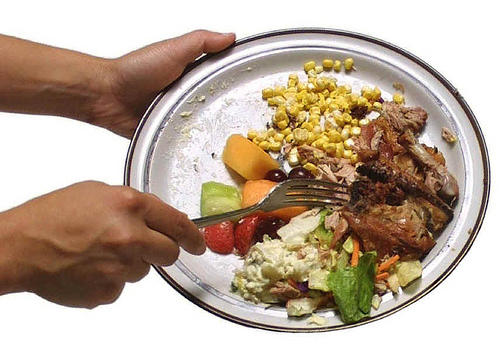
The Institute of Waste Management of Southern Africa (IWMSA) is calling on all residents to be mindful of their food spend at this time of year, and has given some tips on composting organic waste.
Prof Suzan Oelofse, president of the IWMSA, said that South Africa generates a staggering amount of approximately 9.04 million tonnes of food waste per annum.
“The majority of food waste ends up at landfill sites, which is extremely harmful to the environment, as it produces methane gas, a major contributor to greenhouse gas emissions,” she explained.
The first step for all households and consumers is to reduce the amount of food waste they would normally generate.
“Keeping a realistic grocery list is a wonderful way of keeping tabs on what you need.
“Unwanted foods that are still fit to be consumed can also be donated to those less fortunate. Composting of organic waste is another green option and wonderful for your garden, as it closes the loop of nutrients in the environmental system.”
Stuart Gower-Jackson, senior environmental scientist at Jeffares & Green and a member of the IWMSA, said: “We need to make every effort to divert waste from landfill sites.
“There are numerous benefits of composting organic waste, as it produces mulch, soil amendments, organic fertilisers and blended products that can assist in saving costs, such as substituting compost for chemical fertilisers.”
Organic waste suitable for composting includes garden waste, such as grass, leaves, plants, branches and tree trunks.
General food and wood waste can also be included, as can straw, manure, mulch, paper-processing sludge and non-synthetic textiles.
Materials that are not suitable for composting include hazardous waste such as cleaning products, pesticides, broken glass, medicine and treated timber.
Painted wood and recyclable materials (glass, metal, aluminium, paper, plastics and cardboard) are also not suitable for composting.
“Composting of organic waste is relatively simple and we encourage residents to set up their own composting system at home,” Oelofse advised.
She indicated that it usually takes up to a year for the composting heap to fully decompose, with little turning and effort.
She provided some tips to start your own composting heap at home:
· Set out an area in your yard; the size should be approximately one cubic metre.
· Start mixing your waste: mix two parts brown (dry leaves, small twigs, straw) with one part green (grass clippings, food waste).
· Make large pieces smaller: cut or break any twigs and large pieces of fruit and vegetable waste so that materials can break down faster.
· Add water: water your compost to keep it moist, but not saturated.
· Turn your compost: compost needs air. Turning the compost will help to break it down and will prevent it from smelling unpleasant.
· Rich soil: when the compost is ready, it should look and smell like rich soil. Use finished compost to feed your garden, flowers, potted plants and lawn.
“Composting is a wonderful way to keep soil fertile and helps reduce waste sent to landfill sites. We encourage everyone to start their composting garden this summer,” concluded Oelofse.