
Healthier soul, happier me
Our minds have powerful decision-making capabilities that over time teach our brains new ways that can form increasingly healthier patterns and habits.
“For My thoughts are not your thoughts, Nor are your ways My ways,” says the Lord.
“For as the heavens are higher than the earth, so are My ways higher than your ways, and My thoughts than your thoughts.” Isaiah 55:8-9 NKJV
I believe that our souls suffer severe neglect while we focus on the daily demands of life.
We expect ourselves to keep pushing forward every day without taking a moment to remember and to nurture our souls. The soul includes the mind and emotions.
In some Christian communities the soul has been relegated to the evil zone. We are not to pay attention to our feelings and thoughts, especially if others do not approve of how we feel.
These feelings are to be suppressed, denied and ignored. A painful medical condition like depression is said to be non-existent or an evil spirit or due to demon possession.
When people have questions, they are not allowed to express this to God because we are not to question God as if He is easily intimidated and fragile.
David in the Bible speaks about the condition of his soul freely. It appears that it is during these very frank discussions with God that David receives healing.
David asks of his soul “Why are you cast down, O my soul? And why are you disquieted within me? Hope in God; For I shall yet praise Him, the help of my countenance and my God.” Psalms 43:5 NKJV
Because David attended to the state of his soul, he was able to move from discouragement to hope.
When we take time to reflect on the everyday interactions and events in our lives, and the thoughts and feelings about the situation, with the aim to grow from the experience we move from repetitive life cycles to living a quality life.
For our personal well-being, let’s attend to our mental health. Do you remember the saying, “mind over matter”?
Mental health includes the mind and the brain (matter). A synonym for the word ‘mental’ is brain. Our brain is ‘matter’, an organ.
It learns through observation and experience, and it repeats behaviour, forming patterns and habits. If the environment around a person is threatening, the person may learn to be defensive or aggressive.
During traumatic life experiences like an abusive childhood or adult relationship, we can develop maladaptive behaviour patterns that are disruptive.
With repetition these disruptive patterns form physical, hardwired pathways in our brains that direct our behaviour.
These behaviours can develop into personality disorders. We may not be aware of the negative behaviour patterns and its impact on our relationships.
However, we do experience the sense that something is wrong. With our minds we can transcend or rise above ourselves to observe the reactions we have to stressors.
This means that we take a step back and look at our behavioural responses to develop a deeper awareness of what is going on within and around us.
Without awareness, events replay in our minds like movies. We can either replay the same movies on repeat or we can apply ourselves to change the storyline.
Our minds have powerful decision-making capabilities that over time teach our brains new ways that can form increasingly healthier patterns and habits.
I’ve discovered that our Faith answers this need for growth. At times the Holy Spirit answers our need to grow without our knowledge and help.
Precious, isn’t it? Often people with personality disorders struggle with faulty thoughts. Sometimes they don’t even know what they need, but in prayer, through the Word and community healing can come.
All God needs is willingness, obedience and consistency.
1. Our willingness to look inside instead of blaming others
• In therapy we develop a deep awareness of self, God’s plan with our lives and experiences, and a higher sense of self-responsibility.
Instead of waiting for others to change so that we can experience happiness we can work on finding inner contentment and develop a plan to move forward.
You don’t have to remain stuck while waiting for others to validate you. Only God needs to validate and affirm you.
Or do you not know that your body is the temple of the Holy Spirit who is in you, whom you have from God, and you are not your own?
I Corinthians 6:19
2. Obedience to work on self-improvement instead of self-sabotage
• The enemy has a plan to imprison, trap and blind us. He wants us to believe that we are not enough or unworthy.
Improve your understanding of who you are in Christ. Get to know your strengths and weaknesses and accept yourself while celebrating who you are.
You are uniquely, wonderfully and fearfully created. Lighten up. Laugh at yourself, then start working on becoming the version of self that God’s plan requires.
And the Lord will make you the head and not the tail; you shall be above only, and not be beneath, if you heed the commandments of the Lord your God, which I command you today, and are careful to observe them.
Deuteronomy 28:13 NKJV
3. Consistency in keeping with what builds you up and supports your process to a healthier you.
• Keep going even when you feel like there’s no progress. Often in the therapy process it feels like things are getting worse before it gets better.
Most of the time when we go for a medical operation we walk into the hospital but we are wheelchaired out, into the process of recovery. Stay in the process, it gets better. Be sure to surround yourself with people and elements that build you.
Remove yourself from toxic environments when the opportunity arises. However, in healthier environments stay even when things get hard and keep praying.
But you, beloved, building yourselves up on your most holy faith, praying in the Holy Spirit.
Jude 1:20 NKJV
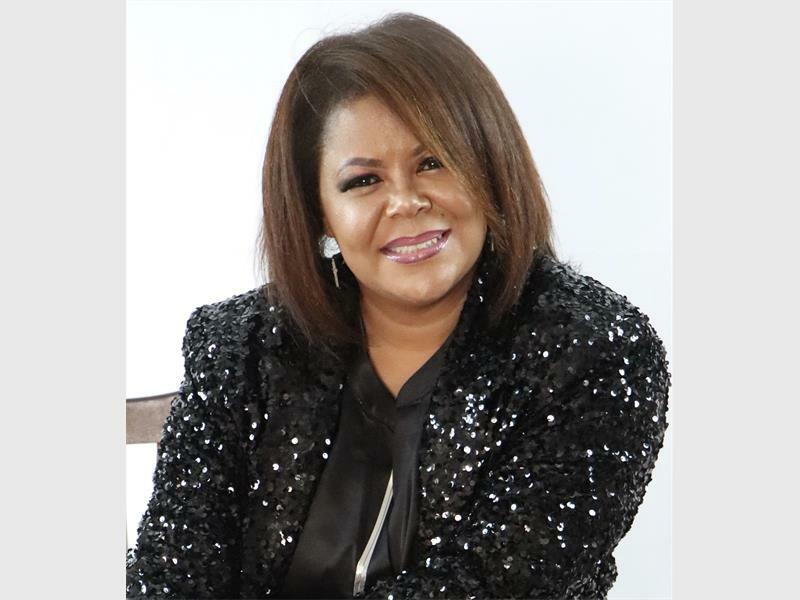
This article was submitted by Minnebron resident Pastor Anneline Reetley, a reputable counselling psychologist with two masters degrees in psychology. She’s been in the field of psychology since 2001.
Anneline inherited and continues her father’s legacy as the senior pastor of Rehoboth Christian Fellowship in Geluksdal.
She loves to work at the intersection of faith and mental health. Anneline is also the founder of Blossom God’s Girl, which seeks to promote mental health in women employing concepts of psychology and Christianity.