
Drivers, check your brakes
As the festive season approaches, experts warn drivers not to ignore the warning signs of brake failure.
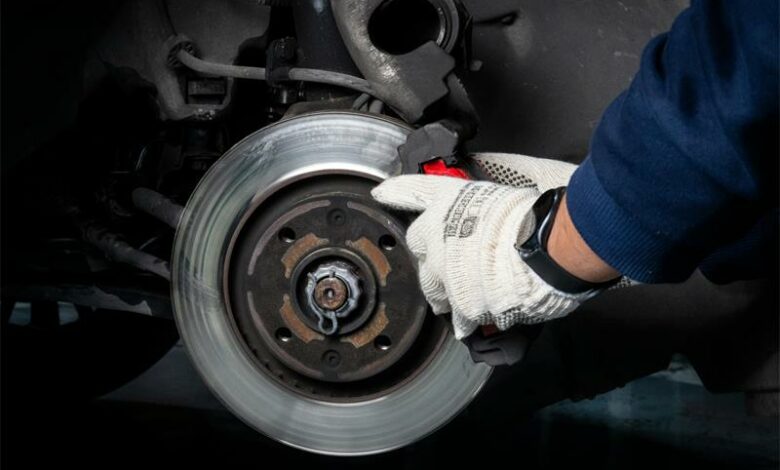
There can be nothing more terrifying than hitting the brakes in an emergency, only to find they don’t work. Most drivers believe their brakes are in good condition until they find out otherwise.
Brakes don’t fail overnight, warns the Tyre, Equipment, Parts Association (Tepa), an affiliate of the Retail Motor Industry Organisation. There are warning signs drivers should never ignore, especially when considering that tyre bursts before impact are linked to 35% of serious crashes.
Tepa national vice-chairperson Dylan Petzer says “brake fade” creeps up gradually.
“It starts with having to press the pedal a little further to get the same slowing effect. This ‘spongy’ or ‘long’ pedal is the classic sign,” Petzer explains.
“If it’s brake fluid fade, the pedal might feel like stepping on a wet sponge and alarmingly close to the floor. If it’s brake pad fade, the pedal might feel hard as a rock and the car just won’t slow down. On a long trip, especially down a mountain, this is a code-red panic situation and should be avoided at all costs.”
What causes brake fade?
It’s simple physics. Brakes are energy converters. Engines burn fuel to create kinetic energy (motion). To stop, brakes convert all that motion back into thermal energy (heat) by using friction – squeezing brake pads against a spinning metal disc (the rotor). This process creates an immense amount of heat.
When the pads get hotter than their designed range, they lose grip and can no longer slow the vehicle effectively.
The system overheats and can’t shed heat fast enough. Petzer says the biggest mistake drivers make when it comes to brake maintenance is ignoring the fluid.
“Everyone worries about pads because you can see them wear down. But that bottle of brake fluid quietly absorbs water, lowers its boiling point and can betray you at the worst possible moment. Brake fluid is a service item, not a lifetime fill. It must be flushed and replaced every two years, regardless of mileage.”
Petzer also explains why in-town driving and mountain roads or long-distance driving (perhaps even towing a caravan or trailer) are two different animals.
• In-town driving: You brake for a robot, then drive for a minute. Brake for a stop sign, drive for 30 seconds. Your brakes are constantly getting a lovely blast of cooling air between uses;
• Mountainous or long-distance driving: When driving down a long, steep pass or towing a heavy caravan, you’re constantly “riding’ the brakes to keep your speed in check. The brakes are generating heat with zero time to cool off. You are asking them to absorb the energy of a two-ton (three-ton, with a trailer) vehicle for minutes on end. Eventually, they hit their thermal limit and give up.
What’s the alternative to ‘riding’ your brakes?
“Use your gears. When driving down a steep hill, instead of riding the brake pedal the whole way down, shift the car down to a lower gear. Let the engine’s natural resistance hold the car’s speed.
“This way, the engine does most of the work and your brakes stay cool, fresh and ready for the moment you really need them,” Petzer says.
Signs that the brakes need help:
• Hot brakes give off a pungent, acrid burning smell. If you are driving down a pass and smell this, immediately pull over and let the brakes cool for at least 30 minutes;
• A squealing sound usually indicates that the built-in wear indicators need to be changed. A grinding sound is worse. That is metal against metal, and it destroys the rotors;
• Vibrations through the pedal or steering when you brake often mean the rotors are warped, usually from a previous overheating episode.
“The festive season is coming up. That means long drives, heavy loads and hot weather. Have an accredited workshop perform a pre-holiday vehicle inspection, including brakes and brake fluid, to ensure your trip is 100% safe.
“Setting off with your loved ones in a vehicle with questionable braking power is irresponsible and can cost lives. Make sure your car is as ready for the holiday as you are,” Petzer concludes.