
FOLLOW-UP: Buzz builds around preventative bee relocations
For advice and referrals contact EHBA chairman, Pete Beart on 063 689 3700.

Following the publication of ‘Beekeepers buzzing about warmer than usual summer’ in the Brakpan Herald, chairman of the Eastern Highveld Beekeepers Association (EHBA), Pete Beart, said the organisation has been inundated with calls for preventative bee relocations before higher-than-average temperatures set in.
“It is heartening to know that residents are taking the welfare of bees, as well as the greater community, seriously and relying on reliable beekeepers’ assistance,” he said.
“However, we often face questions regarding service fees, with many clients inferring that through removals we have access to honey. Unfortunately, honey doesn’t pay the bills.”
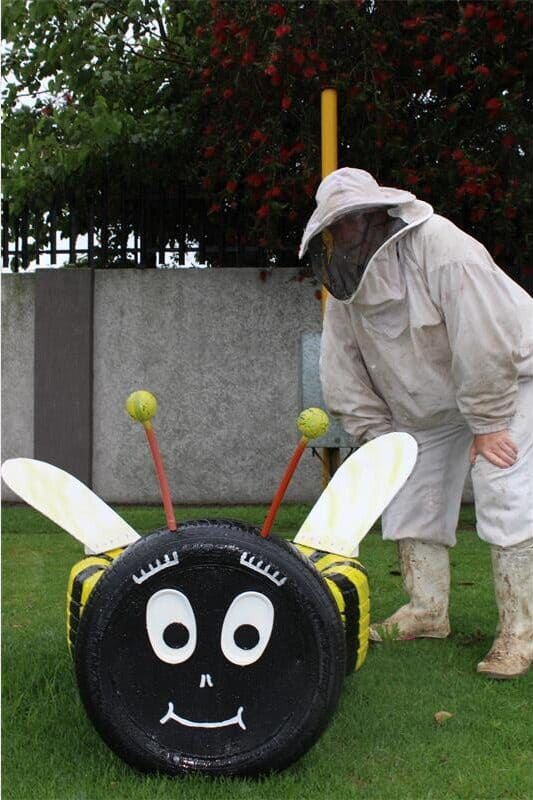
Beart explained that professional and reputable beekeeping is a profession like that of an electrician or plumber and, to that extent, relies on the use of specialised equipment, tools of the trade, time and resources.
“Our equipment is designed to effectively conduct removals while ensuring the safety and well-being of the bees, as well as those enlisting our services, thus limiting stress,” he said.
“Although not compulsory, but highly recommended, reputable beekeepers need to ensure that they have third-party insurance in place, should any liability arise during the relocation process.
“Further to that, professional removals are done at night, when the hive and its residents are most docile, with the process taking between two and four hours. All these factors play a role in how service offering fees are calculated.
“We are not in the business of collecting ‘freebees’ in order to benefit from their honey production. If secondary incomes are generated through the harvesting and sale of honey and honey-related products, it is usually derived from our own established and gently nurtured apiaries.”
Beart continued by saying that, for members of the EHBA, beekeeping and relocations are passion projects, but the incomes generated are practitioners’ bread and butter.
“Techniques implemented during removals have been tried, tested, reimagined and evolved through the knowledge of those who have dedicated their lives to the behaviour and care of bees,” he said.
“Just like a plumber that repairs a leak without flooding your home, or an electrician that installs a plug without setting your home alight, so too do we strive to offer a service and advice that is reliable.”
According to Beart, bee removal services range from R800, although escalating costs could include the use of specialist equipment such as telescopic ladders and even heavy-duty implements such as cherry pickers.
“Every removal is different; however, association members strive to offer a service which is beneficial and kind to the environment,” he said.
Touching on online bee removal hacks which may advise the use of household pesticides, Beart warns that this may not only prompt bees to react defensively but may also come with a hefty penalty.
“According to South African legislation, there is no registered poison to kill bees. Therefore, the use of commercial pesticides to kill bees could lead to a charge of improper use of registered poison, which carries a six-month jail sentence or R60 000 fine.”
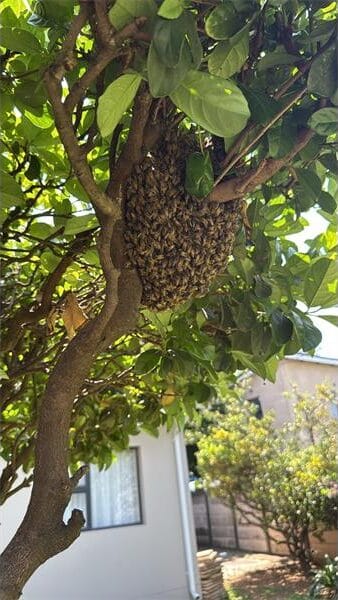
In closing, Beart said that, with the long summer months steadily approaching and bees possibly relocating to better blooming pastures, residents may witness migratory swarms seeking temporary refuge in the shade of trees, walls or garden furniture.
“Bees cannot fly very far; therefore, when they swarm, their primary objective is to reach better foraging grounds and to establish a new nest,” he said.
“Leave them be. Once rested, they will move along without a fuss. If they stay in the spot for more than three days, they may have found a gap in the structure to establish their new home.
“If that is the case, contact a beekeeper to relocate them before they become too comfortable.”
For more information or advice, contact Pete Beart on 063 689 3700.