WATCH: Fallen heroes remembered
The annual Remembrance Day parade honours those who paid the supreme sacrifice, ensuring their courage is never forgotten.
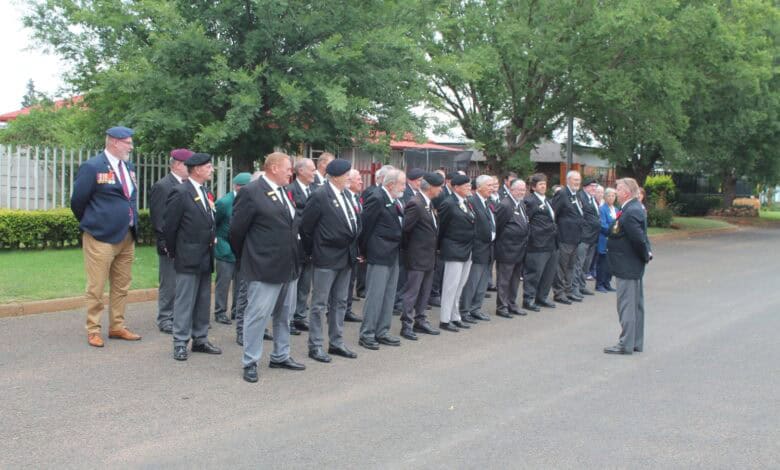
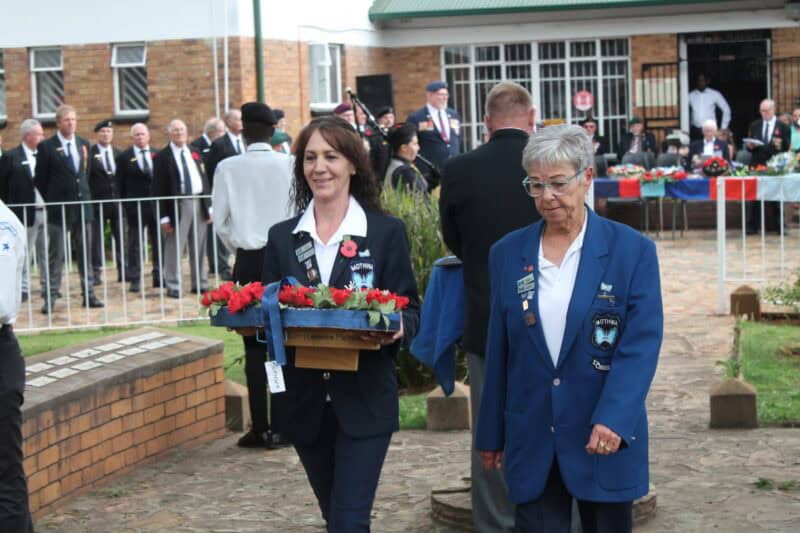
Grey skies could not dampen the solemn enthusiasm of those gathered to honour the fallen at the Remembrance Day parade at the Cosy Corner Moth Shellhole on November 8.
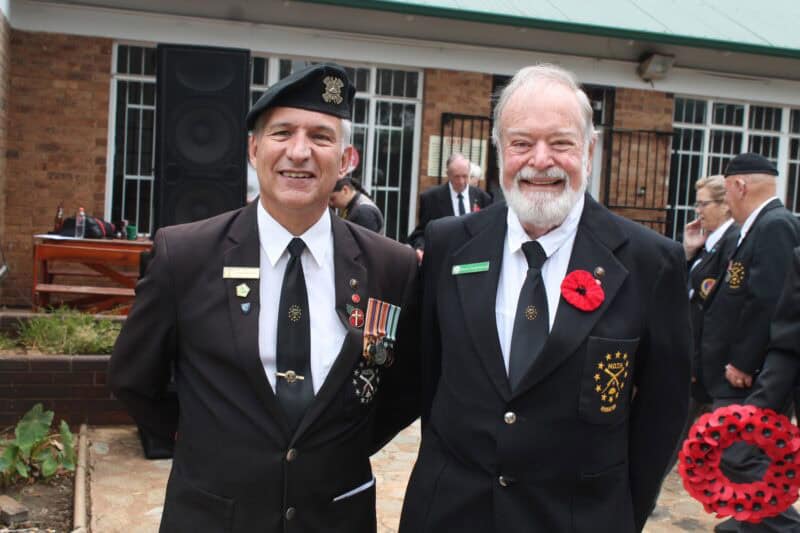
The parade saw ex-servicemen and women, their families and members of the public gather at the shellhole in Brenthurst to honour the service and sacrifice of the armed forces.
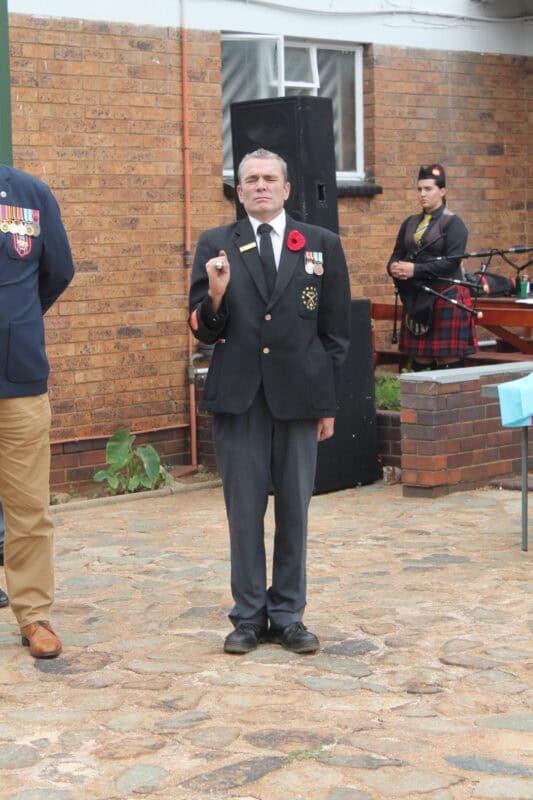
Proceedings started with the parade, after which all were welcomed by the shellhole’s Old Bill Rob Beech, followed by a scripture reading and prayer by Wee Bill Nigel Ellerbeck.
Moments before the event got underway, the unmistakable thudding of helicopters rumbled overhead.
Two Aérospatiale Alouette III helicopters flew over, looped back, and made another pass, setting a memorable tone for the rest of the event.
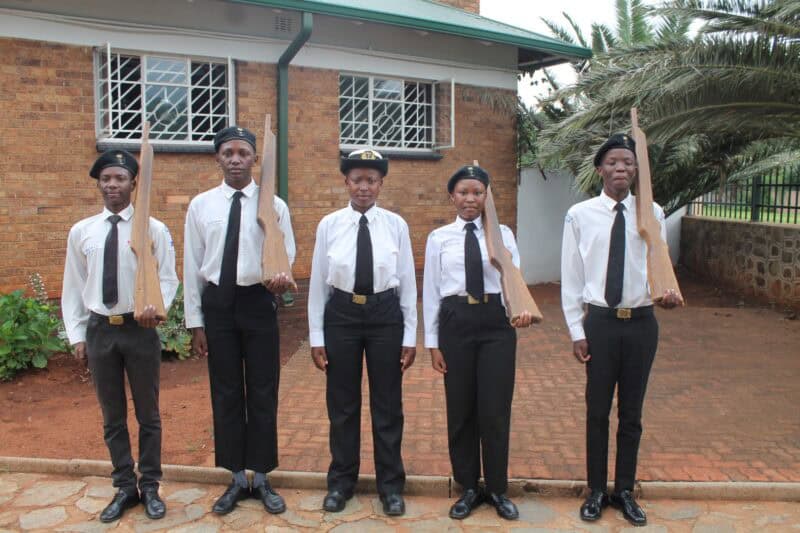
In his address, Beech recited In Flanders Fields, a poem written during the First World War.
“We gather here today in the light of that poem, and in the light of every ordinary soldier who ever stood in a place like Flanders,” said Beech.
“Not the generals, not the politicians, but the common soldier – the young men who left home still almost a boy.
“Most of the veterans among us were once just that. Boys in the late teens, scarcely 20, who traded school desks and the safety of home for training camps and deployment.
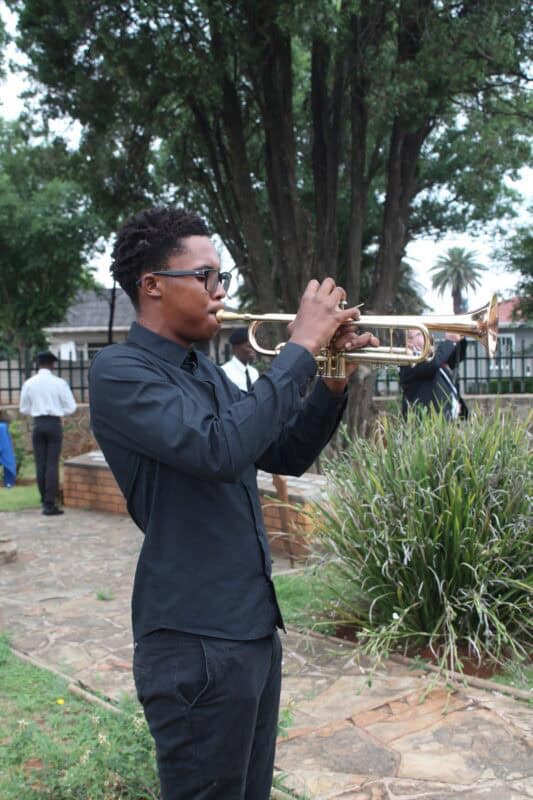
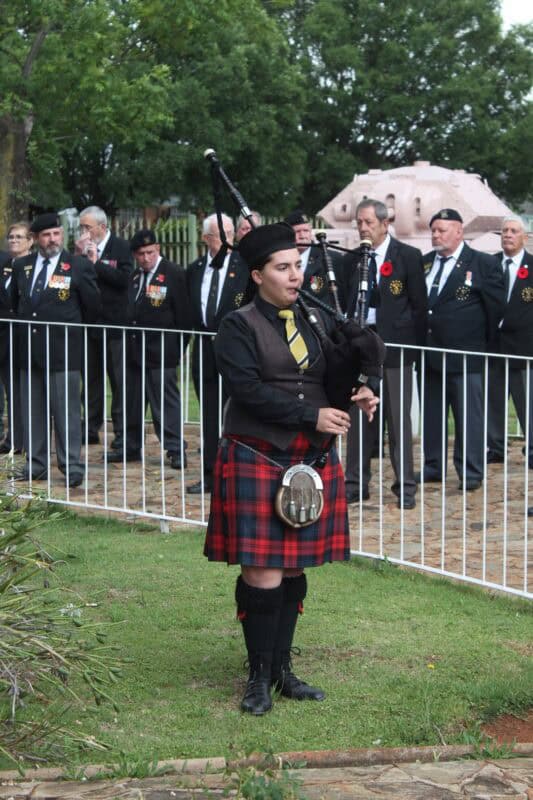
“They were not much older than the young people we see here this morning – the piper from Benoni High School, the trumpeter from Springs Boys High, the flag orderly and honour guard from the TS Springs Sea Cadets.
“We invite these young people deliberately. We need them here. Those of us who have been through the war machine want them to understand what must never be forgotten.”
Beech then spoke about the bond of brotherhood that unites soldiers.
“Someone once said there are no unwounded soldiers. Many who have never served will not grasp the full weight of that truth,” he continued.
“Those who have been there know it in their bones. The wounds are not always visible.
“They are carried in the memory of comrades lost, in the sudden silence after the guns stop, in the quiet struggle to come home again.
“It is in places like this shellhole that we gather, remember, and begin to heal.
“There is a complex truth about soldiering that many veterans only speak of years later.
“Looking back, those years can feel, in some strange way, among the best of our lives.
“We grew up fast. We learned skills no classroom could teach. We knew intense purpose, sharp humour, and the fierce loyalty of the men beside us.
“We made friends who became brothers. We believed we were doing our duty – to our country, and more importantly, to one another.
“Yet honesty demands we name the cost. We sacrificed ordinary time with family and friends.
“We surrendered the simple right to decide our own days. Sometimes the price was a limb, or health that never fully returned, or a life cut short.
“The camaraderie that sustained us in the heat of battle is the same bond we lean on afterwards, when the fighting is over and harder work of healing begins.
“Brotherhood is what binds soldiers. It is what they rely on when everything else falls away.”
Beech called upon the youth to safeguard the memory of those who gave their lives.
“We ask the young people here not to forget those who paid the ultimate price. Not to forget that armed conflict reaches far beyond the front line – to the mother waiting at home, the child who grows up without a parent, the community that carries the quiet absence,” he said.
“And we ask them to remember something harder still. That wars are not accidents of nature. They begin as the extension of political will and political objectives.
“Ordinary young men and women are the ones asked to carry that will into the fire.
“The values forged in conflict – mutual help, sound memory and true comradeship – do not belong only to veterans. They are virtues every generation must practice if we are to build a world worthy of the sacrifice made in our name.
“They are daily disciplines of looking after one another, of refusing to forget, and of standing together when it would be easier to look away.”
Beech concluded with French American missionary Stephen Grellet’s famous quote on kindness.
“Stephen Grellet’s words still hold: “I shall pass through this world by once. Any good, thereafter, that I can do or any kindness I can show to any human being, let me do it now. Let me not defer it or neglect it, for I shall not pass this way again”,” he said.
“That is the charge the dead place in our hands. The torch is not a relic. It is a living responsibility.
“We hold it high not by grand gestures alone, but by the quiet, stubborn work of kindness, loyalty, and remembrance every single day.
“To the common soldier – past and present – we owe more than a moment of silence.
“We owe the determination that their sacrifice will not be emptied of meaning. We owe the courage to teach the next generation what it cost, and why it must never become ordinary again.
“Lest we forget.”
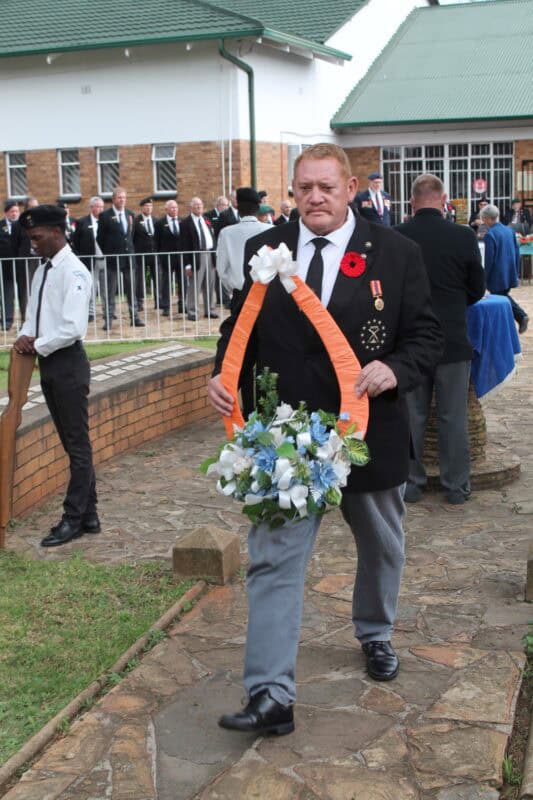
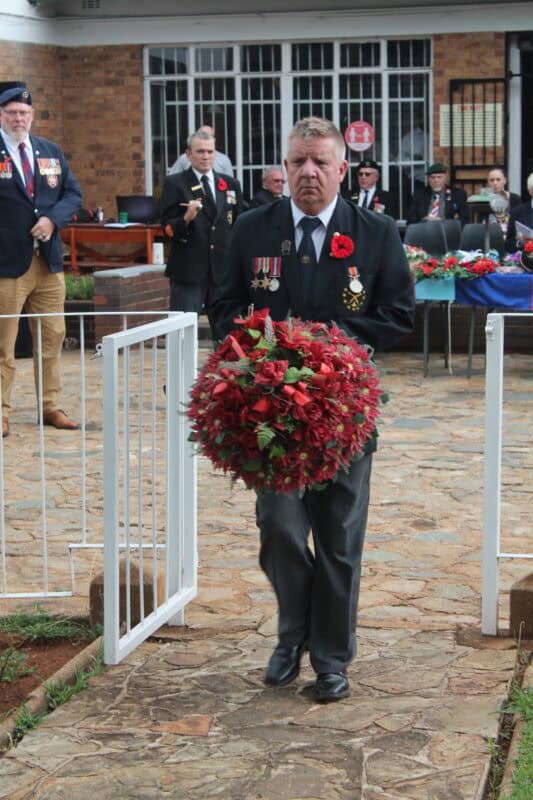
Following Beech’s address, two minutes of silence were observed and the Last Post and Reveille were played.
Musa Zwane from Springs Boys High School was the parade bugler.
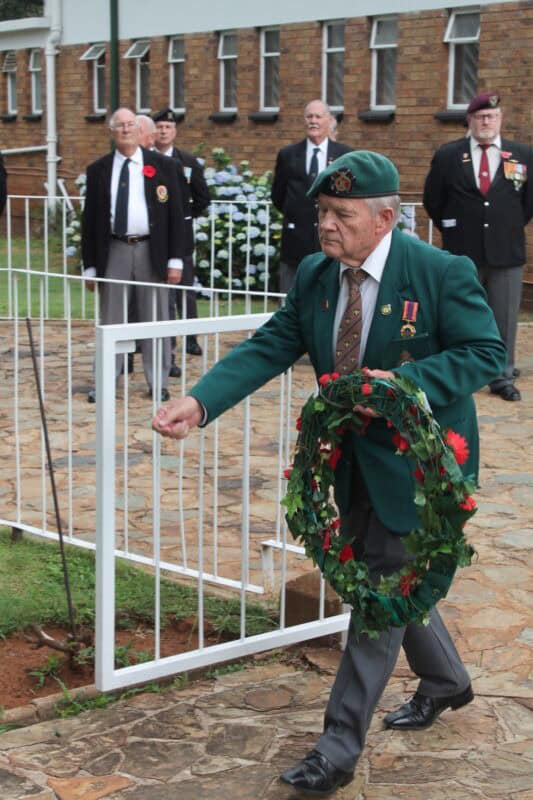
This was followed by the wreath-laying ceremony, during which Isabella Carstens, a piper from Benoni High School, performed.
After formal proceedings, attendees gathered for a toast to absent comrades and refreshments in the bar, and later enjoyed lunch together.
In Flanders Fields by Canadian physician Lieutenant-Colonel John McCrae.
In Flanders fields the poppies blow
Between the crosses, row on row,
That mark our place; and in the sky
The larks, still bravely singing, fly
Scarce heard amid the guns below.
We are the Dead. Short days ago
We lived, felt dawn, saw sunset glow,
Loved and were loved, and now we lie,
In Flanders fields.
Take up our quarrel with the foe:
To you from failing hands we throw
The torch; be yours to hold it high.
If ye break faith with us who die
We shall not sleep, though poppies grow
In Flanders fields.
Remembrance Day is observed on November 11, or on the nearest Sunday to the date, to recall the end of the First World War.
The major hostilities of this war formally ended in the 11th hour, of the 11th day, of the 11th month of 1918.
Remembrance Day is also known as Poppy Day because of the tradition of wearing a remembrance poppy.
Throughout the history of war in Europe and Asia, the phenomenon of poppies growing in places where battles had raged and where the soil was disturbed, occurred frequently.
Blood red poppies grew in place of the more common white specimens, as if nature was protesting against the bloodshed of war.
The appearance of these flowers in areas of battle had an impact on soldiers, reminding them of their fallen comrades.