Jeppe Boys invitational festival strengthens youth development and excellence
Sixteen teams gathered for a high-intensity showcase that highlighted holistic development, structured coaching pathways and the growing strength of basketball within the school’s sporting programme.
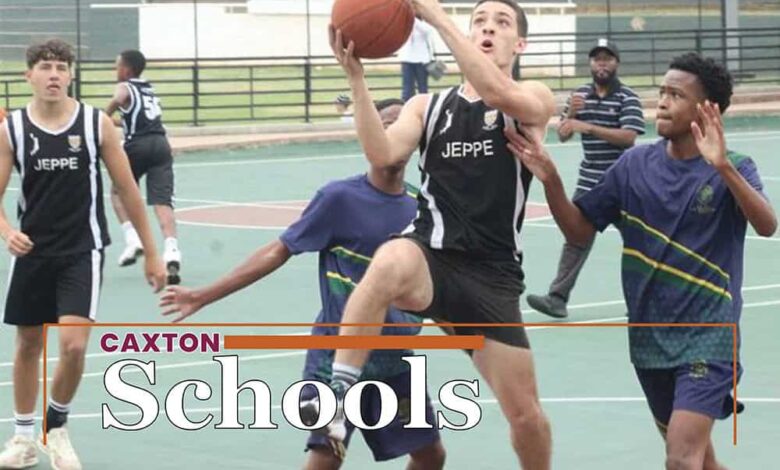
Jeppe High School recently hosted its annual U14 Basketball Invitational Festival, welcoming 16 teams to celebrate youth development, competition, and school sport excellence.
Peter Ngoveni, the school’s Basketball Master-in-Charge, spoke about the festival and the philosophy underpinning basketball at Jeppe.
Also read: Ken Short Water Polo Festival at Jeppe Boys set to boost SA school water polo
He emphasised that the school views sport as a vital part of a learner’s overall development.
“We believe in a holistic approach to sport,” Ngoveni said. “Learners come here for education, but sport is also essential.”

Jeppe offers a wide range of sporting codes throughout the year.
“We have summer, winter and autumn sports,” Ngoveni explained. “In summer, there’s basketball, cricket, rowing and water polo. In winter, we have squash, rugby and hockey, and in autumn we focus on athletics, among others. We give learners the opportunity to try different sports – you never know where they will find themselves.”
Also read: Hoops and Goalposts: Joburg giants set for thrilling 2026 water polo and basketball season
To encourage early participation, the school requires younger learners to be involved in sport.
“For grades eight and nine, it’s compulsory that they choose a sport,” he said.
Basketball has emerged as the most popular elective among the boys.
“The schoolboys love basketball,” Ngoveni noted. “At the start of every season, basketball is the biggest elective.”

The scale of participation reflects this popularity.
“We currently have eight U14 teams alone, with eight players per team,” he said. “That shows how much the boys want to play.”
In response, the programme prioritises regular game time.
“Because they want to play, we’ve committed that they will train and play at least one game a week,” Ngoveni added.
Parental involvement has also strengthened the basketball culture. Through the Patrons Association, parents assist with match-day activities such as running the tuck shop and selling boerewors rolls.
“What this does is bring parents together,” Ngoveni explained. “The boys may be playing together, but the parents don’t always know each other. This helps create a bigger family around the players.”
As the school’s largest sporting elective, basketball benefits from strong institutional support. Facilities are upgraded annually, and funding is provided to ensure coaching stability. Jeppe competes in the Boys’ Schools Union alongside schools such as King Edward and Pretoria Boys, and teams travel during the school holidays to destinations such as Durban and Michael House.
Team selection begins early in the season.

“We play our first matches in the first week back at school,” Ngoveni said. “That allows us to identify areas where players need development.”
The programme is underpinned by a structured coaching pathway.
“Our coaching staff is incredible,” he said. “Our A-team coaches are FIBA Level 1 qualified. In Team B, we often have staff members coaching, and in the lower teams, we have younger coaches who are just starting out.”
All teams follow a unified development framework.
“Our coaching programme is designed by the first-team coach and filters down through all the teams,” Ngoveni explained. “Everything builds towards the first team.”
The first team is coached by former national player Lebesa Selepe. This term alone, Jeppe’s first team has competed at festivals in Pretoria, St John’s and St Stithians. The U16s will attend the St Stithians Festival, the U15s will travel to St John’s, while the U14s host Jeppe’s invitational.
Planning for the U14 festival begins well in advance.
“We started organising last year,” Ngoveni said. “We sent out invitations, planned fixtures, dates and costs.”
Schools from outside the province are accommodated in boarding facilities, and this year marked a milestone with the inclusion of an international team.
“For the first time, we hosted a school from Botswana, Hoop Warriors Academy,” he said.
At the U14 level, development takes precedence over results.
“There’s no outright winner,” Ngoveni explained. “The focus is on giving the boys game time.”
Each of the 16 teams played 15 matches, and the results were shared with participating schools. A Dream Team of 12 players was also selected at the conclusion of the festival.

Reflecting on his own journey, Ngoveni spoke with humility.
“I’m a former Jeppe boy myself,” he said. “I played, but I wasn’t very good.”
Coaching, however, has been deeply rewarding.
“Seeing a player grow and develop, and then watching them reach matric and play at a high level, that’s when you know you’ve had an impact,” he said.
The most difficult part, he admits, is letting players go.
“The hardest thing is seeing players come and go,” Ngoveni said.
Some move on to universities such as UJ and Wits, while others pursue opportunities abroad, including in the United States. Jeppe also maintains ties with NBA Africa, which has invited the school to attend select matches.
“I think schools are trying to build systems that will filter into long-term development,” Ngoveni said.
And, as tradition demands, rivalry remains strong.
“It’s also worth noting,” he added, “that our biggest rivalry is King Edward VII School.”