Robertsham student heads to China for global supercomputing challenge
Months of preparation and teamwork have earned Mubeen Dewan and his team a place on the global stage in a prestigious international computing challenge.
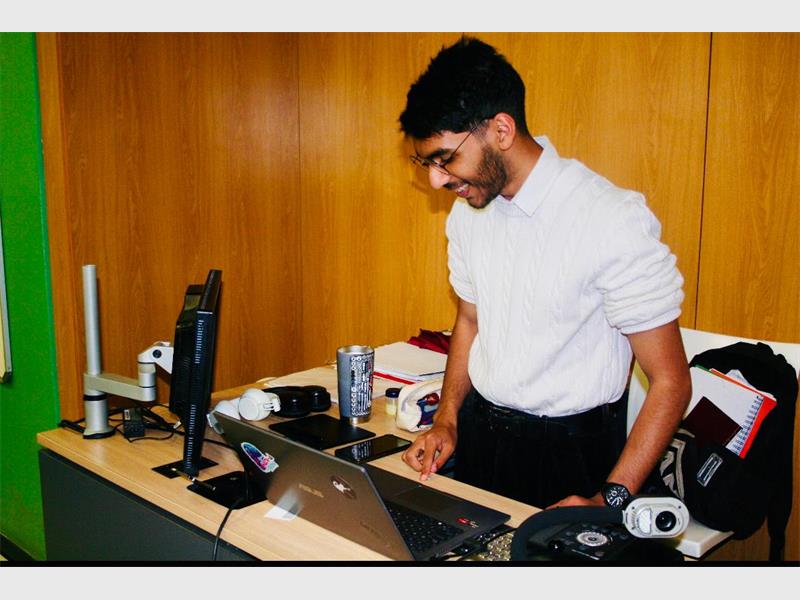
For Robertsham’s, Mubeen Dewan, high-performance computing is not just an academic interest; it is an opportunity to compete on the world stage while helping grow South Africa’s place in global technology research.
The third-year computer science student at the University of the Witwatersrand has been selected as part of the university’s team for the 2026 ASC Student Supercomputer Challenge (ASC26), which will take place from May 16 to May 20, at Wuxi University in China.
ASC is regarded as one of the world’s most respected student supercomputing competitions, bringing together top university teams from across the globe to tackle demanding computing and artificial intelligence challenges under strict power and resource constraints.
For Dewan and his teammates, qualifying for ASC26 is both a major achievement and an opportunity to represent Wits University, South Africa and the African continent internationally.
“It comes with a sense of responsibility,” Dewan said. “We’re representing a relatively small but growing high-performance computing (HPC) community in South Africa, and it’s important for us to show that we can compete at the same technical level.”
From campus talks to international competition
Dewan, who is completing a double major in computer science, said his long-term goal is to work in academia and research in computer architecture. His journey into HPC began during his first year after spotting posters around campus advertising talks hosted by the Wits HPC interest group.
“I was very intrigued, so I started attending the talks, and in my second year, after an internal quiz, I was selected to be part of one of the Wits teams to attend the CHPC Student Cluster Competition,” he said.
That experience eventually took him to the national finals in Cape Town and deepened his involvement in the student HPC community. Since then, he has helped organise weekly talks, manage computing hardware and mentor students interested in the field.
“It’s an honour, and more personally, it’s a kind of validation,” Dewan said about qualifying for ASC26. “It shows that my skills are genuinely improving, and that I’m capable of more than I tend to give myself credit for.”
Building a strong HPC culture at Wits
Wits HPC is a student-run high-performance computing group at the university that brings students together around supercomputing, parallel programming, systems and technical problem-solving. The group focuses on helping students turn classroom theory into practical skills through workshops, talks, training sessions and competition preparation.
Over the past decade, the group has built an impressive record, claiming seven first-place titles at the CHPC Student Cluster Competition and four first-place titles at the ISC Student Cluster Competition in Germany. In 2025, Wits HPC became the first standalone African university to compete at the ASC competition.
According to Dewan, the group has become much more than just an academic club.
“HPC is a very important aspect of computer science that underlines the majority of the headlining tech breakthroughs today, like AI and machine learning,” he explained.
“We’ve poured our effort into establishing pipelines and connections between Wits and many prestigious events, to give students the chance to excel on the global stage.”
The group has also worked closely with the Centre for High Performance Computing to gain access to decommissioned supercomputer hardware through the HPC Ecosystems project, allowing students to conduct independent research and gain hands-on experience with advanced systems.
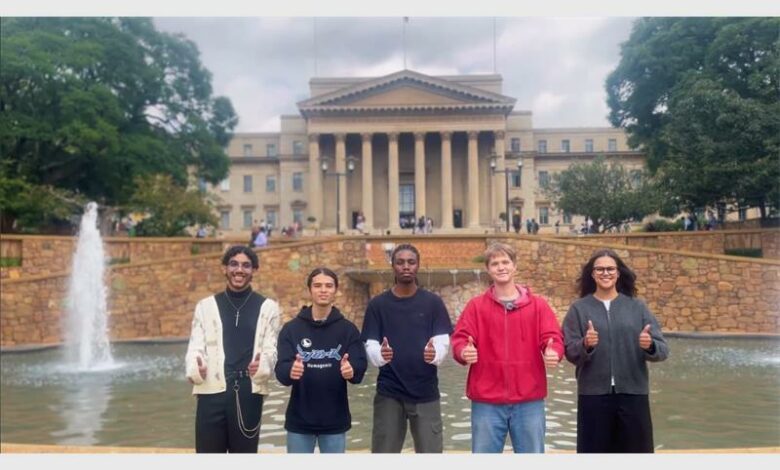
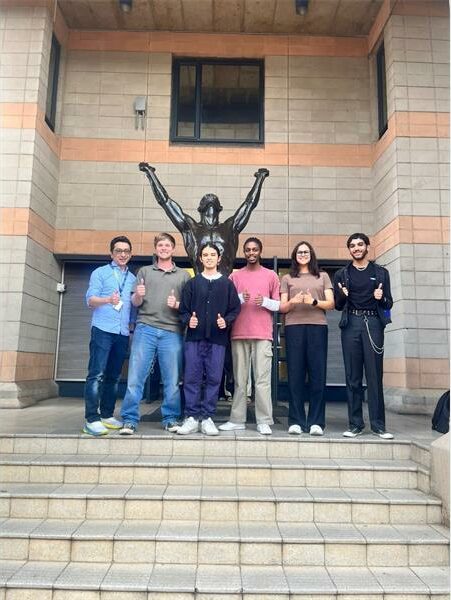
The ASC26 team consists of five undergraduate students: Aatikah Sheikh (captain), Kellen Strydom, Kevin Ebrahim, Vele Ethan Nefale and Mubeen Dewan. The team is advised by Professor Ling Cheng and includes students from both computer science and electrical engineering backgrounds.
Together, they have spent months preparing in benchmarking, system setup, parallel computing, performance tuning and teamwork.
“Our team consists of five people across both computer science and electrical engineering,” Dewan said. “We’ve become more comfortable working together as a team, and we help fill in each other’s gaps. Most solutions just require a second perspective.”
Preparation for the competition started immediately after the team learned they had qualified. Dewan recalls receiving the news in March after the preliminary online round placed them among the top 25 teams out of nearly 300 international entrants.
“It was exhilarating,” he shared. “After hearing the number of teams taking part from all over the world, it was doubtful that we’d even break the top 50, but we managed to pull through.”
Looking beyond the competition
For Dewan, ASC26 is about more than simply competing. He hopes the experience will expose him to some of the world’s leading research institutions and help shape his future career in computer architecture and performance engineering.
“One of my personal goals is to get a firsthand look at how research is actually done at some of the world’s leading computer science labs,” he highlighted.
He is also eager to learn from other international teams and compare different approaches to technical problem-solving.
“Competitions like ASC are results-driven. By producing strong results and approaching problems rigorously, we can demonstrate that students here are capable of working at a very high level.”
As the team prepares to compete in China, Dewan believes the journey has already had a lasting impact on everyone involved.
“This journey has already helped us grow technically and personally,” he said. “ASC26 is our chance to put that preparation to the test at the highest level.”