South Crest residents oppose proposed 900-unit development
Ward 106 councillor Tim Denny says several concerns have been addressed, but outstanding issues will be discussed during a third engagement with developers.
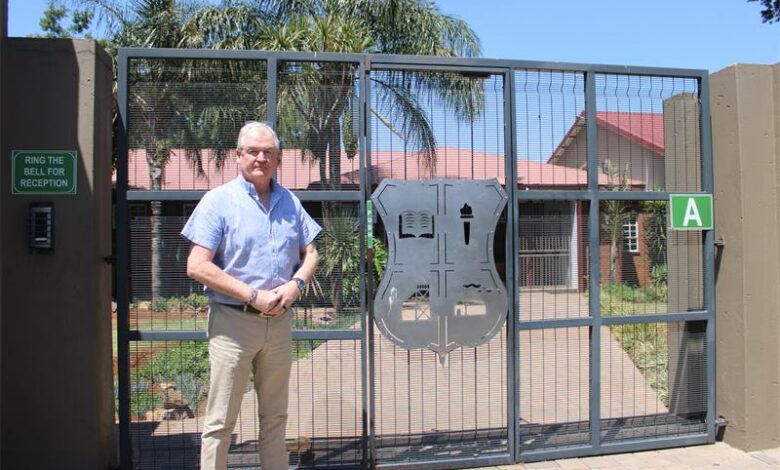
Ward 106 councillor Tim Denny. Photo: Azusakhe Limba
Residents of South Crest and Tulisa Park are strongly opposing a proposed 900-unit residential development planned for Portion 592 of Farm Elandsfontein 108-IR in Alberton.
The proposed development, known as Extensions 13 and 14, includes approximately 900 residential units comprising double- and triple-storey buildings and duplexes.
Community members argue that the development would place severe pressure on already-struggling infrastructure, increase congestion, and negatively impact the character of the suburb.
More than 600 objections have reportedly already been submitted, while residents have also signed a petition opposing the project.
Community meeting outlines concerns
During a community meeting held at the NG Kerk in Jan Meyer Street on May 6, residents gathered to discuss the proposed development and concerns raised in the Environmental Consultants International (ECI) assessment report.
The meeting was chaired by long-time South Crest resident and businessman Leopold Dussing, who explained that the purpose was to inform residents about the development process and encourage public participation.
Dussing told attendees he had lived in South Crest since 1970 and was not representing any political party, the Ekurhuleni Metropolitan Municipality (EMM), or ECI.
According to the meeting minutes, residents expressed frustration that previous concerns raised during public meetings in 2024 were allegedly never adequately addressed before the process resumed in April this year.
‘We are not against development’
Speaking to the Alberton Record, Dussing stressed that residents are not opposed to development itself.
The site earmarked for the proposed 900-unit residential development in South Crest. Photo: Supplied
“We are not against development. We are against the type of development they want to build there,” he said.
He described South Crest as an established, close-knit community made up largely of long-term residents and lower-density housing developments.
According to Dussing, the proposed development would increase the suburb’s housing density by about 71%.
“South Crest currently has around 1 260 properties serviced by 24 roads. Now they want to add another 900 units,” he said.
Infrastructure concerns raised
One of the main concerns raised by residents relates to ageing infrastructure.
According to the meeting minutes, South Crest’s water infrastructure is more than 50 years old and already experiences regular pipe bursts and interruptions.
Residents also fear the area’s sewerage network will not cope with the additional demand from the development.
“The sewer lines are constantly bursting already. Now they want to add hundreds more units to the system,” Dussing said.
Electricity supply was another major issue discussed at the meeting.
Residents questioned how the area could support an additional 4 000KVA demand when South Crest already struggles with recurring outages and delayed power restoration after load shedding.
Traffic and road impact
Traffic congestion was identified as one of the community’s biggest concerns.
Residents argued that the traffic impact study used by developers was conducted in February 2021 and no longer reflects current traffic conditions.
The proposal includes two entrances and exits, both located in Eeuwfees Street.
According to the assessment report discussed at the meeting, approximately 759 vehicles are expected to enter and exit the development during peak hours.
Residents believe this will place unbearable pressure on already congested roads.
“Eeuwfees Street is already the busiest road in South Crest. This is a recipe for disaster,” said Dussing.
Although some road upgrades and intersection improvements have reportedly been proposed, residents are concerned that construction vehicles will severely damage residential roads during the years-long construction process.
“Our roads are residential roads. They are not designed for hundreds of 30-ton trucks,” Dussing said.
Other concerns raised:
• Noise, blasting and environmental impact
Residents also raised concerns about blasting, dust, and environmental damage caused by the rocky terrain on the site.
According to the meeting minutes, blasting during construction is considered unavoidable.
“There’s going to be blasting, dust, trucks and noise for years,” said Dussing.
Residents further fear the development will lead to the loss of green spaces and disruption of local ecosystems.
• Pressure on schools, clinics and policing
Residents also questioned whether public services in the area could cope with the additional population.
The meeting minutes noted concerns over overcrowded schools, limited clinic access and stretched police resources.
“There is no mention of how schools, clinics or SAPS will accommodate this development,” Dussing said.
• Property values and suburb character
Another concern among residents is the possible impact on property values and the character of the suburb.
Dussing said residents fear the large-scale, high-density housing project will not align with South Crest’s existing residential character.
“This development will nearly double the size of South Crest,” he said.
Residents also expressed concern about the proposed housing style, comparing it to developments in South Hills.
Resident Sharnae Van Rhyn, who signed the petition opposing the development, said the area’s infrastructure is already under pressure.
“The infrastructure in South Crest has already been exploited. The area simply cannot take any more influx of people,” she said.
Residents submit hundreds of objections
Dussing said residents attended the public open day hosted at the Alberton Civic Centre on May 14, where community members raised concerns directly with representatives involved in the proposed development.
According to Dussing, residents were encouraged to submit individual objections in addition to signing the petition.
“We told residents to physically submit objections and explain exactly why they are against the development,” he said.
He explained that while the petition gathered support from residents, more than 600 formal objections were also submitted during the public participation process.
“A petition is one thing, but individual objections carry more weight because residents explain their specific concerns,” he said.
Dussing added that a follow-up engagement planned for June 3 was later postponed after developers reportedly indicated they needed additional time to respond to the volume of objections received.
According to Dussing, this is the third time developers have attempted to move the project forward after previous applications were halted.
He said residents remain committed to opposing the development in its current form.
“If they come back with something that fits the character of South Crest, people may support it.
“But right now, the community feels this development will destroy the suburb instead of improving it,” he said.
Concerns still need to be addressed
Ward 106 Clr Tim Denny said he initially shared many of the concerns raised by residents and had raised them with the developer on several occasions.
“As the councillor of Ward 106, my responsibility is to determine whether a development is in the best interests of the community.
“Although many of my concerns have been addressed, there are still a few outstanding issues. The developer and the project team have agreed to a third meeting to address those concerns,” said Denny.
Denny said Alberton residents are generally not opposed to development but have the right to question proposals that may affect their community.
“Residents have the right to raise concerns and submit objections until they are satisfied that those concerns have been properly addressed. To date, the developer has attempted to address a number of these concerns, but not all of them have been resolved yet,” he said.
Residents remain concerned
South Crest resident Elize Froneman said she remains concerned about the potential impact the development could have on the area.
“I am opposed to the development in its current form. Residents already experience challenges relating to municipal services and infrastructure, and there is concern that a development of this scale could place additional pressure on those systems,” she said.
Froneman said many residents believe the long-term impact on one of Alberton’s oldest suburbs should be carefully considered before any final decisions are made.